Let's start with what nobody tells you
Your body at 40 is not a worn-out version of your body at 30. It's a different instrument with its own tuning, and that matters when you're learning how lemon vibrators, suction toys, and clitoral stimulation actually feel. The good news: most people find their best orgasms in their 40s, not their 30s. But the path there requires understanding what's actually changing.
Here's what research and years of working with clients shows: pleasure doesn't decline with age. It evolves. Your clitoral sensitivity shifts. Your arousal pathway changes. The way you respond to a lemon clitoral vibrator is genuinely different in your 40s than it was at 30, and the difference is not worse. Just different. And often better.
What shifts in clitoral sensitivity between your 30s and 40s
In your 30s, your clitoral nerve endings are firing quickly and easily. Stimulation builds fast. Most women in their 30s can reach orgasm in 5 to 15 minutes with consistent stimulation, whether partnered or solo. Direct touch works. High intensity feels good. You're working with a fairly high baseline of estrogen and testosterone, which means tissue is thick, responsive, and quick to swell.
By your 40s, clitoral nerves don't fire quite as rapidly. That doesn't mean they're less sensitive. It means they're more selective. Your clitoral tissue itself hasn't changed much, but the hormonal environment around it shifts slightly. Estrogen and testosterone are both a little lower than they were, even before perimenopause. Your arousal takes longer to build. Direct, intense vibration sometimes feels sharp or overstimulating rather than pleasurable.
What actually improves: specificity. In your 40s, your clitoris knows what it wants. You're less likely to be distracted by performance anxiety or social conditioning. You have a clearer sense of what builds arousal versus what's just noise. That's why lemon vibrators and suction-based stimulation often feel better in your 40s. They offer sustained, focused pressure rather than raw vibration. The pattern matters more than the speed.
How arousal timing changes
This is practical stuff. In your 30s, foreplay could be 5 minutes. You were ready. In your 40s, budget 15 to 25 minutes minimum if you want the same depth of response. This is not a problem. It's information.
What's happening physiologically: blood flow to the clitoris takes a bit longer to maximize. Your natural lubrication may be lighter (even if you're not anywhere near menopause). The pelvic floor muscles are still strong, but they tense slightly faster, which can interfere with arousal if you're rushing.
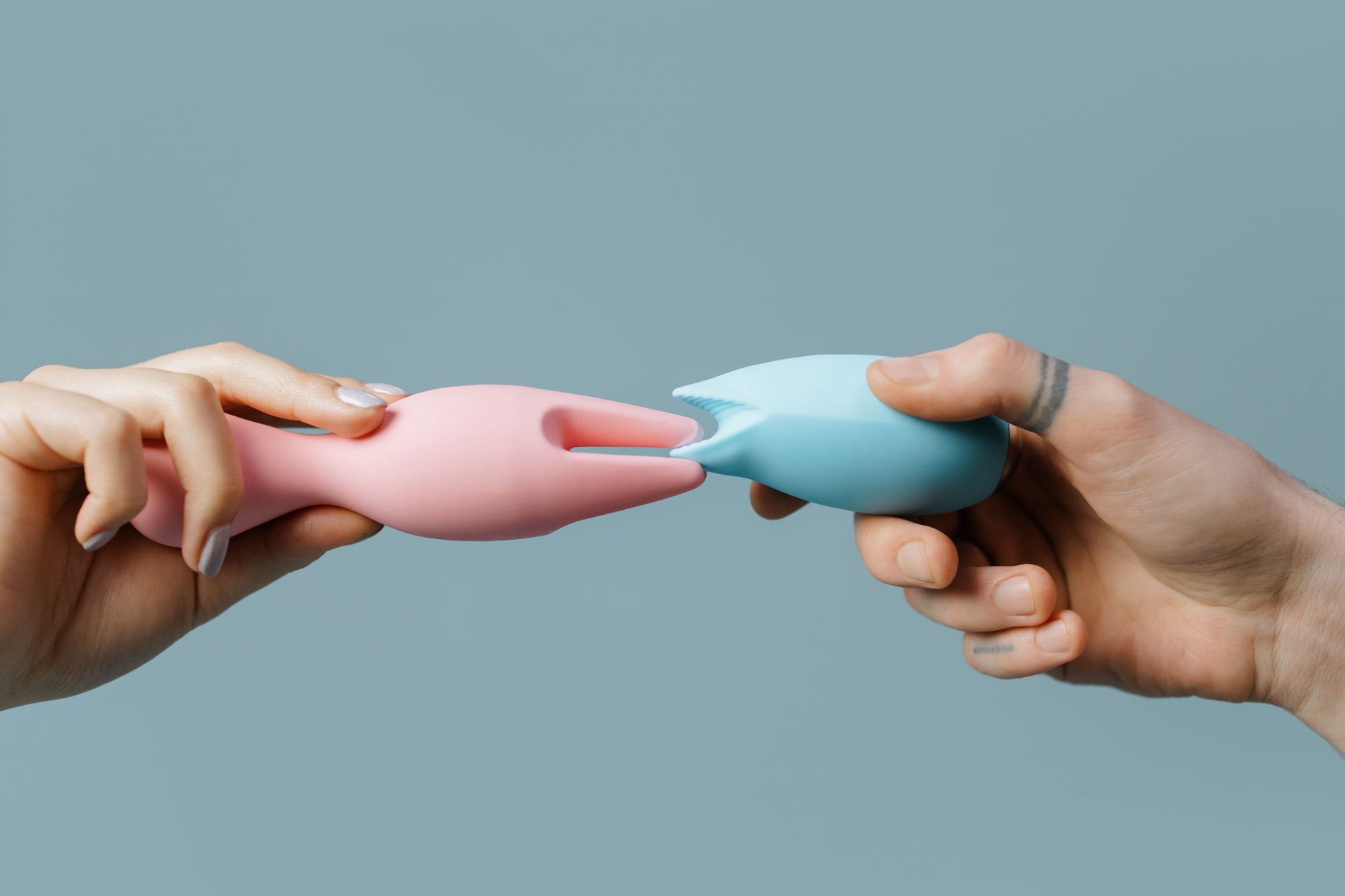
With a lemon vibrator specifically, this timing shift actually works in your favor. Lemon clitoral vibrators use suction and pulsing rather than pure vibration. They're designed for sustained stimulation. In your 30s, you might have preferred a faster, more intense vibe that gets you there quickly. In your 40s, the slower build of a lemon toy often feels more satisfying. It gives your nervous system time to fully engage.
What changes about intensity preference
Many women in their 30s like strong, direct stimulation. High-speed vibrators. Lots of pressure. Zero ambiguity.
By your 40s, the picture becomes more nuanced. Some women want even stronger intensity. Others find that medium-to-high feels better than maximum. The difference is usually this: in your 40s, you've typically figured out that intensity without the right rhythm or sensation just feels numb. You've discovered that the best orgasms aren't always the "hardest" ones. They're the ones where your brain is actually engaged.
With lemon vibrators and clitoral suction toys, this plays out as a preference for pattern over pure power. A Lem vibrator, for example, has multiple suction settings and pulse patterns. In your 30s, you might have used settings 5 or 6 exclusively. In your 40s, you're more likely to find settings 2, 3, or 4 actually feel better. The gentler pressure gives your clitoral tissue room to swell fully and respond more completely.
The mental piece that changes
Here's where the science gets interesting and the experience gets richer: your brain's role in pleasure expands in your 40s.
In your 30s, arousal is largely driven by novelty and physical response. A new partner, new position, new toy. Your nervous system is highly reactive.
By your 40s, arousal increasingly requires context. Mental engagement. You're more responsive to scenario, imagination, emotional connection, and what feels meaningful in the moment. This is not a loss. It's a recalibration. Women often report that their orgasms in their 40s feel deeper, more full-body, and less purely genital than they did earlier.
That mental piece changes how you use lemon vibrators too. In your 30s, you might have used a toy during partnered sex as a quick boost to orgasm. In your 40s, many women find they want more time with the toy, more attention to the experience, more space for arousal to build. This is why many of my clients in their 40s actually prefer solo sessions. There's less pressure to perform and more space for pleasure.
How hormone shifts (not yet menopause) affect sensation
If you're in your early 40s and not yet in perimenopause, you're likely still cycling normally. But testosterone drops slightly between your 30s and 40s. You probably won't notice it dramatically. But it affects desire and how quickly arousal builds. Estrogen is still high during the luteal phase of your cycle, which means you'll have windows of heightened sensitivity.
Many women notice this pattern in their 40s: first half of the month, arousal is slower to build. Second half, after ovulation, sensitivity ramps back up and things feel closer to how they did at 30. That's normal. That's your cycle doing its job.
When you're choosing between a lemon vibrator and other clitoral toys, this means: in your follicular phase, you might need longer warm-up time and a gentler touch. In your luteal phase, higher intensity might feel good again. Learning to work with your cycle rather than against it makes pleasure feel less fraught and more reliable.
Sensation changes worth knowing about
Your skin changes slightly. You're less likely to have that raw, tender quality from frequent stimulation. Your clitoral hood may sit slightly differently. These are tiny things, but they affect how direct contact feels.
Many women find that in their 40s, they prefer toys with a broader, less pointed contact area. This is why lemon clitoral vibrators and broader suction toys often feel better than narrow-tip wands or thin vibrators. The stimulation spreads across more nerve endings rather than concentrating on a single point.
Your pelvic floor awareness increases in your 40s too. You're more conscious of that tension. Some women find they need to actively relax their pelvic floor during arousal, whereas they never thought about it before. This is genuinely helpful information because it means you can make conscious choices about that tension rather than just letting it happen automatically.
What actually gets easier
Here's the part that matters: most aspects of pleasure get easier in your 40s.
You know your body better. You're less embarrassed about what you want. You've usually had enough experience to know what works, which means less time wasted on toys or techniques that don't resonate. You're less reactive to what partners think or what you imagine you're "supposed" to like.
Orgasms in your 40s are often more intense because your whole nervous system is involved, not just your genitals. You're more likely to experience full-body responses. Pleasure feels richer because you're less distracted by performance anxiety.
And practically: you usually have more privacy and agency in your 40s than in your 30s. Fewer roommates. More disposable income for toys that actually work. The space and freedom to explore without judgment.
The lemon vibrators and clitoral suction toys that work best in your 40s tend to be ones that support longer arousal, pattern-based stimulation, and customizable intensity. Which is exactly what something like a Lem is designed for.
When to adjust your approach
If you're moving from your 30s into your 40s and things feel different, that's not a sign to panic or accept that pleasure is fading. It's a sign to adjust strategy.
Longer foreplay. More mental engagement. Different toys. Different timing. Different intensity settings on the toys you already have. Solo exploration without the pressure of partnership. All of these are normal recalibrations, not losses.
If arousal takes noticeably longer and feels less reliable than it did, that's worth checking in with a GP about, especially if you're entering perimenopause. But in most cases, the shift in your 40s is just biological variation, not pathology.
Most of my clients in their 40s who have switched to lemon clitoral vibrators and suction-based toys report that pleasure feels more reliable and satisfying than it did in their 30s. Not because their bodies are "better," but because they finally understand how their bodies actually work.
FAQ
Do lemon vibrators work differently on different clitoral types?
Yes. Some people have a more prominent clitoral bulb, others a flatter anatomy. A lemon vibrator's suction works across different shapes, which is one reason these toys feel so accessible. But sensitivity can vary. If direct suction feels too intense at first, start at lower settings or try shorter sessions to let your tissue adjust.
Is it normal for orgasm to feel different in your 40s?
Completely. Many women report that orgasms in their 40s feel deeper or more full-body compared to their 30s. Some report they feel less intense. Both are normal. Sensation, intensity, and the emotional texture of orgasm can shift. This isn't a problem unless it's distressing to you.
Can I use the same lemon vibrator settings at 40 as I did at 30?
Probably not. Most women find they prefer lower settings and longer arousal windows in their 40s. This doesn't mean the toy is less effective. It usually means you're using it more effectively because you're not chasing intensity but focusing on sensation.
Does this get worse after menopause?
Not necessarily. Many women find pleasure actually improves after menopause because hormonal fluctuations settle and mental clarity increases. Some experience temporary changes during perimenopause. If vaginal dryness appears, that's easily managed with lube. Talk to a menopause specialist if sensation changes significantly.
What if I'm not experiencing these changes?
Not everyone does. Hormonal shifts, clitoral sensitivity, and arousal timelines vary. Some women experience minimal change between their 30s and 40s. If pleasure feels consistent and reliable, there's nothing you need to "fix."
Should I try a lemon clitoral vibrator if I've always preferred wands?
Worth experimenting. Many women discover that the broader stimulation and pulsing pattern of a lemon vibrator feels better in their 40s than a narrow-tip wand. But if wands work, they work. It's not about finding the "right" toy. It's about finding what currently feels good.
The bigger picture
Your body changes. Your desires shift. What feels good evolves. This is not decline. This is refinement.
The pleasure you access in your 40s is often deeper, more honest, and more fully yours than what you experienced in your 30s. The timing is slower. The intensity is more selective. The experience is more conscious. That's an upgrade, even if it looks different than what came before.
If you're noticing changes in how lemon vibrators or other toys feel, or if arousal feels different, that's your body giving you information. Not warnings. Information. And the smartest thing you can do is listen, adjust, and keep exploring.
Ready to experiment with tools that support your 40s body? Start with the essentials or reach out to our team if you have specific questions about what might feel best for you right now.