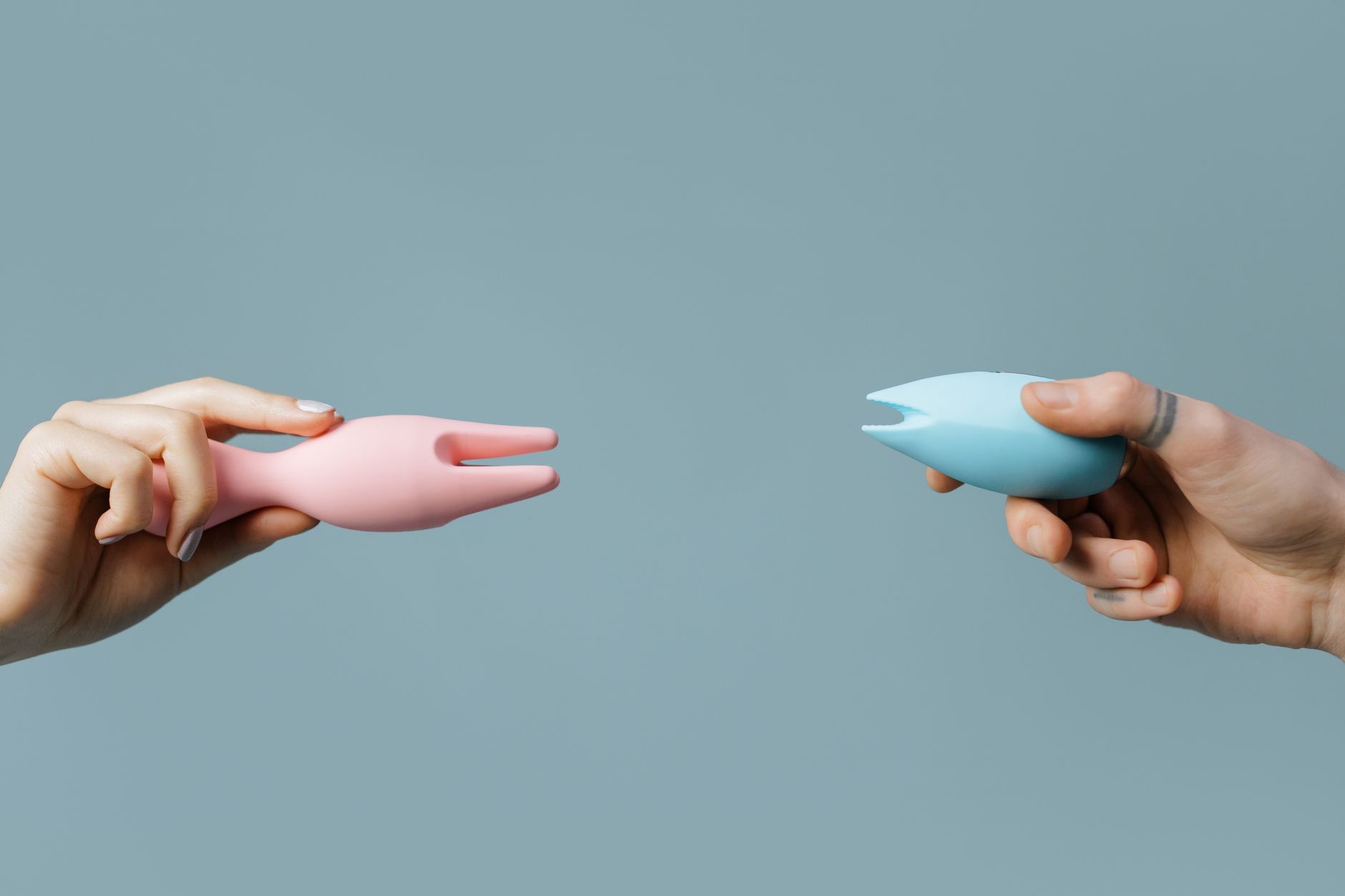
When big transitions kill the mood
Relationships survive a lot. Job loss, moving across the country, a health scare, a miscarriage, a major argument that took months to untangle. But here's what no one tells you: the bigger the life transition, the more fragile physical intimacy becomes. Not because the love is gone. Because the nervous system is overwhelmed.
After a major transition, your body literally rewires. Cortisol is high. Touch feels unfamiliar, even with someone you've been with for years. Sex starts to feel like a performance or an obligation instead of a way to reconnect. So couples avoid it. Weeks pass. Then months. Then the distance becomes the normal.
This is where a tool like a lemon clitoral vibrator enters the picture. Not as a replacement for the work of rebuilding. But as a specific bridge that helps both of you return to pleasure together when the old patterns don't quite work anymore.
Why touch gets complicated after big transitions
When a couple faces something major, the nervous system goes into protection mode. You might feel irritable with your partner even though they didn't cause the stress. You might find yourself physically tense during sex. Arousal takes longer. The body stops trusting that it's safe to let go.
At the same time, you both need physical connection more than ever. Touch is one of the fastest ways to downregulate the nervous system and rebuild trust. But standard sex often doesn't work right now because it requires a baseline of relaxation and presence that you're both missing.
This is where lemon vibrators specifically help. They're lower-pressure than partnered sex. They create a clear boundary between "this is something we're exploring together" and "this is something I need from myself." They're predictable, which your nervous system craves right now. And they put the focus on sensation rather than performance.
The four things that make lemon vibrators work for rebuilding
1. They're not threaded with old patterns.
Partner sex often carries the weight of everything you've been avoiding. Taking that off the table temporarily allows you both to approach intimacy without the baggage. A lemon clitoral vibrator sits in that space between solo and partnered. You can use it while your partner is present, watching, or touching you in other ways. The newness breaks the stuck pattern.
2. They introduce novelty without pressure.
After a major transition, your brain is exhausted from managing the fallout. Novelty actually helps. It pulls you both out of the stress loop and into a moment where something different is happening. Lemon vibrators feel distinct from what you've done before. That shift alone can wake up desire that's been dormant.
3. They give consent a clear shape.
When communication has been tangled by conflict or crisis, consent becomes murky. "Do you want to have sex?" feels loaded. "Want to try something different together?" with a specific tool on the table is clearer. You're both choosing something concrete, not navigating vague expectations.
4. They work with a nervous system that's been through trauma.
After a major relationship transition or crisis, your body may not respond the way it used to. Arousal takes longer. Sensation feels muted. Lemon clitoral vibrators provide consistent, focused stimulation that can help bridge that gap. They're also quieter and less intimidating than some toys, which matters when you're already feeling vulnerable.
How to actually introduce this with your partner
Timing matters. This conversation works better when you're not in bed, not in conflict, and not in crisis mode. Pick a calm moment and be direct.
"I've been thinking about how we've both been checked out physically, and I don't want that to stay the norm. I found this thing called a lemon vibrator. It's smaller, quieter than other toys, and I think it could be a way for us to reconnect without the pressure of regular sex. Would you want to try it together?"
Notice what's missing: apology, explanation of the problem, or implying either of you did something wrong. You're naming a fact and offering a solution.
If your partner hesitates, listen. They might need to know it won't hurt, that you're not replacing them, or that they don't have to participate directly. Answer those. But also be clear: you're introducing this because you want intimacy to come back.
When you do try it, start simple. You exploring yourself while they're present, maybe touching you elsewhere, is often easier than both of you trying something new simultaneously. Their job is to be there and pay attention. Your job is to slow down and let yourself feel something other than stress.
The role of pleasure in rebuilding trust
Here's what I see repeatedly in my practice: couples that have been through a crisis don't rebuild trust through talking alone. They rebuild it through small, consistent experiences of safety and presence. Physical pleasure is one of the deepest forms of that.
When you have an orgasm with your partner present, something shifts neurologically. Oxytocin rises. The amygdala (your threat detector) calms down. You literally remember what it feels like to trust your body and your partner at the same time.
This is why lemon vibrators matter for couples in transition. They're a specific, manageable way to create those moments of connection and pleasure when everything else feels fragile. They're also a conversation starter. "Does this feel good?" and "What do you want more of?" are the kinds of questions that help rebuild communication.
When lemon vibrators aren't enough
If you've introduced something new and the distance hasn't shifted, couples therapy is the next step. Sometimes the physical stuff is a symptom of deeper conflict that needs professional help to untangle. A good therapist can help you both understand what the real block is and whether it's something you both want to work through.
But in my experience, most couples don't need that first. They need permission to rebuild pleasure slowly, with lower stakes, and without performing for each other. A lemon clitoral vibrator provides exactly that.
FAQ
How soon after a major relationship crisis should we try reintroducing sexual touch?
This depends on the crisis. After an argument that's been resolved, within weeks. After infidelity, usually a few months of active repair first. After a miscarriage or health scare, let the acute phase pass (2-3 months), then gently reintroduce. The rule is: when you both want it, not when you think you should. A lemon vibrator works well because it's lower pressure than regular sex, so you can start earlier than you might otherwise.
Can using a toy make my partner feel replaced?
It can, if you introduce it wrong or if there's already deep insecurity. The antidote is simple communication. Use it together, at least initially. Talk about why you're doing this. Make it clear: this is about us reconnecting, not about me preferring this to you. If your partner has deep fears about being replaced, that's worth exploring together, possibly with a therapist.
What if we're not comfortable talking about sex toys openly?
That's actually the thing you need to fix first. When couples can't name what they want, pleasure stays off the table. You don't have to be crude or graphic. "I want to try something that might help us feel closer" is enough. If talking about it creates shame or judgment, that's a bigger relationship issue than the toy itself.
Is a lemon vibrator safe to use with a partner present?
Completely. It's a standard silicone toy. Wash it before and after. Use water-based lubricant. If you're worried about comfort or fit, there are smaller lemon vibrators designed for exactly that. How to Use a Lemon Vibrator When First Exploring Clitoral Suction covers all the practical details.
What if one of us has less desire after the transition?
That's normal. Desire drops after crisis. The goal isn't to force equal interest. It's to create a space where both of you can explore at your own pace. Let the person with more desire take the lead in the moment. Let the person with less desire know they can pause anytime. Lemon vibrators are good for this because they're less committal than partnered sex. You can try for five minutes and stop if it's not working.
How do I know if we're ready to move past this and back to regular sex?
When orgasms start feeling good again. When touch isn't followed by tension. When you laugh during sex instead of treating it like a task. When you initiate without checking in first. These things happen gradually. There's no timeline. Some couples take three months. Others take a year. The tool is there to help you rebuild the foundation, not to rush the process.
The real work is showing up
A lemon vibrator won't fix a broken relationship. It won't resolve infidelity, forgive a betrayal, or erase a major trauma. But it does create space for pleasure to exist alongside the repair. And that matters more than most couples realize. When you can experience your body as a source of joy with your partner present, it becomes harder to stay disconnected. Touch becomes a bridge again instead of a minefield.
The real work is still showing up, being honest about what you want, and choosing each other every day. But a lemon clitoral vibrator can help make that showing up feel less like a chore and more like a return to something that was always yours to reclaim. If exploring physical connection after grief feels relevant to your situation, that resource goes deeper into the emotional side of rebuilding desire.
References and sources
Gottman, J. M., & Silver, N. (2015). The Seven Principles for Making Marriage Work. Harmony.
Perel, E. (2018). Mating in Captivity: Unlocking Erotic Intelligence. HarperCollins.
van der Kolk, B. (2014). The Body Keeps the Score. Viking.
Nagelkerke, L., van Lankeren, W., & Meston, C. M. (2020). The relationship between pelvic floor function and sexual dysfunction. Sexual Medicine Reviews, 8(4), 606-615.