You're there, but not really there
You're in bed. Everything should feel good. But somewhere between arousal starting and things getting more intense, you drift. Your body keeps going, but your mind is somewhere else. You're watching yourself from above, or thinking about the grocery list, or floating in a kind of numb space where sensation doesn't quite register. Then you come back to yourself a few minutes later feeling confused, frustrated, and definitely not orgasmic.
This is dissociation during sex. It's not rare. It's not a sign something is broken. But it's a signal your nervous system is doing something protective, and that signal matters.
Why your brain checks out during pleasure
Dissociation is a disconnect between your mind and body. It happens when your nervous system perceives threat, overwhelm, or loss of control. During sex, the triggers vary wildly.
For some people, it's past trauma activating. Your body recognizes a physical similarity (vulnerability, particular positions, being watched) and your nervous system hits the eject button. You don't need to consciously remember what happened. Your vagus nerve just registers danger and pulls you into observer mode.
For others, it's performance anxiety. If you've been conditioned to prioritize your partner's pleasure, or if you've internalized the idea that you should want something you don't, dissociation becomes a quiet way out. Your mind leaves so you don't have to feel the conflict.
Stress and burnout do this too. When you're running on fumes from work, caregiving, or emotional labour, your nervous system deprioritizes pleasure as a survival signal. Sex becomes something happening to you rather than something you're actively choosing and feeling.
And sometimes it's simpler: you're in your head about your body, your performance, whether you're taking too long, whether your partner is bored. That self-consciousness is enough to fracture the connection between sensation and awareness.

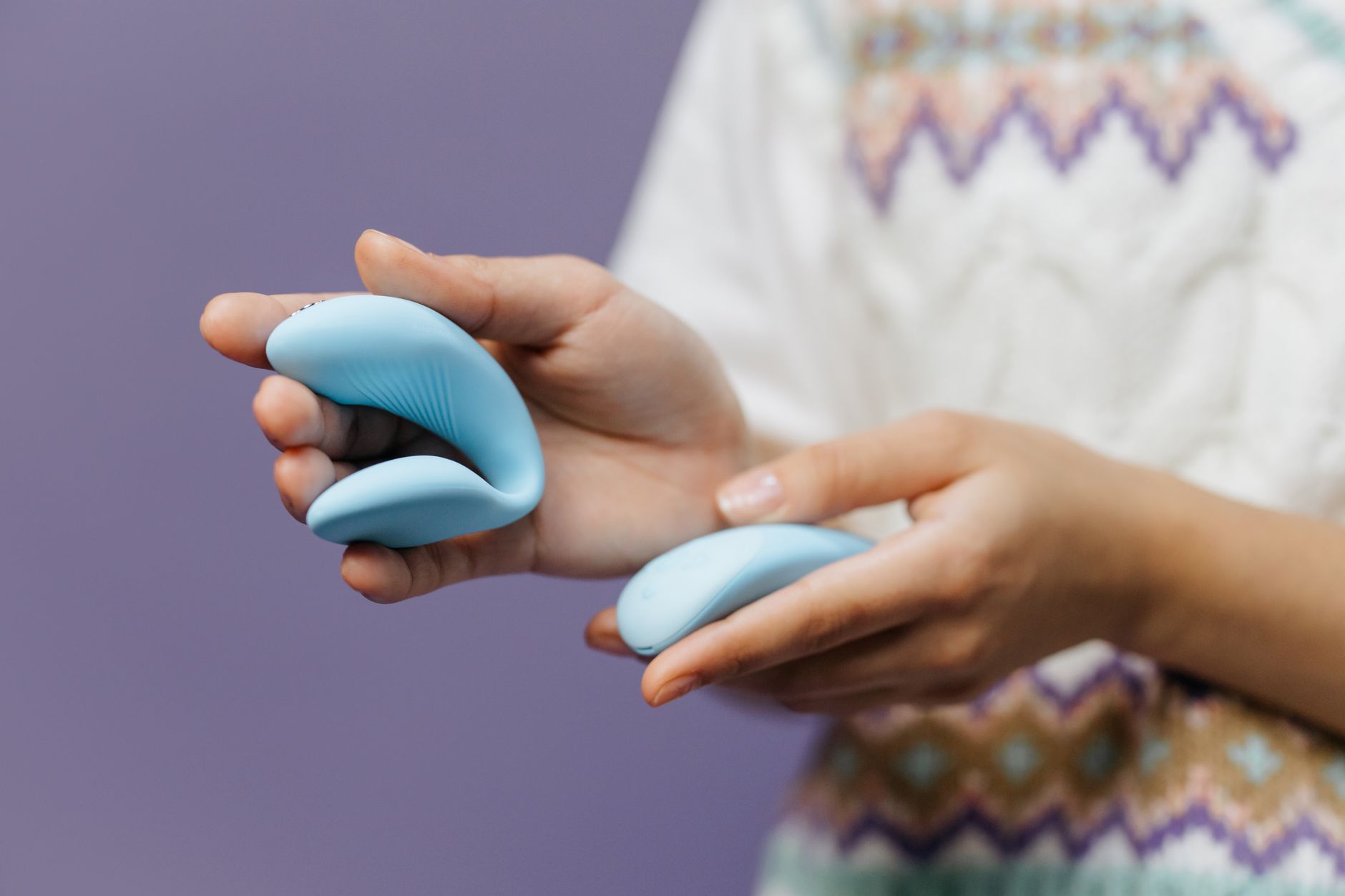
Photo by Hanna Brovko on Pexels
How a lemon clitoral vibrator helps rewire the pattern
Here's the thing about dissociation: you can't think your way out of it. Your nervous system is the problem, and your nervous system doesn't respond to logic.
What it does respond to is clear, strong sensation that you're actively choosing and controlling. This is where a lemon vibrator changes the equation.
The suction mechanism of a lemon clitoral vibrator creates intense, focused stimulation that's hard to ignore or drift away from. Unlike a traditional vibrator, which you might adapt to or zone out of, suction keeps demanding your attention. It's not overwhelming, but it's persistent and distinct.
When you use a lemon vibrator intentionally for reconnection, you're doing two things neurologically. First, you're creating a clear sensation that anchors your awareness to your body. Your nervous system has to register where that sensation is happening. Second, you're proving to yourself that you're in control. You choose the pattern, you choose the intensity, you can stop whenever you want. That's the opposite of dissociation.
In my clinical work, I often recommend lemon vibrators to clients rebuilding trust with their own pleasure after dissociation patterns because the sensory clarity is so specific. Your brain can't float away from suction the same way it can from diffuse vibration.
Start with permission, not pressure
Before you turn anything on, settle a foundational thing: this is not about orgasm. Dissociation usually gets worse when you add performance pressure. You're here to practice being present, not to produce results.
Set a time limit. Twenty minutes, solo, in a space where you feel genuinely safe and won't be interrupted. This is non-negotiable. Your nervous system can't relax into presence if there's ambient threat in the room.
Put your phone in another room. Close the door. Use your usual contraception if this is partnered. Whatever helps you settle.
Start clothed. Literally. Spend the first few minutes in your normal clothes, breathing, noticing what you notice. Are your shoulders tense? Is your jaw clenched? This is your baseline. This matters because you're teaching your nervous system that pleasure doesn't require perfection or performance. It just requires you showing up.
The actual technique for staying grounded
Once you're undressed and ready, start with the lemon vibrator on the lowest intensity setting. The suction pattern matters less than the sensation. You're not hunting for the perfect pattern. You're hunting for presence.
Place it gently against your clitoris. Notice three things: the temperature, the texture, and the specific sensation of suction versus vibration. This isn't romantic. It's clinical and grounded on purpose.
If your mind starts to drift, which it probably will, that's normal. You're rewiring a pattern that may have existed for years. When you catch yourself floating, mentally narrate what you're actually feeling. "Cool sensation." "Rhythmic pulse." "Pressure on the left side." Use language to anchor awareness back to your body.
Incremental intensity increases help. After a few minutes at level one, try level two. But increase only if you're staying present. If you notice yourself dissociating more when you turn it up, go back down. There's no prize for reaching the highest setting while checked out.
Many people find that slow sessions, repeated over days or weeks, gradually retrain the nervous system. You're literally teaching your brain that pleasure equals presence, not absence.
When dissociation shows up with a partner
If this is happening during partnered sex, you need a separate conversation before you use a lemon vibrator together. Not during sex. Before.
You might say something like: "When we have sex, sometimes I notice I go kind of numb or disconnected. It's not about you or about wanting you. It's something my nervous system does when it's overwhelmed or anxious. I'm working on rewiring it, and I'd like to use a vibrator to help me stay present. Would you be open to that?"
That honesty usually opens the door to them asking questions or offering support. Some partners want to help. Some feel hurt initially and need reassurance. Both are real reactions worth addressing.n
If you're using a lemon vibrator as a couples tool, start solo first. Get comfortable with presence when you're alone. Then, when you bring it into partnered sex, the pressure is lower because you've already established you can do this.
One last note: if your dissociation is trauma-linked, you might benefit from working with a trauma-informed therapist alongside this. A vibrator is a powerful tool for reconnection, but it's not a substitute for processing what your nervous system is protecting you from. Many therapists now specialize in somatic experiencing or EMDR, which directly address trauma held in the body. That combined approach often works faster than either alone.
When to check in on what's actually happening
Dissociation can look different for everyone. Some people feel like they're floating or observing themselves from outside. Others describe it as numbness or emotional flatness. Some people space out completely and lose time.
If you're trying the lemon vibrator approach for a few weeks and nothing shifts, that's useful information. It might mean the dissociation is more trauma-linked than stress-linked, and therapy should come first. It might mean you need to address what's happening in your relationship or your broader life before pleasure can reintegrate.
You might also find that the pattern only shows up in specific contexts. Maybe dissociation happens with your partner but not solo. Maybe it's worse during certain times of your cycle. Maybe it intensifies when you're stressed at work. Those are patterns, and patterns are addressable once you see them.
The point is: a lemon vibrator can absolutely help reconnect you to your body and rebuild trust with pleasure. But it works best when you're honest about what you're actually experiencing and willing to address the root cause alongside the symptom.
FAQ: Dissociation and Reconnection
Is dissociation during sex actually common, or am I the only one experiencing this?
You're not alone. Studies on dissociation during sex suggest 10-15% of people experience it regularly, and many more experience it occasionally under stress. It's especially common in people with anxiety disorders, past trauma, or high stress loads. The fact that you're noticing it puts you ahead of most people who just assume something is wrong with them and never address it.
Can using a lemon vibrator alone actually rewire my nervous system, or do I need therapy?
A lemon clitoral vibrator is a powerful sensory tool for anchoring yourself to your body, but it's one part of a larger puzzle. If your dissociation is rooted in trauma, therapy is genuinely important. If it's mostly tied to performance anxiety or life stress, a focused practice with a vibrator plus some nervous system regulation (breathing, body scanning, movement) can be very effective. Think of the vibrator as part of your toolkit, not the whole toolkit.
Why does suction work better than regular vibration for staying present?
Suction creates a fundamentally different sensation than vibration. It's more localized, more intense, and harder to ignore or habituate to. Your nervous system has to actively register suction. Regular vibration, especially at higher frequencies, can become background noise that your brain tunes out. When you're trying to anchor yourself to your body, you want a sensation that demands attention.
What if dissociation happens even with the vibrator on the highest setting?
That's actually important data. It suggests the dissociation is deeply protective for your nervous system, possibly trauma-related. A vibrator can help, but you'd benefit from working with a trauma specialist who understands somatic approaches. They can help you figure out what your nervous system is protecting you from and address it safely.
Can my partner use the lemon vibrator on me if I struggle with dissociation?
Yes, but timing matters. Start by using it solo until you're comfortable staying present on your own. Then introduce it with your partner in a low-pressure context. Some people find that focusing on the vibrator's sensation rather than their partner's presence helps them stay grounded. Others need the reverse. You'll figure out what works as you practice.
Is there anything else I can do alongside the vibrator to stay present?
Absolutely. Breathing exercises help a lot. Deep breathing activates your parasympathetic nervous system, which is basically the opposite of dissociation mode. Before and during your practice, try breathing in for four counts, holding for four, and exhaling for six. Also try keeping your eyes open and looking at something you've placed intentionally in your line of sight. Some people use a specific object or even a mirror. This keeps your visual cortex engaged, which helps prevent the floating sensation.
It's about trust, not just sensation
Reconnecting with your body after dissociation is about rebuilding trust with yourself. A lemon vibrator is a tool for that, but the real work is showing up consistently and proving to your nervous system that pleasure is safe, that you're in control, and that presence is possible.
Take your time. There's no deadline. The fact that you're paying attention to your own experience and trying to shift the pattern is already the hard part. Everything else is just practice. If you're struggling to make progress or feeling stuck, reaching out to a relationship coach or therapist trained in somatic work can make a real difference.