Let's talk about the anxiety-arousal trap
You want to feel turned on. Your body doesn't get the memo. Instead, you feel a familiar tightness in your chest, your mind racing through a to-do list, or a vague sense of dread that won't quit. This is what happens when anxiety sabotages arousal before it even starts.
It's not a character flaw. It's neurology. When your nervous system is stuck in threat mode, the parasympathetic pathways that generate pleasure literally can't activate. Desire requires safety. Anxiety broadcasts danger. You can't have both running at the same time.
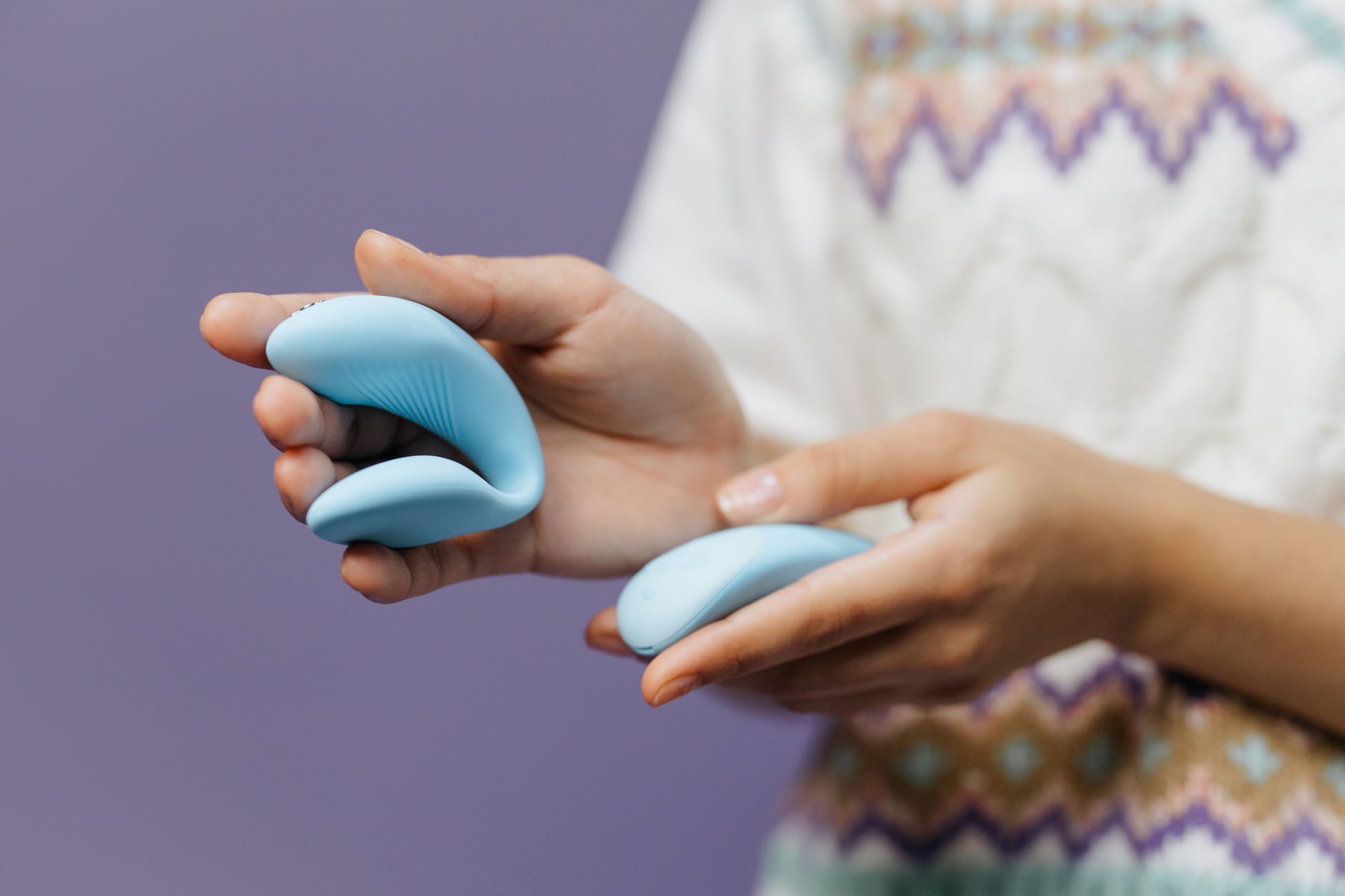
Here's what I see in my practice constantly: people try harder to force arousal, get more frustrated when it doesn't work, and spiral deeper into anxiety about the anxiety. A lemon clitoral vibrator like the Lem breaks that loop differently than willpower or conversation alone can.
Why anxiety kills arousal (the nervous system part)
When you're anxious, your sympathetic nervous system (the "fight or flight" branch) is in charge. It's trying to protect you. It makes your muscles tense, your breathing shallow, and your blood vessels constrict. Arousal lives in the opposite state: parasympathetic activation ("rest and digest"), where blood flows to your genitals, muscles soften, and breathing deepens.
You can't think your way out of this mismatch. Your vagus nerve doesn't respond to logic. It responds to sensation.
This is where the Lem's suction mechanism becomes genuinely useful. Unlike traditional vibrators, which rely on vibration alone, suction stimulation activates sensory receptors in a way that can help signal safety to your nervous system. The rhythmic, focused sensation gives your brain something concrete to attend to, interrupting the anxiety loop.
It's not magic. It's redirection. Your nervous system gets proof that this moment is safe because you're experiencing pleasure, not pain.
The warmup ritual that actually works
If anxiety is your blocker, a standard five-minute warmup won't cut it. You need 15-25 minutes of pure nervous system downregulation before you even think about orgasm. This is non-negotiable.
Here's the sequence I recommend to clients:
Minutes 1-5: Breathing and touch. No vibrator yet. Lie down in a quiet space, hand on your lower belly, and do box breathing: four counts in, hold four, out four, hold four. This activates your vagus nerve and signals "safe" to your amygdala. Touch your inner thighs, your breasts, your neck. Slow. Notice sensation without the goal of arousal.
Minutes 5-10: Introduce the Lem on the lowest setting. Start with it off, just feeling the texture. Then turn it on to pattern 1 or 2 and hold it against your thigh or mons pubis, not directly on your clitoris yet. The suction sensation at lower intensity feels almost soothing, not overwhelming. Your nervous system is learning that this tool brings pleasure, not pressure.
Minutes 10-20: Explore slowly. Move the Lem in small circles. Pause. Breathe. If anxiety spikes, turn it off and go back to hand touch. This isn't failure. This is your body learning that it's in control. The goal here isn't orgasm. It's nervous system recalibration.
Minutes 20+: Whatever happens, happens. Some days you'll reach orgasm. Some days you'll just feel more relaxed and connected to your body. Both are wins. Anxiety-blocked arousal often takes multiple sessions to shift. Your nervous system needs consistent proof that pleasure is safe.
The partner conversation that helps (not hurts)
If you're with a partner and anxiety is interfering, you need to separate two conversations that usually get tangled.
Conversation 1: "My body is experiencing anxiety that blocks arousal. This is not about you or our attraction. It's a nervous system issue I'm working through."
Conversation 2: "Here's what helps me feel safe enough for arousal: slower touch, less pressure, more time."
These are different. The first is about the problem. The second is about the solution. Your partner needs the first to stop blaming themselves. They need the second to know what to actually do.
If a partner resists you using a clitoral vibrator or lemon sucker because they feel threatened, that's worth addressing separately. A good partner understands that your tool isn't a replacement. It's a reset button for your nervous system. Sometimes you need the Lem solo to get back online. Then partnered sex can happen. Then you might not need it for a bit. All of this is normal.
When the Lem becomes your reset button
Over time, something shifts. The Lem stops being a sex toy and starts being a nervous system regulation tool. You reach for it when you're stressed, not just when you want an orgasm. You use it for five minutes before a difficult conversation with your partner. You use it when work anxiety is eating your bandwidth.
This isn't because you're "addicted" to vibration. It's because your nervous system recognizes safety when it feels pleasure. The suction sensation becomes conditioned to "relax, you're okay." Your body learns the pattern.
I've had clients tell me the Lem did more for their anxiety than their therapist did. I don't think that's actually true, but I understand why they'd say it. Therapy works in the mind. Pleasure works in the body. You need both, but the body sometimes gets there faster.
When to bring in additional help
If anxiety is consistently blocking arousal across weeks or months, and you've tried the warmup ritual and partner communication, talk to your doctor or a therapist who specializes in anxiety and sexuality. Sometimes anxiety about arousal is a symptom of something larger: generalized anxiety disorder, PTSD, depression, or relationship trauma.
A lemon clitoral vibrator is a powerful tool for nervous system reset. It's not a substitute for treatment. Think of it as part of a toolkit, not the whole toolkit.
Anxiety-blocked arousal often also responds well to: regular exercise (which burns off excess cortisol), consistent sleep, meditation or somatic therapy, and sometimes medication. The Lem works best alongside these, not instead of them.
The patience part (which is the hardest part)
Your nervous system didn't get stuck in anxiety overnight. It won't unstick in one session with the Lem either. Expect to use it regularly for 2-4 weeks before you notice a real shift in baseline arousal. Some days will feel like you're starting over. Some days your body will surprise you with responsiveness.
This is not failure. This is healing. And honestly? The clients I see who reclaim arousal after anxiety usually end up with a richer connection to their pleasure than they had before. They learned their body's language. They know what helps. They don't take sensation for granted.
The Lem is just a lemon-shaped tool that helps your nervous system remember what it already knows: that pleasure is safe, that your body deserves attention, and that arousal is possible even after anxiety has tried its best to convince you otherwise.
FAQ: Anxiety and arousal with a lemon vibrator
Can using a clitoral vibrator actually reduce anxiety, or is that just psychological?
It's both. When you experience pleasure through a lemon clitoral vibrator, your brain releases dopamine and oxytocin, which directly counteract cortisol (your stress hormone). That's biological. The psychological part is that your nervous system learns to associate the sensation with safety, so over time, just holding the Lem can signal relaxation. It's not either-or.
What if the Lem feels overstimulating when I'm already anxious?
Start lower than you think you need to. Many people with anxiety-blocked arousal do better starting on pattern 1 and staying there for the entire session. You can also hold the Lem further from your clitoris (against your mons or inner thigh) to diffuse the sensation. If suction itself feels too intense, try a different toy. Not everyone's nervous system responds the same way to stimulation.
How long does it take before the anxiety-arousal block lifts?
This varies wildly. Some people see a shift in 2-3 weeks of consistent use. Others take 8-12 weeks. A lot depends on the root of the anxiety: is it situational (stress at work, relationship tension) or chronic (anxiety disorder)? Situational anxiety usually responds faster. Chronic anxiety needs longer, and often benefits from therapy alongside physical tools.
Can I use the Lem if I'm on anxiety medication?
Yes. SSRIs and other anxiety medications can reduce sexual sensation or orgasmic response for some people, but the Lem's suction mechanism often compensates because it provides more intense, focused stimulation than traditional vibrators. Talk to your doctor if you're concerned, but the tool itself is compatible with medication.
Should I tell my partner I'm using a lemon vibrator to manage anxiety?
If you're in a relationship and using it during partnered sex or intimate time, yes. If you're using it solo as a personal tool for stress management, that's entirely your call. But I've noticed that partners often feel less threatened when they understand the tool is helping with a mental health issue, not replacing them. Framing matters.
What if I use the Lem and still don't feel aroused?
Then you've learned something valuable: your blocker might be deeper than just nervous system regulation. It might be relationship stuff, body image, trauma, or a medical issue. The Lem is honest that way. It works for nervous system anxiety. If anxiety isn't your main issue, a different approach (therapy, medical evaluation, relationship work) might be what you actually need.
Sources
Polyvagal Theory and the physiological basis of emotion regulation: Porges, S. W. (2011). The polyvagal theory: Neurophysiological foundations of emotions, attachment, communication, and self-regulation.
Sex and anxiety research: Bancroft, J., & Janssen, E. (2000). The dual control model of male sexual response: A theoretical approach to centrally mediated erectile dysfunction. Neuroscience & Biobehavioral Reviews, 24(3), 571-579.
Nervous system regulation and pleasure: Nagoski, E. (2015). Come as You Are: The Surprising New Science that Will Transform Your Sex Life. Simon & Schuster.
For more on reconnecting with pleasure after life stress, read about how to use a lemon vibrator when pleasure needs rebuilding after loss. If your anxiety specifically shows up during partnered sex, how to use a lemon vibrator when you can't reach orgasm with a partner present covers that in detail. And if anxiety is tangled with desire mismatch, our guide on arousal and desire feeling mismatched walks you through that differently.