
Let's talk about perimenopause and arousal
Perimenopause is the five-to-ten-year sprint before menopause actually arrives, and honestly, it's when things get weird. Your hormones don't decline smoothly. They spike, dip, spike again, then drop without warning. One week you're interested in sex; the next week the thought exhausts you. Your body feels like someone's constantly adjusting the dimmer switch, and you can't find the sweet spot.
Here's what nobody tells you: this isn't a failure of desire. It's a failure of consistency. Your body's capacity for pleasure is still there. The signals just got scrambled.
Why perimenopause scrambles arousal
Estrogen and progesterone don't just disappear during perimenopause. They fluctuate wildly. Some days you wake up with normal tissue thickness and standard clitoral sensitivity. Other days your vulva feels thin, raw, or completely numb. Testosterone wobbles too, and since testosterone is what actually drives desire across everyone's bodies, those fluctuations can turn interest on and off like a broken light switch.
The problem is that most pleasure advice assumes you're working with stable hormones. It says "warm up for 10 minutes" or "use this setting." But if your baseline sensitivity changes three times a week, generic advice breaks down fast.
A lemon sucker (the clitoral vibrator model) handles this unpredictability better than standard vibrators because of how the technology works. Instead of relying on direct friction against tissue that's already irritated or thinned, air-suction devices create gentle, indirect stimulation that works across a wider range of sensitivity levels.
The perimenopause arousal pattern
Most people report three distinct phases during the perimenopause transition.
Phase one: the hot and bothered stretch. This usually hits early perimenopause, when estrogen is still present but progesterone drops first. You feel more interested in sex, maybe more than before. Sensitivity is heightened. This phase can last weeks or months before flipping.
Phase two: the chaotic middle. Hormones spike and crash unpredictably. One morning you're interested and responsive. By evening you're touched out. By next week you're back. Nothing feels consistent. This is the phase when most people give up on pleasure entirely because it feels too unstable to plan for.
Phase three: the low-hormone stretch. As you move closer to actual menopause, hormones settle into a lower baseline. Sensitivity typically normalizes, but at a lower register. This is often when people report their strongest orgasms, once they stop expecting perimenopause patterns to continue.
How to use a lemon vibrator when arousal is unpredictable
The key is flexibility. Here's my actual approach with clients going through perimenopause.
Match your tool to the week, not the month. If sensitivity is high, start on the lowest suction setting (patterns 1-2 on a lem vibrator). If you're in a numb or low-sensitivity week, jump to 4-5 and work up. You're not being "weak" or "broken." You're adapting to your body's actual state that day.
Warm up longer than you think you need to. When arousal is chaotic, foreplay matters more, not less. Give yourself 20-30 minutes of non-genital touch. This isn't wasted time. You're actually building arousal in your nervous system, not just your genitals. By the time you introduce the lemon clitoral vibrator, your body has a chance to recognize the signal.
Use lubrication regardless. You might not need it every week, but having water-based lube within reach removes the friction (literal and mental) of realizing mid-session that tissue is dry. Lube is not a sign something's wrong. It's smart planning.
Expect that what worked last week might not work this week. This is the hardest part emotionally. You can't build a reliable routine during perimenopause. You have to build a flexible practice instead. That means checking in with your body before you start. "How's sensation today? What do I actually want right now?" Not what you wanted last time. What you want today.
The emotional piece (it's bigger than the physical)
Here's what I see in my practice: perimenopause arousal chaos often triggers a deeper layer of grief or disconnection. You've had your body for 40-plus years. You knew how it worked. Now it doesn't. That loss is real, and it shows up as frustration around sex.
If you're with a partner, the shift can feel like rejection when it's actually just biology. "My partner doesn't seem interested anymore," one client told me. What was actually happening: her arousal pattern had shifted to a different time of day, but she and her partner hadn't talked about it. They were still approaching sex the same way they had for 20 years.
A lemon vibrator doesn't fix that conversation. But it can make the conversation easier because it gives you something concrete to work with. Instead of "I'm not into sex anymore," you can say "My arousal looks different now. I need more time, or different stimulation, or a different time of day. Can we experiment?"
That's actionable. That's a doorway back in.
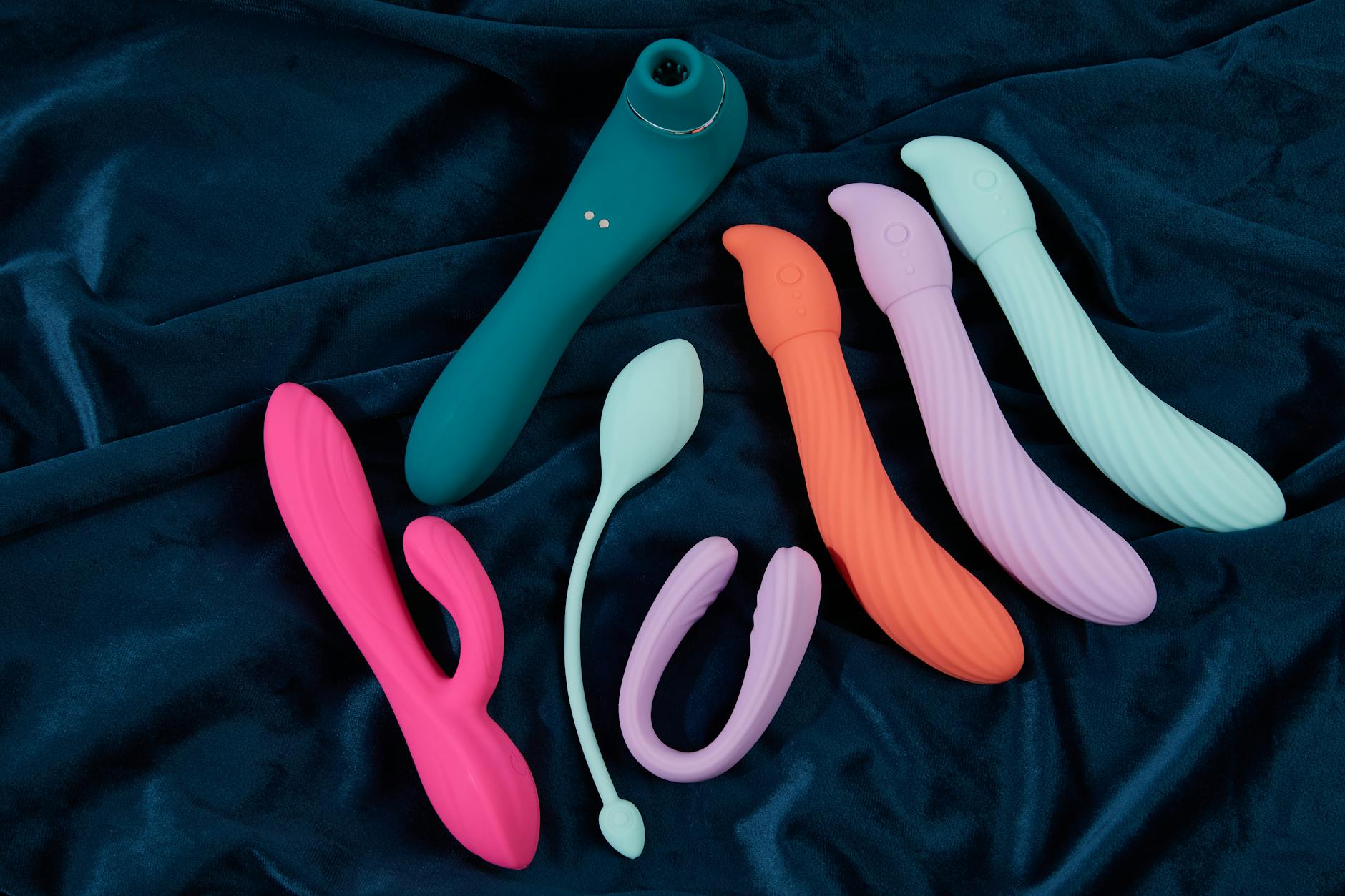
Photo by IFONNX Toys on Pexels
Tracking patterns (because prediction helps)
I know it sounds clinical, but tracking your arousal patterns during perimenopause actually removes anxiety. Not because you're being "medical," but because patterns emerge.
Your sensitivity might spike about a week before your period (if you still have them). Or five days after. Or it might correlate with sleep or stress instead of your cycle. Most people discover their own pattern in about two to three months if they pay attention.
Once you know the pattern, you can plan. "Friday is usually a high-sensitivity day. Let's aim for then." Or "I'm more interested in solo pleasure on Tuesdays." That's not limiting your life. That's working with your actual biology instead of pretending it's stable.
When you're using a lemon vibrator, this tracking becomes useful too. You'll notice which settings work in which weeks. Build a mental note. "Patterns 1-2 work this week. Maybe I'm in a sensitive phase." Next week: "Pattern 4 is where it's at." You're not failing. You're learning.
When to check in with a doctor
If arousal chaos comes with pain, flooding, mood swings that feel unbearable, or sleep loss, talk to a menopause-informed GP or gynaecologist. Perimenopause symptoms are treatable. Hormone therapy (if you want it) can smooth out the worst swings. Progesterone alone sometimes helps. SSRI antidepressants can stabilize mood that's genuinely derailing your life.
None of that is a failure. It's just medicine doing what it's supposed to do. And if you're on treatment, a lem vibrator still works. The principles stay the same.
The real truth about perimenopause and pleasure
Perimenopause is messy. Your arousal will feel unpredictable. Some days you'll feel like yourself. Some days you won't recognize your own body's signals. That's not a bug. That's the transition. And the transition ends. On the other side, when your hormones finally settle, most people report that pleasure actually gets clearer and more intense, not less.
A lemon clitoral vibrator can't fix the chaos. But it can meet you where you are each week. It adapts. It doesn't require you to show up a certain way. You set the intensity. You set the pace. And that flexibility is exactly what you need when your body is speaking a language that changes by the week.
People also ask
Can I use a lemon vibrator every day during perimenopause?
Yes, but pay attention to your body's response. If sensitivity is high, daily use might lead to overstimulation or soreness. If sensitivity is low, daily use is often fine. The variable is your tissue, not the vibrator. Start with 2-3 times per week and adjust based on how your body responds. If you notice pain or numbness the next day, give yourself a break. Learn more about recovery time between sessions.
Does arousal during perimenopause ever stabilize again?
Yes. Once you move through perimenopause into full menopause (usually 12 months without a period), hormone fluctuations stop. Arousal becomes more predictable, often at a different baseline than before, but stable. Most people say this is when sex actually gets better because there's consistency again.
Will a lemon sucker work if I have low libido during perimenopause?
Often yes, but not always. If your libido is low because of depression, stress, or relationship issues, a vibrator alone won't fix it. But if it's hormonal, a lemon clitoral vibrator can sometimes bridge the gap because it requires less mental arousal to respond to. The sensation can trigger physical response even if mental interest is low. Start on the lowest setting and be patient.
Should I use different settings depending on the week?
Definitely. This is actually one of the biggest advantages of a lem vibrator during perimenopause. You're not locked into one intensity. If you're in a high-sensitivity week, stay on patterns 1-3. In a low-sensitivity week, go up to 4-5. You're tailoring the tool to your actual body that day, not forcing your body to fit the tool.
Is perimenopause arousal chaos a sign I should try hormone therapy?
Not necessarily. Hormone therapy helps with hot flashes, mood swings, and sleep loss. It can smooth out arousal chaos too. But some people get through perimenopause without treatment and come out fine on the other side. Talk to a menopause-informed doctor about your actual symptoms and what matters most to you. The choice is personal.
Can my partner help me navigate this without it feeling awkward?
Yes, but only if you name what's happening. "My arousal is unpredictable right now due to perimenopause. Some weeks I'm interested quickly, other weeks I need more time. Can we talk about what that looks like for us?" That conversation removes the shame. Most partners would rather know than guess. Here's how to introduce these changes in partnered sex.
The bottom line
Perimenopause rewires arousal. The response isn't to fight it or ignore it. It's to adapt your tools and expectations to match what your body is actually doing. A lemon vibrator works because it's flexible. It doesn't demand consistency. It meets you where you are, week to week, setting to setting, pattern to pattern.
Your arousal isn't broken during perimenopause. It's just speaking a different language. Once you learn to listen, pleasure becomes possible again. Not the same as before. But sometimes better.
Ready to explore what works for your body right now? Get in touch.