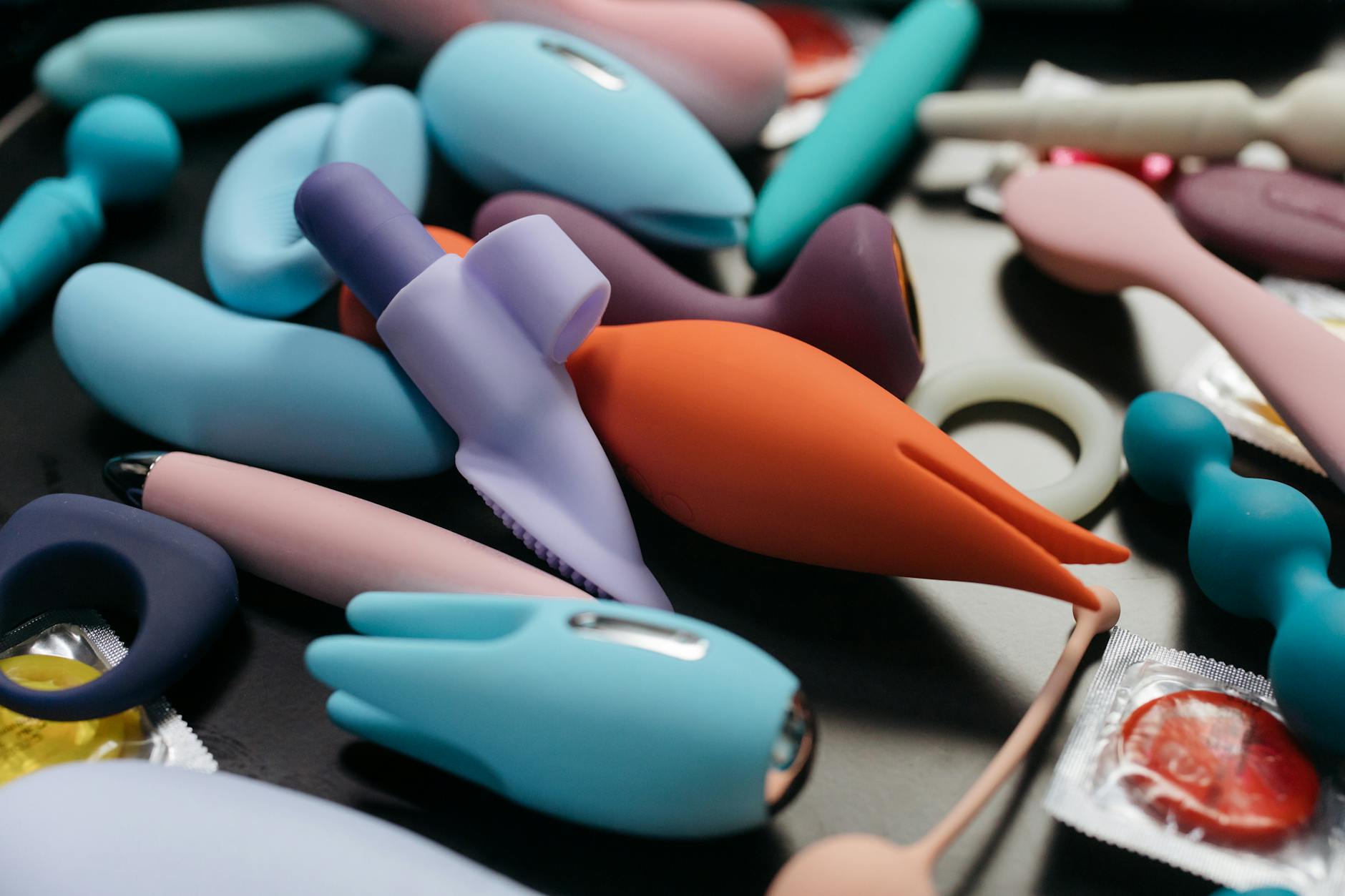
The weird gap between body and brain
Here's the thing most people don't talk about: arousal isn't always unified. Your body can respond to touch, to thought, to anticipation, and your mind can be completely elsewhere, running through your to-do list or rehashing a conversation from last week. When that split happens chronically, it creates a specific kind of sexual frustration. Not the "I'm not turned on" kind. The "my body is interested but I can't get my brain to show up" kind.
This disconnect happens more often than you'd think, especially after periods of stress, major life transitions, or relationship friction. And the longer it persists, the more confusing it becomes. You start questioning whether you actually want sex. You wonder if something is wrong with you. You might even start avoiding situations where sex could happen, because the internal disagreement feels exhausting.
It doesn't have to stay this way.
Why the split happens
Your nervous system has a hierarchy. When your body feels unsafe, threatened, or preoccupied, your brain (specifically the prefrontal cortex, the thinking part) steps into the background. This is actually adaptive. It's your system saying, "Hey, we've got bigger fish to fry right now." The problem is that sexual pleasure requires your brain to be somewhat present and engaged. You need the thinking, feeling, imaginative part of yourself at the table.
So the disconnect usually comes from one of three places:
Unresolved relational tension. If there's resentment, unspoken hurt, or low-level conflict with your partner, your body might be willing but your brain won't let down its guard. Trust is the currency of desire, and when it's depleted, arousal suffers.
Chronic external stress. Work deadlines, family obligations, financial worry. These aren't sexy things, and a part of you knows that sex requires a shift in mental gear. If you're burnt out, that shift feels impossible.
Internalized beliefs about sex itself. Sometimes the disconnect comes from conflicting messages about what sex should look like, who you're supposed to be during it, or whether pleasure is something you deserve.
How a lemon vibrator bridges the gap
A clitoral vibrator like the Lemon works particularly well for reconnection because it operates at a neurological level that bypasses some of the mental chatter. Here's the mechanic: sustained, rhythmic clitoral stimulation creates a focused attention loop. Your brain gets redirected from the spreadsheet or the argument to a single, localized sensation. This is neuroplasticity in real time.
It's not distraction in a dissociative sense. It's directed attention. There's a difference.
When you're using a lemon vibrator solo, you have the added benefit of zero performance pressure. No one is watching, no one is waiting for a response, no one is measuring your pleasure against their own needs. Your nervous system can actually relax. And from that relaxed state, your brain has permission to re-enter the picture.
Starting the reconnection with a solo practice
I recommend a four-week solo lemon vibrator practice before you bring a partner into the equation. Here's why: you need to rebuild the connection between your brain and your body in the safest possible context. Solo play, for all the cultural weirdness around it, is that context.
Week one is about novelty and exploration. Set aside 15-20 minutes when you know you won't be interrupted. No agenda. Use your Lemon vibrator on its lowest settings, explore the sensations without trying to achieve anything specific. Notice where it feels good. Notice what your mind does. If your brain wanders, that's fine. Don't chase the thought or judge it. Let it pass.
Week two introduces rhythm and attention. Pick a pattern you liked from week one. Spend 15-20 minutes exploring what happens when you stay with a single setting. Let your body build arousal at its own pace. Again, no orgasm chase. Just sensation and presence.
Week three invites intention. Before you begin, name what you need mentally. Maybe it's "I'm giving myself permission to enjoy this." Maybe it's "This time, my pleasure comes first." Use that phrase as a soft anchor for your attention. Return to it if your mind drifts.
Week four is integration. By now, your brain and body have had repeated, safe, consistent experiences together. Your nervous system has learned that pleasure is possible even when no one else is involved. That knowledge transfers.
When you're ready to involve a partner
The conversation matters more than the toy. Tell your partner what you've learned about yourself over these past few weeks. Not "I've been using a vibrator" framed as a confession, but "I've realized that my arousal needs some specific conditions right now, and I want to figure out how we can create those together."n That's vulnerable. It's also the only conversation that actually works.
When you do reintroduce partnered sex, the lemon vibrator can be a bridge tool. Some people find that starting with solo clitoral stimulation, then inviting their partner to participate in other ways, rebuilds the co-created quality of sex without requiring your brain to do impossible multitasking. You're focusing on what your body needs. Your partner is focusing on what they can do to support that. The pressure evaporates.
The role of specificity
This matters: don't try to fix the mind-body disconnect through willpower or narrative. "I should want this," "I'm supposed to be aroused," "My partner deserves this" are all brain games. They don't work. What works is specificity. Specific sensation, specific conditions, specific timing.
A lemon vibrator's design gives you that specificity. The direct clitoral stimulation, the sustained pattern options, the intensity control. You're not guessing or performing. You're responding to what actually works for your body right now.
What the brain needs to stay engaged
Physical sensation is only half the equation. Your brain also needs permission, privacy, and narrative freedom. Permission means nobody is timing you or measuring your response. Privacy means you won't be interrupted or judged. Narrative freedom means you get to imagine, think, or fantasize about whatever feels right, without explaining or defending it.
When you have those three things, your brain shows up. It remembers why sex is interesting. It reconnects to your body not as an obligation, but as part of yourself worth attending to.
Rebuilding over time
The mind-body disconnect didn't happen overnight, and it won't heal overnight either. What you're doing with solo lemon vibrator practice is rewiring neural pathways. That takes consistency and patience. Most people start noticing a shift within 4-6 weeks, but the deeper integration takes longer. That's normal.
The metric that matters is this: does your brain stay present a little longer each time? Do you find yourself thinking about pleasure more often, without shame? Are you making choices about sex instead of defaulting to avoidance? If the answer is yes, you're reconnecting.
The lemon vibrator is a tool, but you're the one doing the work. Your willingness to show up for yourself, week after week, is what changes things.
FAQ
What if I'm still not feeling aroused even with a lemon vibrator?
Sensation without connection won't fix a mind-body split. If you're using your Lemon vibrator but your brain is still checked out, you might be in a context where your nervous system doesn't feel safe enough to engage. That could mean revisiting the relational conversation with your partner, addressing external stressors, or working with a therapist on the beliefs underneath. The vibrator is responsive to what's already there, not a substitute for addressing what's blocking you.
Can I use a lemon vibrator if I'm on antidepressants that affect arousal?
Yes, absolutely. Antidepressants can flatten arousal signals from the brain, but they don't eliminate clitoral sensitivity or the body's ability to respond to direct stimulation. A clitoral vibrator like the Lemon can sometimes be a useful bridge because it provides more direct, consistent stimulation than manual touch. That said, this is also a conversation worth having with your prescriber. Sometimes adjusting timing or dosage helps. Sometimes a different medication does.
Is solo practice really necessary before partnered sex?
It depends on where you're starting. If the mind-body disconnect is primarily happening with your partner, then yes. You need to reprogram your nervous system in a lower-stakes context first. If it's situational and you feel relatively connected in other contexts, you might be able to start the partner conversation sooner. But solo practice removes the variables, which is why I recommend it.
How do I talk to my partner about using a lemon vibrator for this?
Frame it around connection, not around them. "I've realized that I need some specific conditions to feel present during sex, and I want to rebuild that together." Then get specific about what those conditions are. Privacy. Time. Pressure-free touch. Using the lemon vibrator as part of that process. Most partners respond well when they understand this is about deepening intimacy, not replacing them or compensating for them.
What if using a lemon vibrator feels like avoidance instead of reconnection?
Trust that instinct. If the vibrator becomes a way to bypass emotional conversation or further distance yourself from your partner, it's not serving reconnection. Reconnection requires vulnerability, and sometimes a vibrator can feel like a way to avoid that. If that's what's happening, pause the solo practice and get into a real conversation with your partner or a therapist about what you're avoiding.
Can the mind-body disconnect ever fully resolve?
Yes. Most people find that once they rebuild the connection through consistent, safe, shame-free practice, it stays. That doesn't mean it never gets tested. Stress, conflict, or major life changes can temporarily widen the gap again. But you've already learned that the connection is possible. Rebuilding after that becomes faster and easier.
The integration work is worth it
Your mind and body belong together. When desire feels fragmented, it's not because something is broken in you. It's because the conditions for integration aren't quite right yet. A lemon vibrator gives you a specific, accessible tool for creating those conditions and inviting your brain back to the table. The rest of the work is showing up, week after week, with patience for yourself.
Want to talk through what reconnection might look like for your specific situation? Reach out to us. We're here to listen.