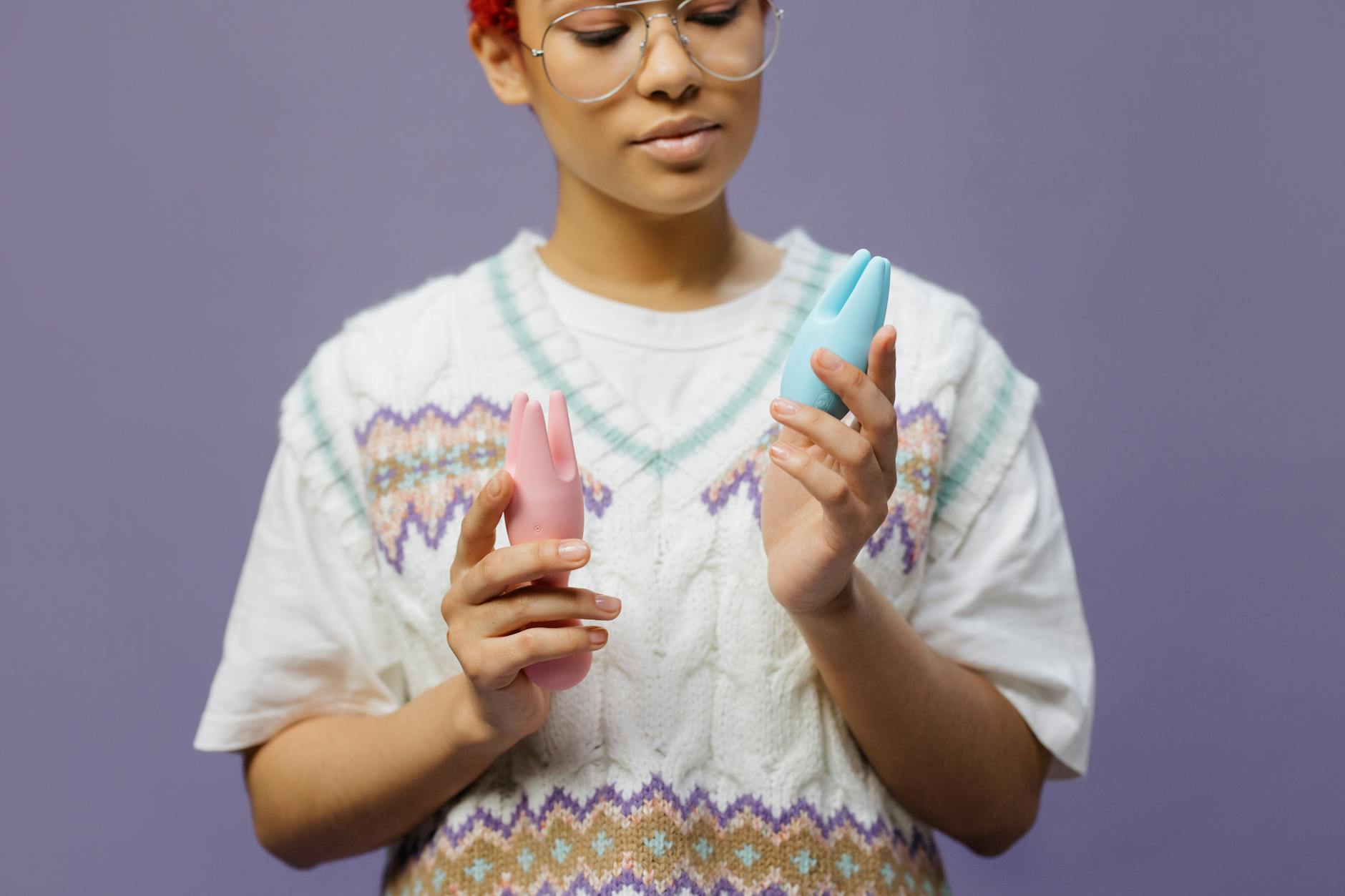
How to Use a Lemon Vibrator When Exploring Pleasure After Years of Suppression
Let's be real. If you're reading this, your body has probably spent years in a holding pattern. Maybe it was religious upbringing, family messaging, a long marriage where your pleasure wasn't centered, or relationship dynamics that taught you to prioritize everyone else's comfort over your own. That history doesn't just disappear because you decide to change it. It lives in your nervous system, in how you breathe, in what feels safe to want.
Reconnecting with pleasure after suppression is not a sprint. It's the opposite of what the internet usually sells you. There's no "unlock your pleasure in 7 days." There's rebuilding trust with your own body, one small sensation at a time.
This is where a lemon vibrator changes things. The lem's suction design works differently than traditional vibration. It doesn't demand anything from you. It whispers.
Why your body might need permission to feel
Years of suppression create a specific physiological pattern. Your nervous system learned that pleasure wasn't safe, or wasn't yours to have, or came with consequences. That's not a weakness. That's your body doing exactly what it was designed to do: protect you.
When you try to jump straight into intense sensation after that history, your nervous system often pulls you back. You feel numb, or anxious, or disconnected from what's happening. That's your protective system still running. Forcing through it doesn't work. Honoring it does.
The reason so many people who experienced pleasure suppression respond to a lemon clitoral vibrator is simple: suction stimulation bypasses some of that protective armor. It's not the aggressive intensity that vibrators traditionally deliver. It's gentler, more rhythmic, almost meditative. Your nervous system gets to say yes at its own pace.
The first session: creating safety
Start here. Seriously.
Set 20 minutes aside when you're completely alone and won't be interrupted. Not during a partner's shower. Not when you're listening for kids. This is protected time. Your nervous system needs to know it has permission and space.
Dim the lights or close your eyes. Temperature matters more than you'd think. If you're chilly, your nervous system stays on alert. Warm blankets, warm room, tea in your hands first. These aren't luxuries. They're permission signals to your body.
Take the lem without turning it on. Just hold it. Look at it. Notice if any feelings come up. Shame? Excitement? Grief? All of it is valid. Your body might have a lot to say after years of silence. Let it.
Now turn it on the lowest setting. Most people who've experienced pleasure suppression do better starting at setting 1 or 2, not blasting into 5 or 6. Let your body ask for more if it wants to.
Moving past numbness
If you feel mostly numb during early sessions, that's incredibly common and not a sign you're broken. Numbness is dissociation, and dissociation is a survival skill your body learned. You can't force your way through it. You have to bore through it gently.
Here's what actually helps: slowing down further, not speeding up. Move the lem more slowly. Breathe more deliberately. Sometimes putting your hand on your heart or another part of your body that feels safe helps your nervous system realize this is happening to you and it's consensual.
Notice the smallest sensations. Not orgasms yet. A slight warmth. A subtle shift in how the tissue feels. A tiny flutter of interest. Your job is to meet those micro-sensations with curiosity, not judgment.
Some people benefit from thinking about a partner they trust deeply, or a memory that felt safe and sensual, not explicitly sexual. Others do better completely alone in their own fantasy. Let yourself experiment. There's no rule.
If your brain is checking in constantly, checking if you're doing it right, that's your protective system again. Gently redirect: "I'm safe. This is for me. I get to explore." Repeat as needed.
When anxiety shows up mid-session
It will. Years of suppression often come packaged with anxiety, and that anxiety might spike right when you're finally being vulnerable. Your body might freeze. Your breath might get shallow. You might suddenly feel hyperaware of how you look or sound.
Stop. Turn the lem off. Put it down. Take five full, slow breaths. Sometimes the bravest thing you can do is pause.
Anxiety doesn't mean you're doing it wrong. It means something old is surfacing. That's actually progress, even though it doesn't feel like it. Your body is starting to believe this might be safe.
When you're ready, turn it back on, but lower. Sometimes you need to prove to yourself three or four times in one session that you can stop and start again on your terms. That builds trust.
Building a rhythm across weeks
One session doesn't rewire years of suppression. But consistent, gentle exploration does. I recommend working with a lemon clitoral vibrator 2-3 times per week if you're reconnecting after suppression. Not because of some arbitrary rule. Because your nervous system needs repetition to update its threat assessment.
Over the first few weeks, you might notice:
Week 1-2: Sessions feel like experimenting. Lots of stopping and starting. Some tingling, some numbness, mostly curiosity.
Week 3-4: Your body starts recognizing the pattern. Arousal might come a bit faster. You might feel less anxious about what you're supposed to feel.
Week 5-6: Sensation deepens. You might reach orgasm, or you might still not. Either way, something feels different. More connected. Less scary.
The lemon vibrator's suction design is particularly helpful here because it creates a sensation that's distinct from everyday touch. Your nervous system registers it as "this is intentional, this is different, this is mine." That clarity helps.
When to involve a partner (if you want to)
If you're partnered and your suppression happened in the context of that relationship, rebuild solo first. At least 4-6 weeks of solo exploration before bringing your partner into it. You need to know what your body wants independent of their presence.
When you're ready, show them the lemon vibrator. Not as a performance. As an invitation to witness something you're reclaiming. Tell them what you need: maybe they just sit quietly nearby. Maybe they leave the room and you use it together across distance through sharing what you're feeling.
If your partner responds with pressure to perform or shame, that's information. That's a relationship issue separate from your pleasure recovery. You might need to work with a couples therapist on rebuilding trust before pleasure reconnection makes sense.
If your partner is genuinely supportive, they might ask what they can do. The honest answer is usually: "Let me explore. Don't touch me yet. Don't comment on my body. Just let me have this."
The plateau that isn't actually a plateau
After a few weeks of progress, many people hit a point where sessions feel a bit flat. Nothing new happens. Orgasm doesn't feel different. You might think you're doing it wrong or that this isn't working.
You're probably not. You're just adjusting to new normal. That's actually a sign your nervous system is starting to feel safer. The panic is gone. Now you're entering the territory of genuine, sustainable pleasure. It's quieter than the early excitement, but deeper.
Sometimes a small change helps here: exploring different times of day, different settings, adding a partner's presence, or trying a different lemon sexual toy alongside the lem. But often the move is just patience. Your body is doing exactly what it needs to do.
Pleasure isn't performance
Here's what I tell most people who've experienced pleasure suppression: your body spent years protecting you. Now it's learning it can want things. That's revolutionary. It doesn't matter if you orgasm. It doesn't matter if the experience looks like what you expected. What matters is that you're in dialogue with your body again, and that dialogue is saying: "You deserve this. Your pleasure matters. You get to have sensation that's only for you."
The lemon vibrator is just a tool. The real work is showing up, consistently, with gentleness toward yourself. That's the reclamation.
People also ask
How long does it take to reconnect with pleasure after years of suppression?
Every body is different, but most people start noticing shifts within 3-4 weeks of consistent, gentle exploration. Full nervous system rewiring takes longer. I'd expect 2-3 months before pleasure feels natural rather than intentional. This isn't a slow timeline. This is a realistic one.
Will a lemon vibrator feel too intense if I'm just starting to explore?
The lem is actually less intense than most traditional vibrators because suction feels gentler and more rounded than vibration. Start at setting 1. You control the intensity. If it ever feels too much, you turn it off. That's always your choice.
What if I still feel numb even after weeks of use?
Numbness is often tied to dissociation or to trauma held in your body. A lemon vibrator can help, but you might also benefit from working with a sex therapist or somatic therapist alongside solo exploration. They can help you understand what's underneath the numbness.
Can I use a lemon clitoral vibrator if I'm with a partner who doesn't know yet?
Yes. Privacy is part of reclaiming your pleasure. You don't owe anyone access to your exploration. That said, long-term, healthy relationships usually benefit from honesty about pleasure. If you're ready to tell your partner, you might frame it as something you're doing to understand your own body better. That's the truth.
Is it normal to cry during or after exploration if I've suppressed pleasure for years?
Completely normal. Pleasure reconnection often brings up grief about the years you couldn't have it, anger at whoever taught you it wasn't safe, and relief that something is finally shifting. Crying is your nervous system processing. Let it happen.
How do I know if my partner's shame about sexuality is something we can work through?
If your partner is willing to examine their own history with pleasure, willing to go to therapy if needed, and willing to prioritize your wellbeing even when it makes them uncomfortable, there's usually something to work with. If they're locked in defensiveness or they believe your pleasure is a threat to them, that's a deeper relationship issue that might need professional support. Consider reaching out to connect with a couples specialist if you're not sure.
The work ahead
Reconnecting with pleasure after suppression is one of the most courageous things you can do. Your body spent years learning that wanting things was dangerous. Teaching it that safety exists again takes patience, consistency, and a deep commitment to your own permission.
A lemon suction vibrator makes that conversation easier. But the conversation is yours. You get to have it with yourself, on your timeline, with as much or as little intensity as you choose.
Your body has been waiting. Now it gets to want.