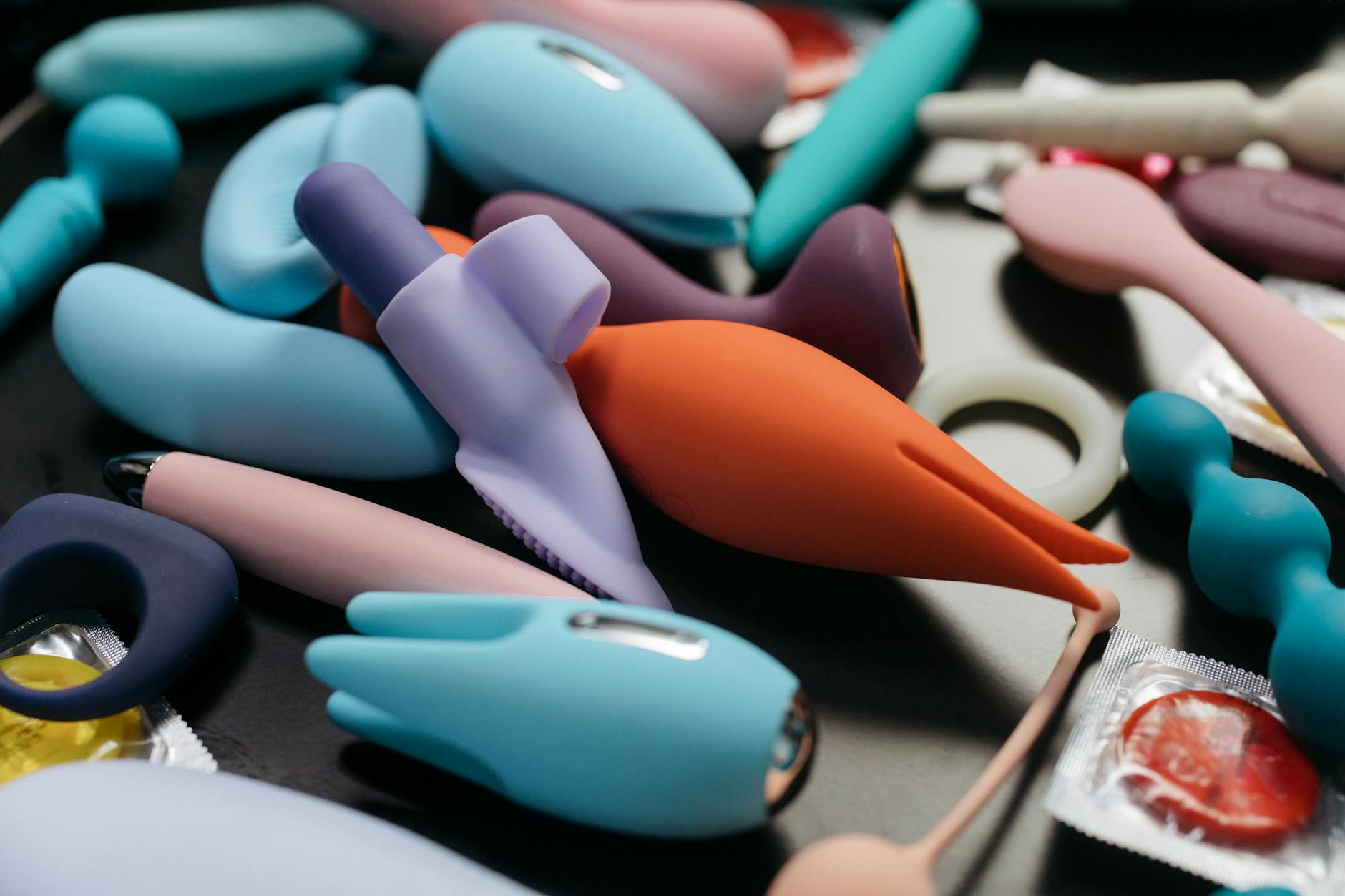
Let's talk about the imbalance no one names directly
You're in bed with someone you care about. The sex happens. Afterward, you realize their orgasm came quickly, yours took forever, and somewhere in the middle you stopped mattering. That's not a communication problem. That's a pleasure distribution problem. And it's weirdly common.
Here's the thing: most people think one-sided sex is about effort or desire. It usually isn't. It's structural. If your partner's body is wired for fast arousal and quick release, and yours needs longer, slower buildup, the default script favors them every time. A lemon vibrator doesn't fix that. But it does something smarter. It creates a parallel pleasure track so you're not negotiating for attention anymore. You're generating your own.
Why one-sided intimacy happens (and it's not your fault)
There are three layers to this.
The biological layer. People with penises typically reach orgasm in 5-10 minutes of partner sex. People with vulvas average 20-40 minutes, and that's with consistent stimulation. Most partnered sex lasts 10-15 minutes total. Do the math. The structure itself disadvantages you.
The attention layer. Once your partner comes, there's a neurochemical drop. Prolactin rises, arousal crashes, and the impulse to continue evaporates. This isn't laziness. It's biology. But it means your pleasure gets cut short not because they don't care, but because their brain chemistry works against it.
The communication layer. Most people never explicitly ask for what they need during sex because it feels like admitting something's broken. So they stay quiet and resent it quietly.
A lemon clitoral vibrator solves the structure problem. It means your orgasm doesn't depend on your partner's stamina or attention. You can maintain intensity independent of theirs.
How lemon vibrators specifically help with one-sided dynamics
Lemon suction vibrators work faster than traditional vibration, which matters here because speed collapses the gap. While your partner is still engaged, you can reach intensity and release on your timeline, not theirs.
Three specific advantages:
Speed of response. A lemon vibrator's suction pattern engages nerves differently than friction vibration. Most people report building sensation faster and more predictably. That means less time chasing orgasm while your partner's attention wanes.
Independence. You control the intensity, pattern, and pace. You're not waiting for your partner to notice you need something different. You're creating it yourself. That agency alone shifts the emotional texture.
Dual stimulation possibility. A lemon vibrator on your clitoris while your partner is inside you (or you're together in another way) creates simultaneous sensation for both of you. They feel you building intensity, which often keeps them engaged longer. It's reciprocal, not sequential.
The conversation before you introduce a toy
This is the part most people skip and then regret.
Your partner might assume a vibrator means they're doing something wrong. They might feel replaced or like they're not enough. None of that is true, and you need to address it before the toy appears.
Honest framing: "I want us to explore something that helps me get to orgasm during sex with you, not instead of you. It's not about you. It's about my body and what it needs to feel satisfied alongside you."
Then show them. Let them hold it. Explain the sensation. Make it collaborative, not secretive.
If they resist, that's a different conversation entirely. Resistance to your pleasure is not a toy problem. That's a relationship problem worth addressing with someone like me or a couples therapist.
How to actually use a lemon vibrator during partnered sex
Timing and positioning matter more than you'd think.
Start early. Don't wait until your partner is on the edge. Begin building sensation in the foreplay phase so you're already climbing when penetration starts. That way, when your partner's arousal peaks at 15 minutes, you're already close.
Find your position. If you're penetrated, angle yourself so the toy stays accessible. Many people use a lemon vibrator against their clitoris while their partner is inside them. Others prefer external-only stimulation while their partner is penetrating. Experiment first solo to know what you want, then show your partner.
Maintain rhythm. Your partner might want to match your vibrator's rhythm, or they might maintain a separate one. Both work. Some couples find that contrasting rhythms (toy going fast, partner going slow) builds interesting sensation. Others prefer synchronization.
Keep communicating. "I'm close." "Keep going." "Slow down." "Stay inside me while I finish." These aren't interruptions. They're the map your partner needs.
What changes when you both know you can get satisfaction
Something shifts emotionally when neither of you is performing for the other anymore.
Without a lemon vibrator, sex often becomes performance. Your partner tries to last longer. You try to come faster. You're both pushing against your bodies' natural rhythms. It's exhausting.
With a tool that works for you, you can relax into your actual response. Your partner can enjoy their pleasure without guilt. And you both land somewhere that feels good instead of somewhere that felt like compromise.
I've worked with couples who introduced a toy and suddenly had the best sex they'd had in years. Not because the toy was magic. But because it removed the arithmetic. No one was keeping score anymore.
The real talk about desire imbalances
If the one-sidedness isn't about orgasm timing but about overall desire, a lemon vibrator won't fix that. If your partner isn't interested in your pleasure at a fundamental level, that's a values mismatch, not a technique problem.
But if your partner genuinely cares and the sex just feels unbalanced structurally, a vibrator absolutely changes things. It creates equity. It says, "I want my pleasure to matter as much as yours, and I'm willing to show you what that looks like."
That's not selfish. That's sane.
FAQ: One-Sided Intimacy and Lemon Vibrators
Will using a lemon vibrator during sex make my partner feel inadequate?
Maybe, briefly, if they haven't understood what you're doing. But inadequacy is usually rooted in shame, not reality. A conversation where you explain that your body needs different stimulation to finish isn't criticism. It's information. Many partners, once they get past the initial weirdness, find that watching you use a vibrator is actually hotter. You're more present, more satisfied, and more engaged. That's the opposite of inadequate.
What if my partner finishes before I even start?
Start the toy sooner. If your partner orgasms at the 10-minute mark and you're still at arousal level four, you're playing catch-up. Begin stimulating yourself during foreplay so you're already building when penetration or partnered sex begins. That way, when they finish, you're closer to your own release and can keep going without it feeling like an afterthought.
Can I use a lemon vibrator if I have a very sensitive clitoris?
Absolutely. Lemon suction toys actually work well for sensitive clits because the sensation is concentrated without sharp friction. Start on the lowest intensity setting and build up. Suction doesn't require direct contact if you don't want it. You can place the vibrator over your underwear or let the sensation diffuse across the whole area. Your clitoris is tougher than you think, but your preferences matter more than toughness.
What if I can't orgasm during partnered sex even with a vibrator?
First, make sure you know how to orgasm with a vibrator solo. If you can't come alone with the toy, partner sex won't magically change that. Once you know your own blueprint, introduce it to partnered sex. If you still can't come, it might not be physical. Anxiety, resentment, or disconnection from your body can block release. A good therapist or sex counselor can help untangle that. But most people find that once they have a reliable way to reach pleasure, the mental barriers soften.
Is it weird to use a toy every single time we have sex?
Not if it works for you. Some people use a vibrator sometimes, others use it every time. There's no right frequency. What matters is that you're enjoying yourself. If your partner feels insecure about the consistency, that's a conversation about reassurance and their own anxiety, not about the toy being problematic.
How do I introduce this to a partner who's never been into toys?
Don't make it a big moment. Mention it casually. "I've been using something that helps me finish faster. Want to try it together?" Let them see it. Show them how it works. Take the weirdness out of it by normalizing it. If they're still hesitant, ask what they're worried about. Often it's a fear of being replaced. Reassure them. Explain that it's a tool for your mutual pleasure, not a replacement for theirs. Then move slowly.
What actually changes
When you stop trying to fit your body into someone else's timeline, intimacy gets better. Not easier, necessarily. But honest.
A lemon vibrator doesn't guarantee simultaneous orgasm or perfect sex. Nothing does. What it does is create space for your pleasure to coexist with theirs instead of competing. And in most relationships, that shift alone transforms how partners experience each other.
Your satisfaction matters. Full stop. A tool that helps you claim it isn't cheating the intimacy. It's deepening it.