
Let's talk about what just happened
You switched partners. Everything felt incredible with the last one, and now orgasms feel muted, harder to reach, or just... less. Not painful. Not gone. Just quieter than they used to be. The frustration is real because you know your body is capable of that intensity. You've felt it before. So why does it feel like starting over?
Here's what's actually happening: orgasm is not one thing. It's a whole system that includes physical sensation, psychological safety, timing, friction patterns, dirty talk rhythms, and about seventeen other variables your nervous system was calibrated to. When any of those change, your body notices immediately. A new partner doesn't mean your pleasure capacity dropped. It means your body hasn't learned this person's rhythm yet.
The neuroscience of partner-specific arousal
Your brain creates pathways for pleasure based on repetition and reward. After months or years with one partner, you developed specific neural grooves. You knew exactly what they'd do next. You could anticipate. Your nervous system was primed before anything even happened. That predictability is actually a huge part of arousal, even though we pretend it's all spontaneity and passion.
With someone new, all that neural scaffolding disappears. You're back to baseline. Your brain can't predict. Your body doesn't know what to expect. That uncertainty is wonderful for emotional connection, but it can feel devastating for sensation intensity.
The other piece: arousal happens in layers. The first layer is physical (touch, friction, position). The second is psychological (safety, desire, feeling seen). The third is temporal (how long you've been building, when you usually peak). With a new partner, you might have physical chemistry but psychological misalignment. Or great conversation but mismatched timing. Your body needs all three working together to hit peak intensity.
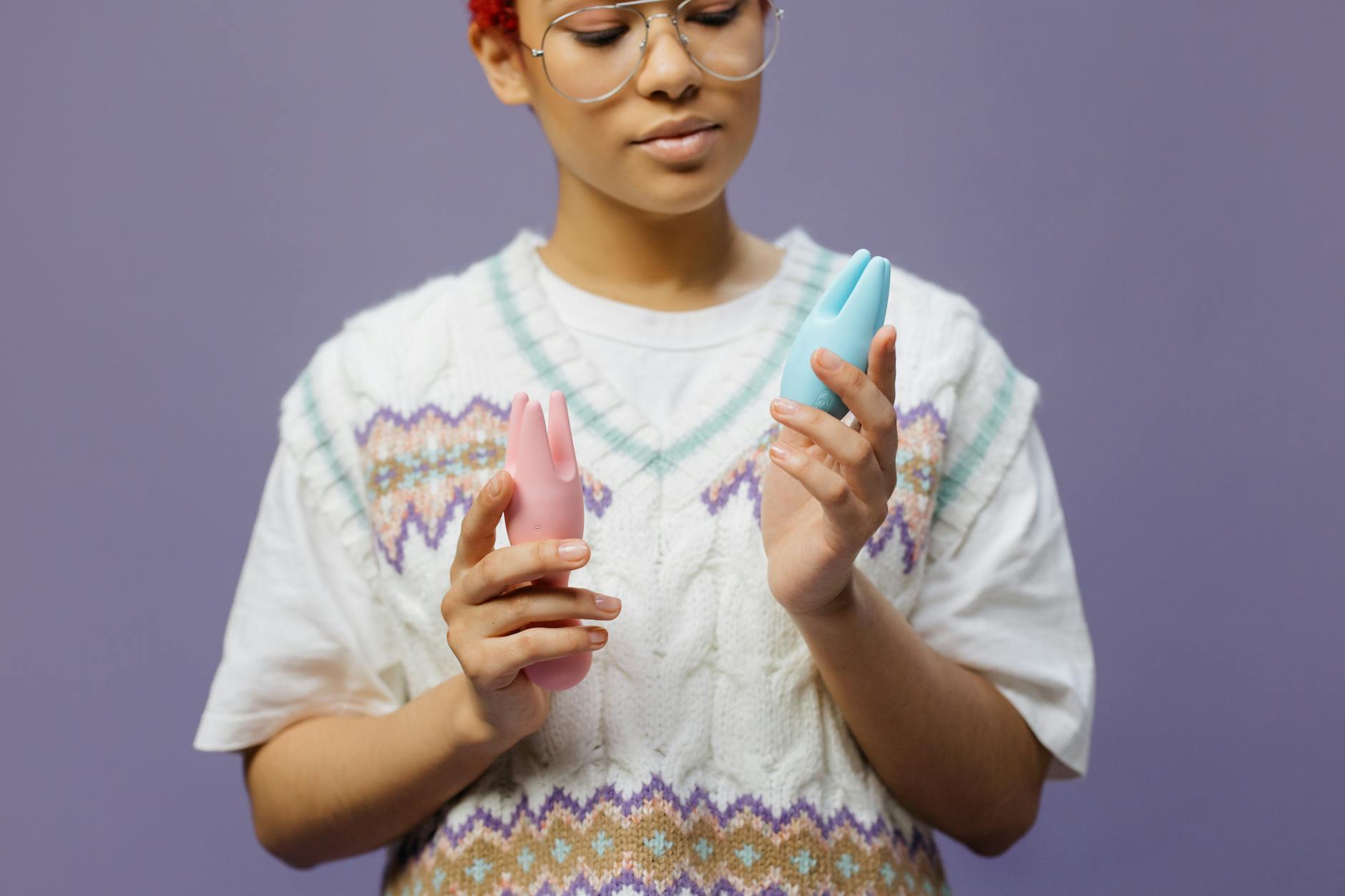
Photo by cottonbro studio on Pexels
Why the lemon vibrator fills this gap
Here's where the lemon clitoral vibrator becomes genuinely useful, not just a backup plan. A lemon vibrator (or any clitoral suction toy) does something no partner can: it delivers consistent, predictable stimulation at a frequency your body recognizes. Immediately.
When orgasm intensity dips after a partner switch, solo pleasure often comes roaring back faster than partnered pleasure does. That's because you don't have the conversation tax, the performance awareness, the timing negotiation. You're just you and sensation. A lemon vibrator in that space works like a reset button for your nervous system. It reminds your body what peak intensity feels like. It also teaches you exactly what you need.
The suction mechanism of a lemon vibrator (unlike a vibrator's buzz alone) mimics the kind of stimulation most clitoral tissues respond to most powerfully. Suction engages more nerve endings because it creates a gentle pressure differential. You don't have to think about it. Your body just knows: this feels deeply satisfying.
Rebuilding sensation step by step
Start with solo sessions, not as a replacement for partnered sex but as a recalibration tool. Spend 15-20 minutes with the lemon vibrator at pattern 3 or 4 (moderate intensity). Don't rush to orgasm. The goal is to remind your nervous system of that peak intensity so your brain can recognize it again.
After 3-4 solo sessions where you're hitting that sensation clearly, bring the lemon vibrator into partnered sex. Not instead of partnered stimulation. Alongside it. Your partner stimulates you by hand or with their mouth. You or they use the lemon vibrator on the same area or nearby. This hybrid approach lets your body feel both: the unpredictability of your partner plus the reliability of the tool. Your brain starts to wire these two things together.
Honestly, this also takes off the pressure. If you're worried about reaching orgasm, you're not going to reach orgasm. The lemon vibrator gives both of you permission to stop chasing it and just build sensation together. Often the intensity returns the moment you stop trying to force it.
What to tell your partner (and what not to)
Don't frame it as "you're not doing it right" or "I miss my ex." Both of those will backfire. Instead, try something like: "I want to explore what feels best with you. I'm curious what happens if we try this together. My body's still learning your rhythm, and I want to meet you halfway."
Most partners find this genuinely hot, not insulting. You're inviting them into the process of figuring out your pleasure together instead of expecting them to automatically know a system that took months to build with someone else. That's actually more intimate than pretending it should happen instantly.
If your partner gets defensive about the vibrator itself, that's a separate conversation. Some people struggle with toys because they tie it to inadequacy. But that's about their insecurity, not your pleasure. Your pleasure matters. A partner who can't support you using a tool that helps you feel good is showing you something important about how they handle your needs generally.
The timing component (it's huge)
With your previous partner, you probably had a rhythm. Maybe they always touched you a certain way for exactly long enough before moving on. Maybe you usually had sex at a specific time of day when your hormones were primed. Maybe there was a specific sequence that worked.
None of that rhythm is automatic with a new partner. That means you need to communicate what your body actually needs, not assume they'll figure it out. This is uncomfortable, which is why most people don't do it. But it's also the fastest path to rebuilding intensity.
Use solo sessions with the lemon vibrator to get clear on your own timing. How long does arousal usually take you to build? What intensity level gets you there fastest? What patterns feel best? Once you know your own system, you can tell your partner: "I usually need about 15 minutes of buildup before I'm ready. I like when you start soft and gradually increase."
That's not criticism. That's a recipe. Most partners actually feel relieved to have one instead of guessing.
When to know if it's actually about the partner
If you've been with this new partner for 4-6 weeks and tried the above approaches and orgasms still feel completely flat, that might point to something else. Sometimes a partner-switch that tanks your pleasure points to:
Mismatched desire (you want sex; they want it less, or in a different way). Poor communication. Unresolved feelings about the previous relationship. Stress or anxiety that's wearing you down. A partner who isn't genuinely interested in your pleasure, which is a bigger red flag.
But before you land there, give yourself (and the lemon vibrator) time. Six weeks is not a fair timeline to judge a sexual connection. Eight to twelve weeks of consistent effort usually shows whether you're dealing with a recalibration issue or a compatibility issue. The lemon vibrator helps you figure out which one it actually is.
The solo pleasure truth
One more thing, because it matters: if you find yourself preferring solo pleasure with the lemon vibrator over partnered sex, that's information. Not a failure. It could mean this partner isn't the right fit. It could mean you need more foreplay than you're getting. It could mean you're burned out and your nervous system is protecting itself. Pay attention to that signal instead of overriding it.
But most often, when you give yourself permission to use tools, communicate with your partner, and stop white-knuckling your way to pleasure, intensity comes back. It's just on a new timeline. Your lemon vibrator is the bridge between the nervous system you had and the one you're building.
People also ask
How long does it usually take for orgasm intensity to return after switching partners?
Everyone's timeline is different, but most people start feeling a shift within 8-12 weeks of consistent partnered sex. That doesn't mean full intensity by week 12. It means you're noticing improvement, your body's responding faster, and the pressure's starting to ease. If nothing's shifted by 16 weeks despite communication and effort, that's worth examining more closely. It might not be about intensity at all; it might be about fit.
Can using a lemon vibrator during partnered sex create a dependency?
No. The opposite usually happens. When you use a lemon clitoral vibrator alongside partnered touch, your body learns to recognize pleasure from multiple sources. You're actually expanding your capacity, not narrowing it. Some people do find they prefer the predictability of a toy during stress, and that's fine. That's not dependency. That's using a tool that works.
What if my partner feels threatened by the vibrator?
That's a conversation that needs to happen outside the bedroom. Something like: "I want us both to feel good. This tool helps my body get there. That doesn't mean you're not enough. It means I'm learning what I need, and I want to share that with you." If they can't hear that after one or two conversations, you're dealing with insecurity that goes beyond the vibrator. That's worth considering.
Should I use the lemon vibrator instead of partnered sex to rebuild intensity faster?
No. Solo sessions accelerate the recalibration, but partnered sex is what you're actually trying to improve. Use the lemon vibrator as a tool within partnered sex, not as a replacement for it. The goal is to rebuild pleasure together, not to give up on that and just go solo.
Is it normal for orgasms to feel different with every new partner?
Completely. Your nervous system is highly responsive to context, and every partner brings a different context. Different body, different rhythm, different timing, different emotional tone. That variability is actually healthy. It means you're not rigidly locked into one pleasure pattern. It also means rebuilding takes time.
Can antidepressants or hormonal changes explain why orgasms feel weaker?
Maybe, but usually partnered pleasure changes are more about emotional and neural recalibration than chemistry. That said, if you've noticed a general decline in sensation (solo and partnered), that's worth mentioning to your doctor. But if pleasure feels normal solo and just muted with your new partner, it's almost always about the system, not your body.
What actually matters here
Orgasm intensity isn't some fixed thing your body either has or doesn't. It's a product of your nervous system, your partner, your timing, your psychological safety, and your expectations all lining up. When you switch partners, those variables reset. That doesn't mean you're broken or less capable. It means you need to rebuild the system from the ground up.
A lemon vibrator helps you recalibrate faster because it gives you a reliable reference point. It reminds your nervous system what peak sensation feels like. It takes the pressure off your partner to somehow magically know a system that took months to build. And it gives you permission to advocate for what you actually need instead of pretending it should happen automatically.
Talk to your partner. Use the lemon vibrator. Give yourself time. And trust that the intensity usually comes back. You're not starting from zero. You're just learning a new rhythm.