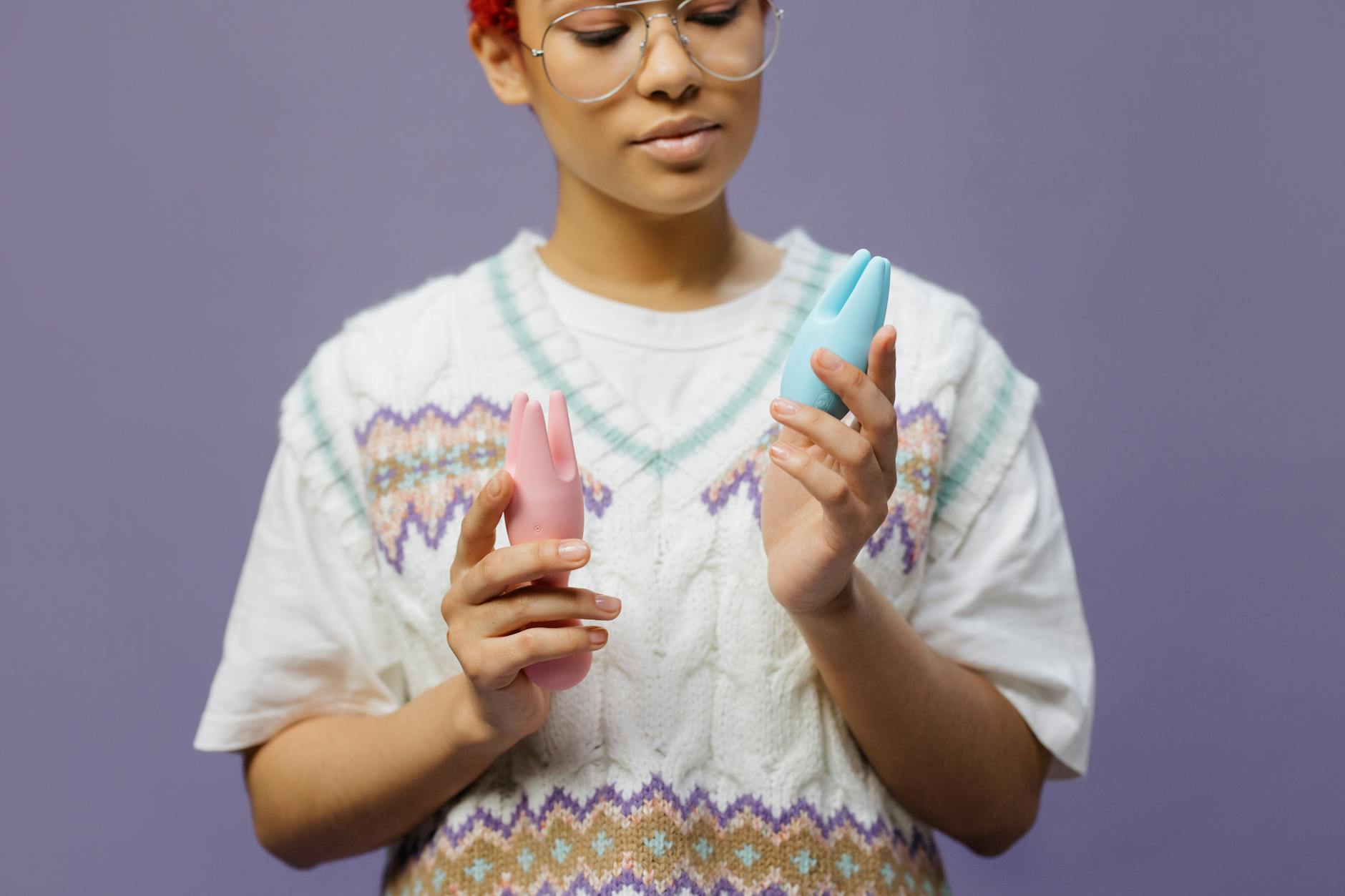
Let's talk about the sensitivity mismatch nobody plans for
You and your partner probably align on a lot of things. Dinner timing, temperature in the bedroom, how much foreplay feels right. Then you get physical and discover that the intensity your partner craves leaves you wincing, or what feels like a feather touch to you barely registers for them. Welcome to clitoral sensitivity mismatch, one of the most common frictions in partnered sex that almost nobody discusses openly.
The thing is, sensitivity differences aren't a sign something's wrong with either of you. They're just... differences. Bodies vary wildly. Some people have dense nerve clusters; others have more spread-out sensitivity. Hormonal cycles shift it month to month. Medications, stress, arousal levels, even the time of day plays a role. A lemon vibrator, specifically its variable intensity and unique suction mechanism, is one of the smartest tools for bridging this gap because it gives you real control.
Why sensitivity mismatches happen between partners
Clitoral sensitivity isn't a fixed trait. It's influenced by at least a dozen factors that fluctuate independently for each partner.
First, anatomy itself. The clitoris has roughly 8,000 nerve endings, but they're distributed differently person to person. Some people have dense clustering near the surface. Others have more diffuse sensitivity. Neither is better or worse. They just mean different stimulation works.
Second, hormones. If one partner is cycling through a menstrual cycle and the other isn't, sensitivity swings don't align. The person ovulating might be hypersensitive mid-cycle, then deadened by the time their partner is actually in the mood. The person on hormonal birth control might find their baseline sensitivity locked at "muted" while their partner's fluctuates wildly.
Third, arousal speed and depth. Some people reach full arousal in five minutes. Others need twenty. When one partner is at 70% and the other is at 20%, the 70% person might find direct clitoral touch too much, while the 20% person needs that intensity just to register anything. This creates a timing trap: you either wait for both to align (which kills spontaneity), or you misfire with intensity.
Finally, sensation fatigue is real. The person who enjoys intense suction might reach a threshold where even more intensity creates numbness rather than pleasure. The person who prefers gentleness might find their sensitivity actually increases with very light touch because their nervous system isn't overwhelmed.
Understanding lemon clitoral vibrator settings as a negotiation tool
Here's what makes a lemon vibrator different from a standard wand or bullet: it uses suction and pulsing rather than pure vibration, and most have 5-8 distinct intensity levels. This matters because it transforms the device from "this is what you get" to "this is what we negotiate."
If your partner loves intensity and you don't, you're not choosing between "use the toy" and "don't use the toy." You're choosing which setting. They might use levels 6, 7, 8 solo, but when you're together, you find your comfortable range at levels 2-4, and they discover that the build-up through those lower levels actually intensifies their eventual pleasure. That's the real win.
The suction mechanism also distributes pressure differently than vibration does. A wand vibrator concentrates all stimulation in one spot at very high frequency. Suction uses cycles of pressure and release, which some people find less "sharp" and more "full." If you're the sensitive partner, suction might feel gentler and more sustainable than vibration, even at identical power settings. Your partner, who needs more intensity, can stay with you longer because suction doesn't create the same rapid numbness.
This is why lemon vibrators and similar clitoral vibrators bridge mismatched sensitivity better than many alternatives.
The three-conversation framework for sensitivity differences
Before you even use the tool, you need to talk. Not during sex, not in the moment. Beforehand, clothed, tea in hand.
Conversation one: naming the mismatch without shame. "When we're intimate, I notice I need X and you seem to need Y. I want us both to feel great. Let's figure this out together." Full stop. Don't diagnose, don't apologize, don't make it about attraction or performance. It's a mismatch, like having different hand sizes.
Conversation two: what each person actually wants to feel. Not intensity level. Feeling. The sensitive partner might say, "I want to feel awakened without being shocked." The high-sensitivity partner might say, "I want to feel like my body is being worked, not just touched." Those are two different sensory goals, and they matter more than numbers.
Conversation three: practical boundaries and preferences. When, where, and how you'd like to use a lemon vibrator or other toy. Does one partner want to use it solo first? Do you both use it together on different settings? Does one person hold it while the other controls the setting? These logistics prevent assumption and tension.
Using a lemon vibrator when sensitivity diverges
Let's say you're the sensitive one and your partner isn't. Your approach:
Start at intensity level 1 or 2. Not as a "test." As your baseline. Most people with lower sensitivity thresholds find that meeting the toy at a genuinely comfortable level actually allows them to stay present longer, which paradoxically creates a more aroused state. When you're not bracing for pain or overstimulation, your nervous system can actually relax and feel more.
Use the suction cycle rather than constant pressure. Many lemon vibrators have pulse patterns alongside intensity levels. A pulsing pattern at level 3 often feels more manageable than solid suction at level 4, even though power-wise they're similar. The rhythm of pressure-release-pressure gives your body micro-breaks.
Now your partner. They might find level 1-2 feels like nothing. That's fine. They use levels 5-7 when they're solo. When you're together, the goal isn't to meet at one number. It's to find a place where you're both on the pleasure spectrum, even if you're at different points.
One framework that works: alternate control. You hold the toy for three to five minutes on your comfortable setting while your partner enjoys that sensation with you. Then they take it, bump it to their preferred level, and you adapt. This isn't about sacrifice. It's about the rhythm of partnered pleasure. You're trading intensity, not erasing your preferences.
Another framework: dual devices. If one person loves a lemon clitoral vibrator and the other prefers something milder like a mini wand, you each use what feels right. You're touching each other, you're in the same space, you're sharing the experience. You're just stimulating yourselves rather than negotiating a single tool.
When one partner's sensitivity changes mid-session
Sensitivity isn't stable even within a single session. The person who felt great at level 5 for the first ten minutes might hit a numbness wall and need to drop to level 2. The person who started at level 1 might warm up and want to gradually increase.
This is normal. Build in check-ins. "How's the intensity feeling now?" isn't a mood-killer. It's attunement. And because a lemon vibrator has multiple settings, you can actually respond to these shifts in real time without stopping.
Some people also find that short breaks help. Two minutes with no stimulation, then resuming. This resets your sensory nerves and prevents the fatigue that makes everything feel numb.
The emotional part matters as much as the tool
Mismatched sensitivity can trigger weirdness. The sensitive person might feel broken ("why can't I take what they take?"). The high-sensitivity person might feel frustrated ("nothing feels like enough"). Both are starting from incorrect assumptions.
Your body is not broken. Neither is your partner's. You're just different instruments. A lemon vibrator is useful because it has enough range that both instruments can play at their own pitch and still make music together.
The relationship work here is curiosity, not complaint. "I'm fascinated that you experience this so differently" lands differently than "you're too intense" or "you're not intense enough." The first is science. The second is judgment.
If you're the high-sensitivity partner and your person is more sensitive, you might also discover that your patience with slower build-up actually deepens your arousal. You're not racing to orgasm. You're exploring. That shift in perspective often changes the whole experience.
Common scenarios and quick fixes
Your partner loves strong suction and you don't. Use a lemon vibrator with your partner, but position it so you're controlling the intensity or have a clear "tap my arm to back off" signal. Or use separate devices on different settings.
You both like clitoral vibrators but at wildly different frequencies. You might find that pulsing modes help more than continuous vibration. The rhythm can bridge sensitivity gaps in ways straight power can't.
Sensitivity changes based on where in your cycle you are. Track it. Note when you're more or less sensitive. Then plan partnered play accordingly. You can absolutely have great sex across sensitivity mismatches, but it helps to know your own baseline first.
One of you feels pressure to perform at the other's intensity level. This is the real killer. Press pause and reclaim your own pleasure as separate from theirs. You don't have to match their response. You have permission to want what you want.
FAQ
Can a couple really enjoy a lemon vibrator together if they have different sensitivities?
Completely. The variable intensity and suction mechanism mean both partners can find their comfort zone and adjust in real time. The key is talking beforehand about what intensity each person needs, then either taking turns, using separate devices, or finding a middle setting where you're both in the pleasure zone even if you're at different points.
What if my partner wants intensity 7 and I max out at level 3?
You're not broken. Sensitivity variation is normal. Consider alternating control: you use the toy at your level for a few minutes while your partner enjoys that sensation with you, then they take it higher for their turn. Or use separate devices designed for your individual ranges.
Does sensitivity mismatch mean we're sexually incompatible?
No. Sexual incompatibility usually involves desire frequency, values, or boundaries. Sensitivity is logistics. It's solvable with the right tool and communication. Many couples find that bridging this gap actually deepens intimacy because they're paying attention to each other's actual needs rather than assuming.
Should one partner adjust their sensitivity to match the other?
No. You can't rewire your nervous system to want something you don't want, and trying is exhausting. What you can do is find tools and approaches that meet both people where they are. A lemon clitoral vibrator is useful precisely because it has enough range that both partners stay true to themselves.
Is it weird to use different intensity levels together?
Not at all. You're not competing. You're cooperating. One person at level 3 and another at level 6 is just... partnered play. Think of it like dancing. You're moving together even though your individual movements are different.
How do we know if a sensitivity mismatch is actually a medical issue?
If one person suddenly loses sensation where they previously had it, or if sensitivity causes pain rather than pleasure, that's worth a conversation with a gynecologist. Neuropathy, hormonal shifts, and other conditions can affect sensitivity. But baseline differences between partners? That's just human variation.
Can we ever get to a point where we both want the same intensity?
Maybe, maybe not. And that's okay. The goal isn't to become the same. It's to find a rhythm where both of you feel good. Sometimes that's different settings on the same tool. Sometimes that's separate devices. Sometimes it's a compromise setting you both find workable. All of those are wins.
The real takeaway
Sensitivity mismatches aren't obstacles to work around. They're information. Your body is telling you what it needs, and so is your partner's. A lemon vibrator with multiple intensity settings and a suction mechanism gives you enough flexibility to honor both truths at once.
The tool matters. But the conversation matters more. When you're both clear about what you actually want, when you're not performing or accommodating or apologizing for your own body, sensitivity differences become a non-issue. You're just two people figuring out how to feel good together.