
Let's talk about the tension that never makes it to the dinner table
You want to introduce a lemon vibrator. Your partner thinks it means they're not enough. Neither of you is crazy, and both of you are operating from incomplete information. This particular friction costs couples real pleasure, and honestly, it's preventable.
Here's what I've seen in my practice: the person with a vulva knows instinctively that a clitoral vibrator would help them orgasm more reliably, more intensely, or at all. The partner has absorbed a cultural script that says a toy is a referendum on their sexual performance. Both stories have enough truth in them to feel unmovable. Both are also missing something crucial.
What your partner is actually afraid of
It's not really the toy. It's three things layered on top of each other.
First: inadequacy. Your partner has been taught that their body, their hands, their penis should be enough. The existence of a toy reads as a public announcement that they aren't. This is deeply tied to how men especially are socialized around sex. Performance equals love equals proving yourself. A vibrator short-circuits that equation and it feels personal, even when it isn't.
Second: replacement. There's a sneaky anxiety underneath: what if you prefer this? What if you start needing it to orgasm with them? What if you leave? These fears are rarely articulated, which is exactly why they run the show.
Third: loss of control. Sex is one domain where your partner has felt powerful or needed. A vibrator redistributes that power. Your orgasm becomes something you can generate independently. That's genuinely destabilizing for someone whose sense of sexual value is built on being the source of your pleasure.
None of this is rational. All of it is real.
What the research actually says
Here's the plot twist: couples who use sex toys together report higher sexual satisfaction, more frequent sex, and stronger emotional intimacy than couples who don't. Not lower. Not weaker. Higher.
More specifically: a study in the Journal of Sexual Medicine found that women who use vibrators have easier, more frequent orgasms. Full stop. Their partners didn't disappear from the equation. They just became part of a system that actually works.
The second piece of research that matters: partners who feel threatened by toys almost always feel less threatened once they see how the toy works in practice. Watching your partner have intense pleasure that you're part of creating changes the narrative from "you're replacing me" to "I just gave you that."
You're not choosing between your partner and a toy. You're expanding what's possible together.
How to have this conversation without triggering the fear
Timing: not during sex. Not when you're frustrated. Pick a moment when you're both calm and clothed.
Opening: "I want to talk about something that matters to me, and I need you to know upfront that this isn't about you not being enough." That's not flowery language, but it signals that you're aware of the actual fear and you're naming it directly.
Frame it as a problem you want to solve together, not something you want to do to them. "I've noticed it takes me a long time to orgasm, and sometimes I don't get there at all, even when I'm really into it. I've been thinking about ways to change that. I came across a clitoral vibrator called the Lem and I'm curious if you'd be open to exploring that together."
Note what you didn't do: you didn't apologize. You didn't ask permission. You stated a fact about your body and proposed a collaborative solution.
Their response will probably be one of three:
- Immediate yes. Some partners are just relieved. You're about to have a much better sex life.
- Defensive. "Why, what's wrong with how we do it now?" This is the fear talking. Your response: "Nothing's wrong. I want to feel even better, and I think this could help both of us." Then pause. Let them process.
- Hard no. "I'm not comfortable with that." This needs a different conversation, which we'll get to.
If they said yes, here's how to actually integrate it
Don't make the first experience a performance. Don't bring it out and say "okay go." That creates pressure and makes it transactional.
Instead: next time you're having sex, when you're already aroused, pause and say something like "Want to try something?" Hands stay on skin. You guide their hand to help them use the lemon vibrator on you, or you use it on yourself while they're inside you or touching you elsewhere. The tool doesn't replace them. It joins them.
When your partner sees you have an orgasm that's clearly more intense, more full-bodied, more present than before, something shifts. They're not being replaced. They're watching themselves give you something better. That's genuinely arousing for most people.
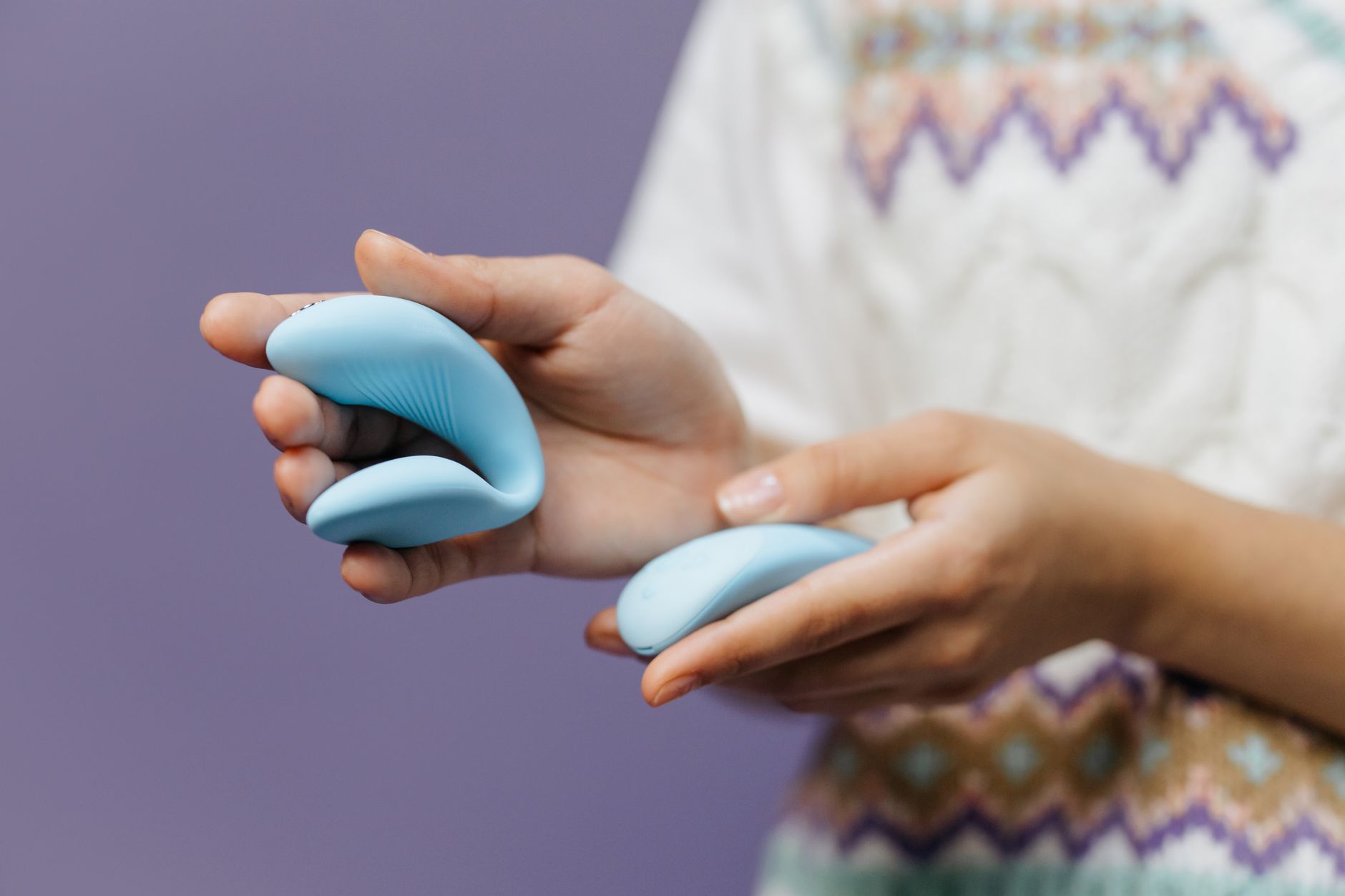
Photo by cottonbro studio on Pexels
Start on a lower pattern. The Lem vibrator has multiple intensities, and beginning gently makes this feel exploratory rather than clinical. You're not trying to prove a point. You're discovering something together.
Talk about it after. Not in a review format, but genuinely. "That felt incredible." "I loved watching you." "Want to do that again?" This is where the actual intimacy happens. You're building language around shared pleasure.
What if they're still refusing
A hard no deserves respect, but it also deserves curiosity. Not "fine, whatever," but actual conversation.
"I hear you saying no. Help me understand what you're worried about." Then listen without defending. Most of the time, once the actual fear gets named, it becomes negotiable.
Maybe they'd be okay with you using a clitoral vibrator alone, outside of partnered sex. That's a real compromise. Maybe they're willing to try it once with an agreement that you'll tell them honestly how it feels. Maybe they need time. All of those are workable.
But here's the line: your orgasm is not negotiable. If your partner's insecurity means you're permanently denied a tool that would change your pleasure, that's not about protecting the relationship. That's about control. And control disguised as protection is one of the core patterns I see eroding long-term intimacy.
You can be kind and firm at the same time. "I respect your concerns. And I also need you to understand that this is important to me. I'd love for you to be part of this with me, but I'm going to explore options that help my body feel good."
The conversation nobody's having
Most couples fight about toys without ever discussing what they're actually fighting about. Is your partner worried about their own performance? About being left? About changing power dynamics? About what the toy means culturally?
Those are different problems requiring different solutions. And until you identify which one you're dealing with, you'll keep hitting the same wall.
When arousal and desire feel disconnected, a clitoral vibrator becomes even more valuable. But a toy only works if both partners feel safe. That safety comes from conversation, not capitulation.
Here's what I know after twenty years of relationship work: the couples who stay connected long-term are the ones who can talk about sex without shame, who can ask for what they need without apology, and who can hear "I want something different" as "I want us to be better together." A lemon vibrator is just the tool. The real work is building that language.
What to do right now
If you haven't had this conversation yet: pick a calm moment, name the fear directly, and propose collaboration. Bring data if it helps. "Research shows couples who use toys together actually feel closer, not more distant."
If they said yes: plan one experience where the toy is integrated naturally, not as a feature event. Let pleasure speak louder than logistics.
If they're still refusing: dig into what's actually frightening them. Most of the time, the toy is metaphor, not the real issue. Once you're talking about the real issue, movement becomes possible.
Your pleasure matters. Your satisfaction matters. And if your partner loves you, they'll come around to wanting that for you, even if it takes time to untangle their fears. Patience plus honesty usually wins.
People also ask
Why do some partners feel threatened by vibrators?
Most men grew up learning that their job during sex was to provide pleasure and orgasms. A vibrator disrupts that narrative by introducing an external tool that often works better than fingers or penetration alone. It's not actually about the plastic object. It's about a shift in who's responsible for your satisfaction. Your partner may also worry they'll become unnecessary, or that you'll prefer the toy to them. These fears are common and mostly unfounded. The actual pattern in research is the opposite: couples who use toys together have more sex and feel closer.
Can I use a clitoral vibrator without my partner knowing?
Technically yes, but it usually doesn't end well. The secrecy itself becomes a problem later, and it means you're missing the opportunity to build shared pleasure and deeper intimacy. A better path: propose trying it together first, with honesty about why. If they refuse and you decide to use one alone anyway, own that decision rather than hiding it. Transparency is usually less threatening than discovered secrecy. That said, your body is yours. If your partner's insecurity becomes a permanent veto on your pleasure, that's information you need to sit with.
How do I know if a lemon vibrator is right for my body?
Clitoral vibrators like the Lem work best for external stimulation, especially if penetration causes discomfort or if you have difficulty reaching orgasm through conventional methods. The suction sensation is gentler than some vibration patterns, which makes it good for sensitive tissue. It's also particularly effective if you've been struggling with sensation feeling numb during foreplay. Start on the lowest setting to see how your body responds. If it feels good, you've found something valuable.
What if my partner wants to use the toy on me but I feel awkward?
Awkwardness is usually about unfamiliarity, not actual incompatibility. Let them experiment. Some partners figure out patterns on the Lem that actually feel better than you'd do yourself. And there's something psychologically different about receiving pleasure from a partner using a tool versus doing it solo. It can feel more intimate, not less. If it genuinely doesn't work, you can always switch back to solo use.
How do I bring this up without seeming like I'm criticizing their sexual skills?
Frame it as addition, not replacement. "I want to feel even better" is different from "you're not making me feel good." It's also worth noting that orgasm difficulty is rarely about skill anyway. It's usually about physiological factors, stress, medication, hormones, or mismatched arousal patterns. Position the vibrator as a tool for both of you to feel more satisfied, not as a scoreboard of your partner's performance.
What if using a toy changes how I orgasm with my partner?
That's possible, and it might actually be good. Once your body learns what orgasm feels like with a vibrator, you have new information. You might find you need less intense stimulation during partnered sex than you thought. You might discover that specific patterns work better. You're not broken. You're becoming more attuned to what your body actually wants. Most partners, once they see this in motion, actually like it because they understand you better.
The couples who thrive are the ones who keep talking, keep adjusting, and keep choosing each other's pleasure. A lemon vibrator is just equipment. The real intimacy is in the willingness to explore it together.
Next steps
If this conversation feels risky or you're unsure how to navigate your specific dynamic, that's what our contact page is for. There's no shame in getting support for the hard conversations. And if your partner needs resources on why this matters, plenty of research backs up what you already know: toys aren't threats. They're invitations to feel better together.