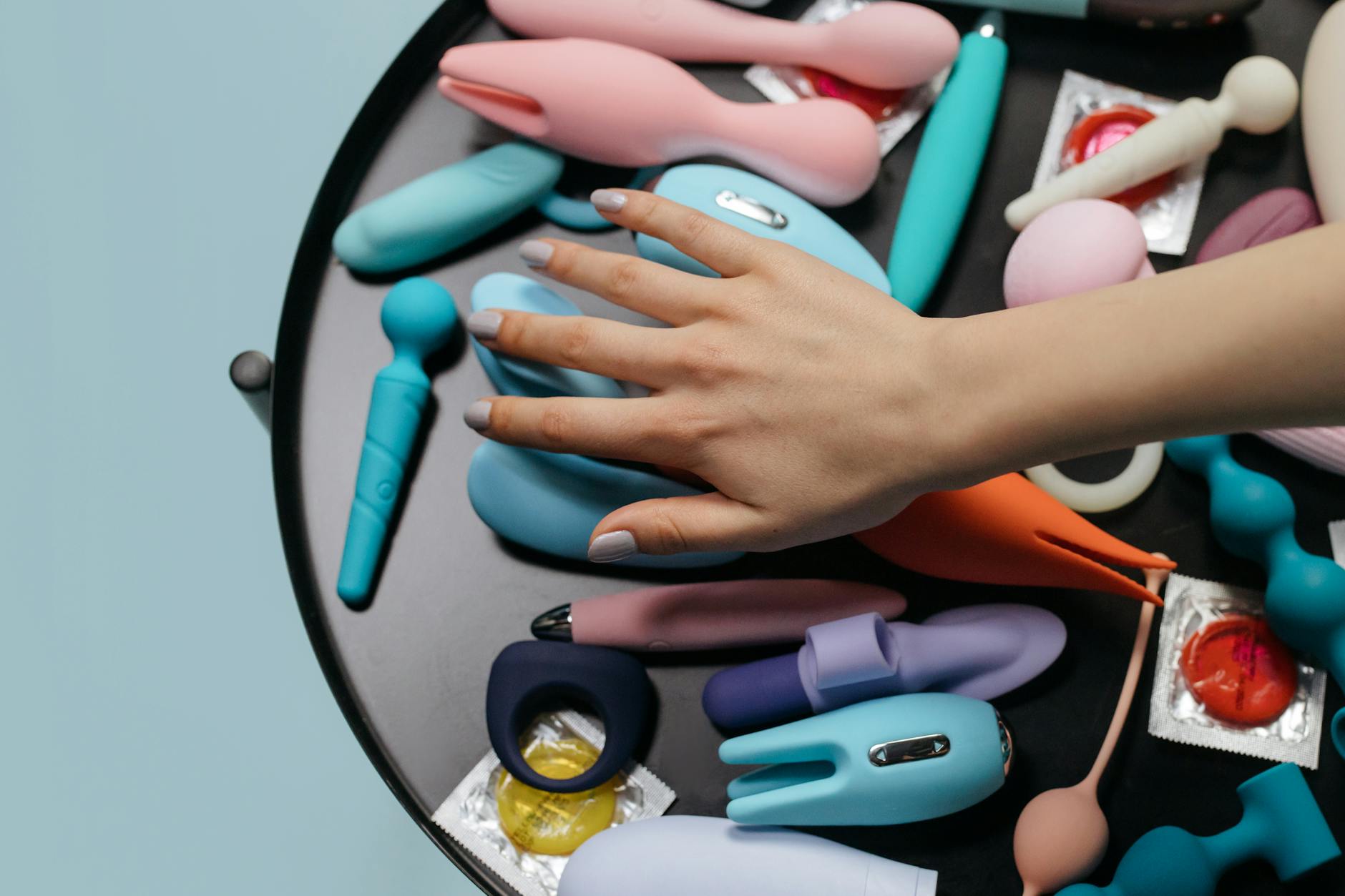
Here's what nobody tells you about low libido
Your desire didn't vanish. It went quiet. There's a crucial difference, and understanding that difference is where the whole healing process begins.
Low libido is not a character flaw, a sign your relationship is ending, or evidence that your body is broken. It's a signal. Something shifted. Your nervous system is protecting you, your brain is overwhelmed, your body needs rest, or something in your relational world has changed. Low desire shows up for reasons, and those reasons are almost always addressable.
I've worked with hundreds of couples rebuilding arousal, and the ones who succeed fastest aren't the ones who force it back. They're the ones who get curious about what caused the quiet in the first place, then rebuild slowly with intention.
Why libido actually drops (and why it's fixable)
The most common culprits I see in my practice:
Stress and overwhelm flatten desire faster than almost anything else. Your nervous system prioritizes survival over pleasure. When your brain is running a background loop of work deadlines, family obligations, financial worry, or relationship tension, there's literally no bandwidth left for arousal.
Partner mismatch creates a quieting loop. One partner initiates, the other deflects. Rejection stings. Soon both partners stop trying, and the silence becomes the normal. Months pass. Reconnection feels harder than it did at the start.
Physical depletion. Sleep deprivation, inadequate nutrition, overtraining, or hormonal shifts (thyroid issues, vitamin D deficiency, blood sugar dysregulation) all suppress desire. Your body can't turn on sexually when it's running on fumes.
Emotional disconnection. This one surprises people. You can feel sexually connected to a partner and emotionally distant at the same time. But you cannot stay sexually connected when emotional intimacy has eroded. Resentment, unspoken hurt, or simple distance kills arousal faster than anything.
The good news: all of these have solutions. And rebuilding desire is not about forcing yourself to want sex. It's about removing the barriers to wanting it.
The first step: get honest about the cause
Before you pick up a lemon vibrator or any other tool, sit quietly and ask yourself: what changed?
When did the shift happen? Was there an event, a slow fade, or a sudden drop? Did something happen between you and your partner, or is this happening regardless of who you're with?
What does your nervous system feel like right now? Anxious, exhausted, numb, resentful, overwhelmed, or grieving?
Do you feel desire for anyone or anything, or is the low libido specific to your partner or specific scenarios?
Your answers matter because they shape the pathway forward. If your low libido is rooted in stress and exhaustion, the fix is rest and nervous system regulation first, pleasure tools second. If it's rooted in relational tension, you might need conversation or couples therapy before lemon vibrators will help. If it's physical, you might need a doctor.
Don't skip this step. Tools work better when you're addressing the actual problem.
Building arousal from a deficit state
Once you've named the cause, rebuilding happens in phases. This matters because jumping straight to intense stimulation when your nervous system is depleted won't work. You'll feel pressure instead of pleasure.
Phase 1: Restore safety and context. Before touching anything, your brain needs to feel safe. This means reducing external stressors where you can, prioritizing sleep, moving your body, managing your nervous system. If you're with a partner, it means reconnecting without sexual pressure. Holding hands. Talking without agenda. Sleeping skin to skin. Reminding your body what it feels like to want something from your partner that isn't sex.
Phase 2: Restart sensation without pressure. Start with solo touch. Not with the goal of orgasm. With the goal of noticing sensation. Warm water in the shower. How your skin feels. A cotton sheet. Notice what texture appeals to you right now. Take 10 minutes. No expectations.
Phase 3: Introduce tools gently. This is where a clitoral vibrator like the Lem comes in. But timing matters. You want to introduce it when you've already done the nervous system work, when you've felt some solo sensation return, when there's curiosity instead of pressure. Start on the lowest setting. Let the suction do the work. Your body will tell you what it needs.
Phase 4: Integrate pleasure into partnership. Once solo arousal is returning, you can bring this back into partnered sex. But slowly. Show your partner what you've learned about your own body. Invite them in. No pressure to reach orgasm or perform. Just presence and exploration.
Why lemon vibrators work for low libido specifically
When desire is low, the last thing you need is mechanical harshness. You need something that feels good without requiring intense friction or mental effort to coordinate.
The Lem's suction mechanism is gentle. It doesn't require you to position it perfectly or adjust angles constantly. You just place it and let the sensation build. For someone rebuilding arousal, that ease is everything. You're not thinking about technique. You're just feeling.
The sensation itself is different from traditional vibration. Suction activates the clitoris more slowly and more diffusely than a standard vibrator. For people whose nervous systems are depleted or overstimulated, that gentler activation is often exactly right.
You can also control intensity with precision. Start at level one. Your body is telling you it's ready for more? Move to level two. This responsive, self-directed pace helps rebuild trust between your brain and your body.
Practical steps for rebuilding with a lemon vibrator
Start when you're actually aroused, even if arousal is tiny. Don't use a vibrator to create arousal from zero. That's putting the cart before the horse. Use it to amplify arousal that's already present.
Set aside time that's just for you. 15 to 20 minutes. No partner pressure. No expectation of orgasm. Just curiosity.
Start on the lowest setting. Spend five minutes there. Let sensation build. Don't rush to higher intensities.
If suction feels too intense, try placing the vibrator over your underwear or use a thin barrier like a silk cloth. Sensation softens and becomes less overwhelming.
Pay attention to what patterns feel good. Does pulsing feel better than steady stimulation? Does higher intensity after buildup feel better than jumping to high intensity? Your body's feedback is data.
If you're with a partner, incorporate them gradually. Let them watch while you explore solo. Ask them to use the vibrator on you while you're together. Make it part of intimacy, not a replacement for it.
Don't set a deadline for orgasm or for libido returning. Some people rebuild arousal in weeks. Some take months. Your timeline is your timeline.
When to bring your partner in (and how)
If your low libido happened in a relationship context, bringing pleasure back is a team effort.
Have the conversation before you touch anything. Not during foreplay. Sit down and say: I've noticed my desire has been low. I'm working on rebuilding it. Here's what I think caused it. Here's what would help me feel safe enough to reconnect. What do you need from me?
Remove the pressure for sex. This is crucial. Tell your partner: I'm exploring solo pleasure again, and I might invite you to be part of that. But there's no expectation of sex right now. If they feel the pressure lift, they can relax. And when both partners relax, arousal often follows.
Start with what feels easiest. Maybe that's your partner being in the room while you use a vibrator. Maybe it's them using the vibrator on you. Maybe it's talking about pleasure while you're touching yourself. Find the entry point that feels safe, then expand from there.
If resentment is present, you may need a couples therapist before pleasure tools will matter. Arousal cannot coexist with unprocessed hurt. Address the hurt first.
What to expect in the first month
Week one might feel awkward. Your brain is used to being offline sexually. Reactivation takes time.
Week two might bring tiny amounts of sensation or interest. Celebrate that. Your nervous system is listening.
Weeks three and four often bring a curiosity or playfulness returning. Not necessarily a dramatic surge in libido. Just a lightening. An openness.
Some people have orgasms. Some take much longer. Both are normal. The goal right now is reconnection, not performance.
If you feel no shift after four weeks, pause and check: Did I address the underlying cause? Am I still under the same stress? Is my partner still pressuring me? Do I need to see a doctor about hormones or thyroid function?
Low libido that doesn't shift after removing stressors and giving yourself time might have a medical component worth exploring with a doctor who listens.
The thing nobody says about rebuilding
Desire returns not when you force it, but when you stop trying so hard to feel what you think you should feel.
When you stop guilt tripping yourself. When you stop thinking your body is broken. When you stop performing pleasure and actually reconnect with what feels good in this body, right now, under these actual conditions.
Tools help. Conversations help. Rest helps. But permission helps most. Permission to take your time. Permission to rebuild slowly. Permission to ask for what you actually need.
That's where the real arousal lives.
People also ask
How long does it take to rebuild libido after it's been low for months?
There's no universal timeline, but I generally see people feeling noticeably different within six to eight weeks if they're actively addressing the underlying cause. If stress, sleep deprivation, or relational tension was the driver, removing those stressors can shift things fairly quickly. If the cause is hormonal or medical, timelines depend on treatment. The key is patience. Your body didn't lose desire overnight, and it won't fully restore it overnight either. Rebuilding is a gentle process, not a sprint.
Can a vibrator actually help if I don't feel aroused at all?
Not as a starting point, no. A vibrator amplifies arousal that's already present. If you're at zero arousal, a vibrator will feel like pressure, not pleasure. Start with what I call the nervous system work first: sleep, stress reduction, solo touch that has no agenda, reconnection with your partner (if you're in a relationship) that's nonsexual. Once you feel even a glimmer of arousal returning, then introduce a tool. The order matters.
My partner feels rejected when I say I don't want sex. How do I handle that?
This is where conversation outside the bedroom is essential. Tell your partner: My low desire is not about you or about us as a couple. It's a signal from my body that something needs attention. I'm working on it. Here's what would help me feel safer and more connected to you right now. Often what helps most is nonsexual physical affection, quality time, or just hearing that they understand. Ask your partner what they need too. Sometimes partners feel rejected because they're interpreting low libido as rejection of them personally. Clarifying that these are different things can reduce the emotional charge significantly.
Is it normal to need more time to rebuild arousal now than when I was younger?
Completely normal. As we age, arousal often takes longer to build. Stress affects us more deeply. Recovery takes more time. Hormonal changes shift how your body responds. That's not a sign something is wrong. It's a sign you might need different conditions now: more time, more direct stimulation, less performance pressure, more emotional intimacy first. Once you accept that, you can actually design your sexual life around what works for you now, not what worked at 25.
Should I tell my partner I'm using a vibrator while rebuilding libido, or keep it private?
If you're in a relationship, transparency tends to work better than secrecy. Not because you don't have the right to privacy, but because partners often feel less rejected if they understand you're actively reconnecting with your own pleasure. You might say: I'm rebuilding my arousal by exploring solo pleasure. I'd like to share that with you eventually. For now, I'm taking time to understand my own body. Most partners respond well to that honesty. If your partner responds with jealousy or pressure, that's a separate conversation worth having, possibly with a therapist.
What if my low libido is related to antidepressants or other medications?
That's a conversation for your prescribing doctor, not a conversation for a vibrator to solve. Sexual side effects from medications are real and common, and they're often addressable by adjusting dosage, switching medications, or adding something that counteracts the effect. Don't just accept low libido as the cost of treatment. Talk to your doctor about it. In the meantime, the nervous system work and the Lem can still help rebuild what connection you can feel, but the medical piece matters.
Final thought
Rebuildling arousal after low libido is not about willpower. It's about removing what's blocking desire and then gently reintroducing pleasure on your body's terms.
You don't need to earn your arousal back. It's already part of you. It's just been quiet. And quiet things can wake up when given the right conditions: safety, time, and permission.
If you're ready to start that conversation with yourself or your partner, reach out. We can talk through what's actually going on and what might help.