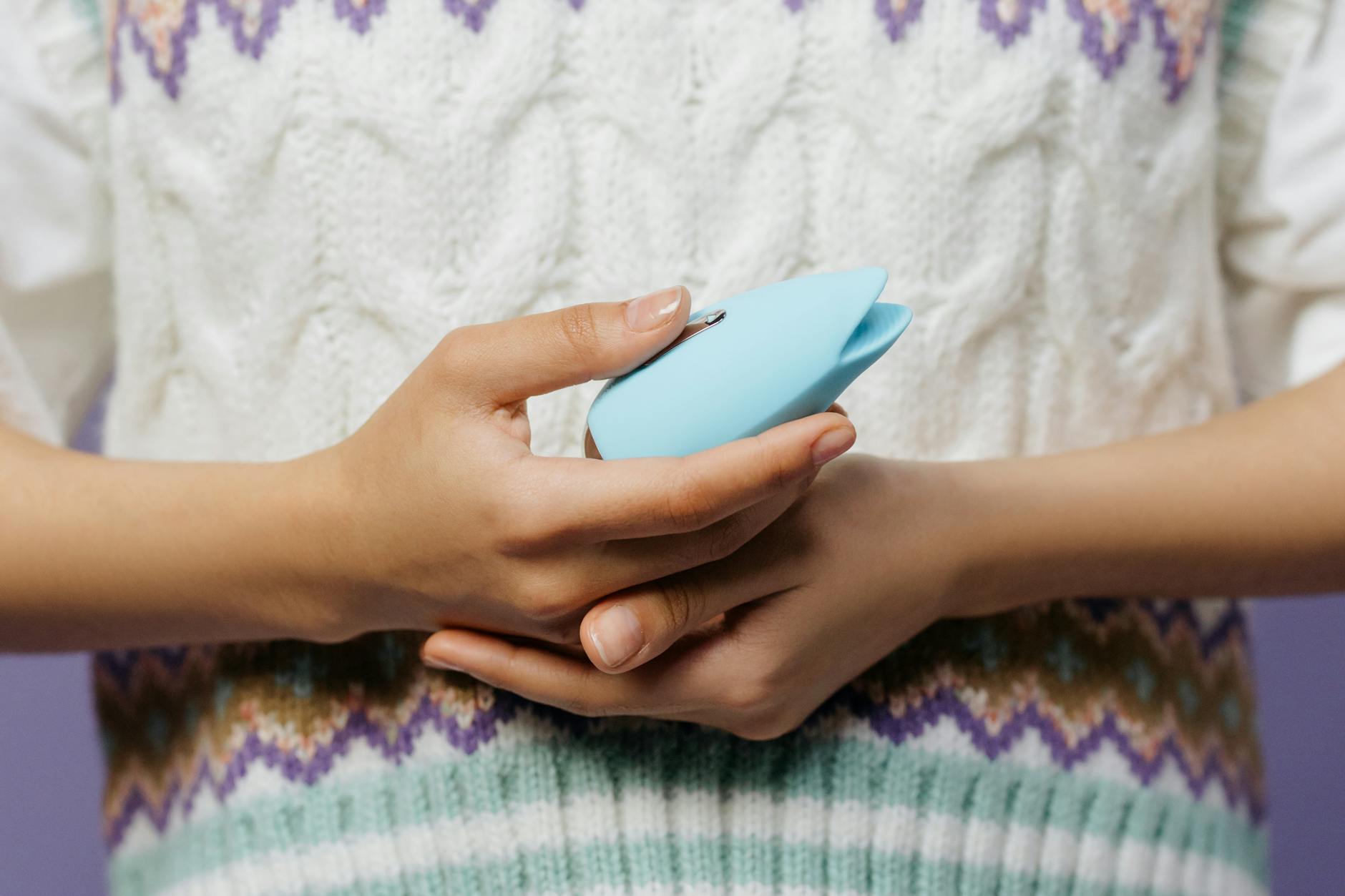
How to Use a Lemon Vibrator When Vaginal Dryness Persists After Menopause
Let's be real. Vaginal dryness after menopause feels like a door closing. Except it isn't. It's a redirect.
The estrogen drop that causes dryness changes how penetration feels and how quickly arousal builds. That's the literal part. But here's what doesn't change: your clitoris still has the same nerve density, the same pleasure pathways, the same capacity for intense sensation. A clitoral vibrator like the Lem doesn't work around dryness. It bypasses it entirely. And for most people post-menopause, that means better, more reliable orgasms than they had before.
What vaginal dryness actually does to your body
Estrogen keeps vaginal tissue plump and elastic. When it drops, that tissue thins. It produces less natural lubrication. The vaginal opening can feel narrower. Penetration might sting or feel too intense. You might need 20 minutes of arousal instead of five to produce any lubrication at all.
But here's what people miss: dryness is a penetration problem, not a pleasure problem. The clitoris lives outside the vagina. It doesn't thin. It doesn't dry out. It's anatomically separate from the tissue that's changing. When you shift focus to clitoral stimulation instead of trying to force penetration that isn't comfortable, you're not settling for less. You're actually choosing the most efficient route to orgasm most bodies have access to anyway.
Why clitoral vibrators work better post-menopause than ever
Three reasons clitoral stimulation becomes more valuable after menopause, not less.
First, arousal takes longer. A clitoral vibrator gets you there faster. Instead of spending 25 minutes on foreplay hoping penetration becomes comfortable, you're building pleasure directly from minute one. That's not a compromise. That's smarter design.
Second, dryness makes texture matter more. Silicone vibrators and suction toys don't require friction the way fingers do. The Lem works through air-pulse technology, which stimulates without grinding. No friction means no irritation, no soreness the next day, no anxiety about whether it's going to hurt. Just sensation.
Third, confidence comes back. When you stop trying to make something work that doesn't work right now and switch to what does, sex stops feeling like a problem you're solving and starts feeling like something you're choosing. That mental shift alone transforms the experience.
How dryness changes arousal timing (and what to do about it)
Post-menopausal arousal is slower. That's not bad. It's just different.
With vaginal dryness, your body isn't signaling readiness as quickly as it used to. Clitoral swelling happens more gradually. The urge to come might not arrive until 15 or 20 minutes in, when before it was five. This used to be frustrating for people. Now I see it as an opportunity.
A slower build means you have time to actually enjoy the process. Most post-menopausal clients I work with report that their orgasms feel more grounded, more intense, more full-bodied once arousal finally builds. It's like the journey matters more now because you can't fast-forward it.
With a clitoral vibrator, you're not waiting for your body to cooperate. You're actively creating the sensations that will bring arousal. Start at pattern one or two on the Lem. Let it work for 10 minutes without expecting anything. Then you'll notice the shift. Sensation building. Clitoral swelling beginning. Arousal catching up to intention.
Lubrication strategy when dryness is persistent
Water-based lubricant isn't optional after menopause. It's a tool. Using it isn't admitting defeat. It's using your resources.
Apply lube to the external clitoris and labia, not inside. You're not trying to create internal lubrication. You're protecting sensitive tissue from the slight friction of the vibrator against skin. A high-quality water-based lube (Hyalo Gyn or Hyaluronic Acid formulas are excellent) adds slip and comfort without changing the sensation.
If dryness is truly severe and persistent, ask your GP about topical estrogen creams. They're applied locally, have minimal systemic absorption, and can genuinely restore tissue in 8 to 12 weeks. Vagifem or Premarin cream work. They're not a long-term solution, but they can give you a window where everything feels more comfortable again.
Some clients also find that a little extra blood flow helps. That means time. Foreplay that's genuinely aimed at arousal, not penetration. A clitoral vibrator, used without pressure, for 15 to 20 minutes before anything else happens.
Why suction technology sidesteps dryness
The Lem isn't a traditional vibrator. It's a clitoral suction toy. Air pulses create waves of pressure rather than mechanical vibration. That distinction matters when tissue is thinner and more sensitive.
Traditional vibrators work through friction. Suction works through pressure and rhythm. Suction doesn't require the same amount of lubrication because it isn't grinding against skin. For post-menopausal bodies, that's the difference between comfort and soreness.
Start with the lowest setting. The Lem has multiple intensities. At setting one, it feels like a gentle pulse. By setting four, it's more intense. Most post-menopausal clients find settings two and three give them the best balance of sensation without overwhelm.
One tip: don't position it like you're trying to maximize pressure. Let it sit gently. The suction does the work. Pressure from you just makes it uncomfortable.
What changes in partnered sex when dryness is an issue
If you're with a partner, the conversation matters more than the lubricant.
Many post-menopausal people make the mistake of trying to hide dryness or push through discomfort to keep sex "normal." That's backwards. Dryness is visible to your partner the moment you communicate it. Hiding it creates tension and anxiety. Naming it creates a problem you can actually solve together.
Some couples shift to primarily clitoral play, with penetration as an optional add-on, not the main event. Some use toys as part of partnered sex. Some take penetration off the table for a season and focus entirely on what does feel good.
The common thread isn't what they choose. It's that they chose it together, consciously, without shame.
When dryness signals something that needs medical attention
Persistent dryness that doesn't improve with lubricant and time, or dryness paired with pain, burning, or visible inflammation, needs a gynaecologist's attention. Genitourinary syndrome of menopause is real and highly treatable.
Your GP can offer topical estrogen, vaginal moisturizers like Hyalo Gyn (used regularly, not just before sex), or systemic hormone therapy if that's right for you. Getting help isn't giving up. It's using the resources available.
If you've tried everything and penetration still hurts, a sex therapist or pelvic floor physical therapist can help. Vaginismus (involuntary pelvic floor tension) often develops alongside dryness because you've been anticipating pain. A therapist can help you retrain those muscles.
The mindset shift that changes everything
Most post-menopausal people approach dryness as a problem. An obstacle. A reason sex should be harder now.
I see it differently. Dryness is information. It tells you that penetration-centered sex isn't going to be as easy as it was. That's valuable. Because most people, given permission and good information, end up preferring clitoral play anyway. Dryness just forces the conversation earlier.
When you switch from "how do I make penetration work" to "what feels best right now," pleasure becomes simpler. A clitoral vibrator, a little lubricant, and 15 to 20 minutes is often enough to reach orgasm more reliably than years of trying to force something that doesn't fit anymore.
Your body isn't broken. It's changed. And change, when you stop fighting it, often opens doors.
FAQ: Lemon vibrators and post-menopausal pleasure
Can a clitoral vibrator help if lubricant doesn't seem to be enough?
Often yes. If internal lubrication is the problem, a clitoral vibrator bypasses it. The Lem works on the external clitoris, where dryness isn't an issue. If you've been frustrated with how long foreplay takes or how hard it is to reach orgasm with penetration, a clitoral vibrator can shorten that timeline dramatically.
Is it normal for sensation to feel different after menopause, even with lubrication?
Completely normal. Tissue changes affect how stimulation feels. It might take more intensity to register, or you might find that certain sensations feel better than they did before. Neither is wrong. It's your body adapting. A vibrator with multiple settings (like the Lem) lets you dial in what works now instead of trying to force what worked 10 years ago.
How long should I wait after trying lube before switching to a vibrator?
Give lubrication three to four weeks of consistent use during partnered sex or masturbation before concluding it isn't helping. If dryness is severe, topical estrogen cream can take 8 to 12 weeks to show results. A clitoral vibrator, meanwhile, works immediately. You don't have to wait.
Can I use a clitoral suction toy if I have very sensitive tissue?
Yes, but start low. The Lem's lowest setting is genuinely gentle. If even that feels overwhelming, you can also use it in pulsing mode rather than suction mode, or apply it over a thin fabric barrier. Some people find a layer of cloth reduces intensity just enough. Experiment without pressure.
Is vaginal dryness a sign I should try hormone therapy?
Not necessarily. It depends on your overall health, your other symptoms, and your preferences. Topical estrogen creams are extremely effective and have minimal systemic absorption. They're often a good first step. Systemic hormone therapy is an option if dryness is part of a larger constellation of menopausal symptoms. Talk to your GP about what makes sense for you.
What if my partner feels like a vibrator is a reflection on them?
That's a conversation, not a problem you need to solve alone. A vibrator isn't about your partner. It's about your body and what it needs right now. You might frame it as "my body is responding differently, and this helps me enjoy sex more." Or "I want to feel good, and this makes that possible." If your partner can't hear that, that's about their insecurity, not about you or the vibrator. You deserve pleasure that doesn't depend on someone else's comfort with your body.
You don't have to choose between comfort and pleasure
Menopause changes vaginal tissue. That's not disputable. But it doesn't have to change your sex life in the ways people assume it will. Dryness is solvable. It's inconvenient, maybe, but not tragic.
Clitoral vibrators exist partly because people with vulvas have spent decades accepting that penetration-centered sex is the default. Menopause sometimes makes that default uncomfortable. That's when a tool like the Lem stops being a luxury and becomes practical. You're not enhancing pleasure you already had. You're accessing pleasure your body actually prefers, once friction and dryness stop getting in the way.
If you're navigating this transition and want to explore what's available, we're here. Contact us if you have questions about what might work for your body, your situation, or your relationship. Pleasure after menopause isn't theoretical. It's lived experience, and it's worth fighting for.