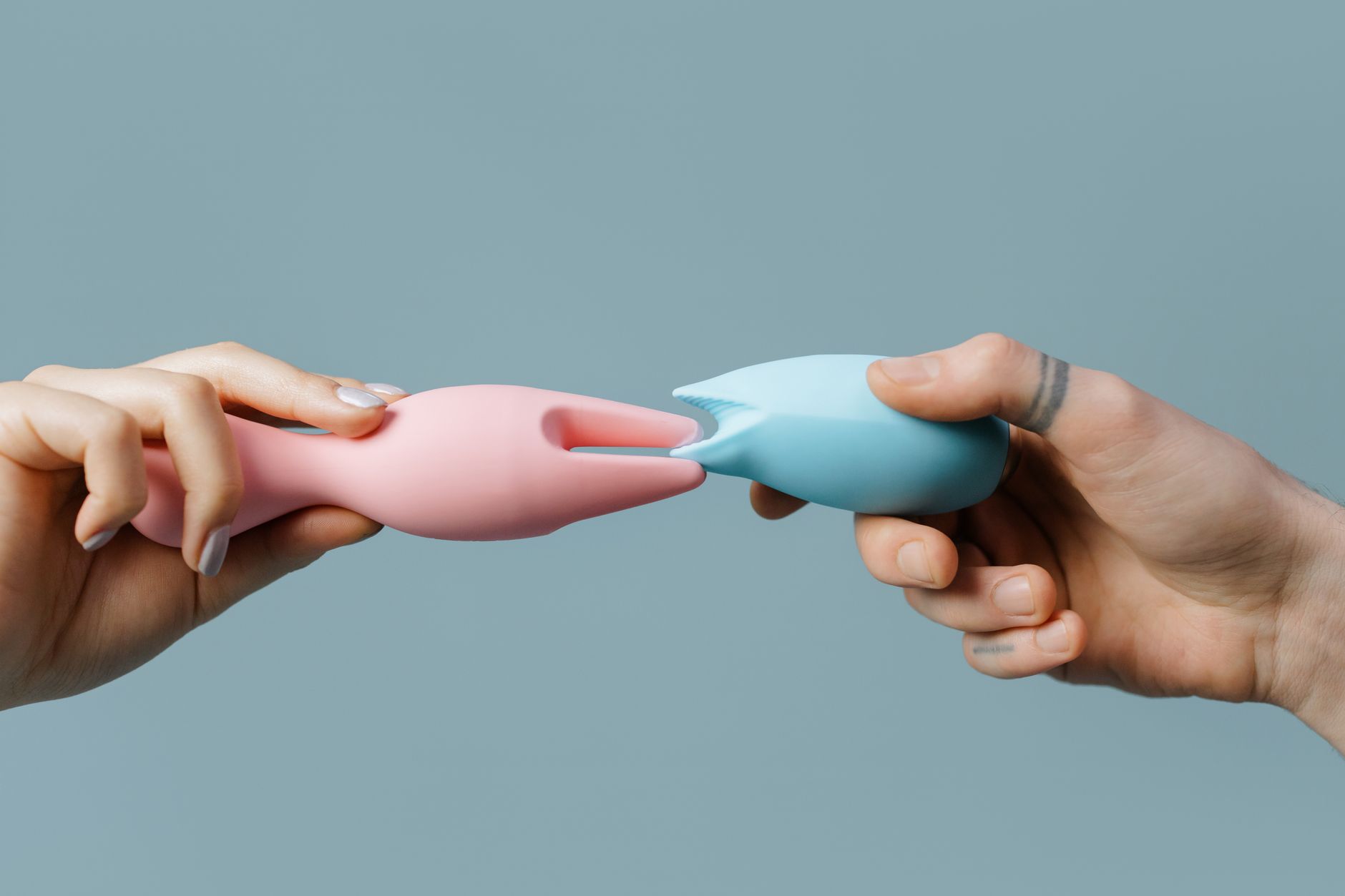
Let's be real about this one
Your partner doesn't want toys in the bedroom. Maybe they see it as a referendum on their own ability to please you. Maybe they grew up thinking vibrators meant something was broken. Maybe they're just uncomfortable with the idea, and that's their boundary, and it's worth respecting. The thing is: you can still have a lemon vibrator. You can still use it. You can still build a satisfying solo practice that doesn't erode the intimacy you've got with your partner. It just takes intention.
This isn't about sneaking around or creating secrets that will blow up later. It's about honoring two different comfort levels in the same relationship. That's actually possible, and it's actually healthy. Let me show you how.
Why partners resist toys (and what it usually means)
Here's the script that runs in most people's heads: if you need a vibrator, that means I'm not enough. Logically? Wrong. Emotionally? That's the fear talking, and it's worth taking seriously without accepting it as truth.
Resistance usually lands in one of three buckets. First is threat perception.he worry that the toy will replace them, that you'll prefer it, that your body will somehow forget how to respond to their touch. Second is shame. They grew up with the message that vibrators are dirty or desperate, and that shame isn't rational but it's real. Third is loss of control. With a vibrator, they can't fully direct your pleasure anymore. You're in the driver's seat, and that shift can feel destabilizing if they've built their sexual identity around being the one who knows what you need.
None of these are actually about whether vibrators are good. They're about anxiety, history, and identity. And none of them mean you don't get to use one.
The solo practice that doesn't create distance
Here's what I tell couples: a vibrator isn't a replacement for partnered sex. It's a supplementary practice. It's something you do in your own time, like working out or taking a bath. It builds your capacity for pleasure, which actually improves the sex you have together because you're not starting from depletion or frustration.
Use your lemon vibrator solo. Early morning. After they've left for work. Or late at night when they're asleep and you're lying awake with your thoughts. A lemon clitoral vibrator like the Lem is quiet enough that it doesn't need to broadcast itself. Set aside 15 to 30 minutes, no pressure. This is for you. This is your body reclaiming the right to explore what feels good without an audience or without someone else's anxiety in the room.
The frequency doesn't matter as much as the consistency. Weekly? Great. A few times a month? Also great. You're building a map of your own pleasure. That map is invaluable when you're back in partnered sex because you actually know what you need instead of guessing.
When they don't know and why that matters
Here's the hard part: does your partner need to know you're using a vibrator?
That depends on your relationship values. If honesty and disclosure are non-negotiables for you both, then yes, eventually, they need to know. Not as a confession. As information. As a choice you've made about your own pleasure.
If you're in a relationship where vulnerability is already fragile, or where your partner has made it clear that finding out you use a toy would genuinely hurt them, then you're in a different situation. That's a sign the relationship needs work on communication, not a sign you should abandon your own pleasure. But it does mean the conversation matters more.
The key: using a vibrator in secret is different from using it privately. Private means you're making your own choices about your body. Secret means you're hiding something because you're afraid of your partner's reaction. One builds autonomy. The other builds resentment.
How to have the conversation (without it becoming a fight)
Timing matters. Don't bring this up during sex or right before it. Don't bring it up when they're stressed or defensive about something else. Bring it up in calm time, over coffee, when you both have space.
Start with what's true for you, not what you need from them: "I've been thinking about solo pleasure. I want to explore what feels good for my body. I'm considering using a vibrator for that." Notice you're not asking permission. You're not phrasing it as a question. You're stating a choice.
Then pause. Let them react. Their initial reaction might be hurt or threatened. That's information. It's not a veto. It's their anxiety speaking. You can acknowledge it: "I hear that this brings up feelings for you. I want to understand what's underneath that." This is different from backing down.
Some partners will soften once they understand you're not comparing them to the toy. You're just building a relationship with your own body. Some will need time. Some will need reassurance that this doesn't mean sex with them changes. And some will stay resistant, which is a different conversation about what you both actually need to feel connected.
The sexual dynamics that actually improve
Here's the counterintuitive part: couples where one partner uses a vibrator solo often report better partnered sex, not worse. Why? Because the person using the vibrator is no longer approaching sex from a place of depletion. They're not wondering if they can get off. They know they can. That confidence changes how they show up.
You're also no longer putting all the pressure on your partner to be the sole source of your pleasure. That's a lot of weight. When you take some of that responsibility back, the sex feels less like work for both of you. It feels more like connection, which is different.
If your partner is worried about the Lem replacing them, you can explain what it actually does: it mimics suction and vibration in ways fingers and tongues can't perfectly replicate. But what it can't do is create the emotional intimacy, the vulnerability, the presence that makes sex feel meaningful. That's still 100 percent them.
When resistance becomes a bigger issue
If your partner's discomfort with your pleasure is part of a larger pattern, that's worth naming. If they need to control what you do with your body. If they shame you for having desire. If they make you feel small for wanting pleasure that exists outside their participation. That's not really about the vibrator. That's about power dynamics that need attention.
A lemon vibrator can't fix a relationship where someone doesn't respect your autonomy. What it can do is clarify what's actually happening. Sometimes once you're exploring pleasure on your terms, you realize you've been smaller than you wanted to be. Sometimes you realize your partner actually respects you more than you thought, once you stop apologizing for your own body.
Your pleasure is not negotiable
Here's the thing: you deserve to feel good. That's not selfish. That's not a threat to your relationship. That's baseline. If your partner can't come to terms with that, that's information. And you get to do something with that information.
Your solo practice with a lemon vibrator isn't something you need to feel guilty about. It's an act of self-care. It's an act of claiming your own body back. It's an act of saying: my pleasure matters even if you're not involved in creating it.
Start the conversation. Start solo. And notice what shifts.
People also ask
Can I use a lemon vibrator if my partner is in the house?
Yes. The Lem and most lemon clitoral vibrators are designed to be quiet. Use a closed door and a bit of focus. If your partner is truly unaware, that's one thing. If you're having to hide every time, that speaks to a bigger communication gap that's worth addressing directly rather than managing forever.
Will my partner feel rejected if I use a vibrator solo?
Possibly, if they interpret it as rejection. That's why the conversation matters. Frame it as addition, not substitution. "I'm exploring more of what feels good for my body" is different from "You don't satisfy me." One is about you. The other is about them. Keep it about you.
What if they find out I've been using a vibrator without telling them?
Then you're in a conversation about trust and disclosure. It won't be pleasant, but it'll be clearer than the secret. Address it head-on: "I was nervous about your reaction, so I kept it private. That wasn't fair to you. Here's what I actually need." Honesty plus accountability opens more doors than continued secrecy.
Is using a vibrator cheating?
No. Not even close. Cheating involves betrayal of trust and commitment. Using a vibrator is solo sex. It's intimate with yourself. It's not a replacement for your partner and it doesn't involve someone else. If your partner believes it is, that's a core belief difference worth exploring with a therapist, because that's restricting your autonomy in a way that usually extends into other areas.
How often should I use a lemon vibrator if my partner doesn't want me to?
As often as you need to feel grounded in your own pleasure. That's the point. It's not about frequency. It's about reclaiming the right to know your own body. Once or twice a week is plenty for most people. The rhythm that matters is consistency, not intensity.
Can we eventually use a lemon vibrator together?
Maybe. Some partners need time to move from resistance to curiosity. You might use a lemon clitoral vibrator solo for months, then one day your partner asks what it actually feels like, and from there, intimacy opens up. Or they might never be comfortable, and you respect that. But don't wait for permission to explore on your own. That boundary is yours to set.
Keep the bigger picture in view
A vibrator is a small tool in a much larger relationship. But it's also not small at all because it represents something bigger: your right to pleasure, your autonomy, your body as a source of information and joy that doesn't need external validation.
If your partner comes around, great. If they don't, you've still got your own practice. And sometimes, that's enough to remind you that you're whole on your own, which actually makes partnership feel more like a choice and less like a need. Both of those are better places to build from.