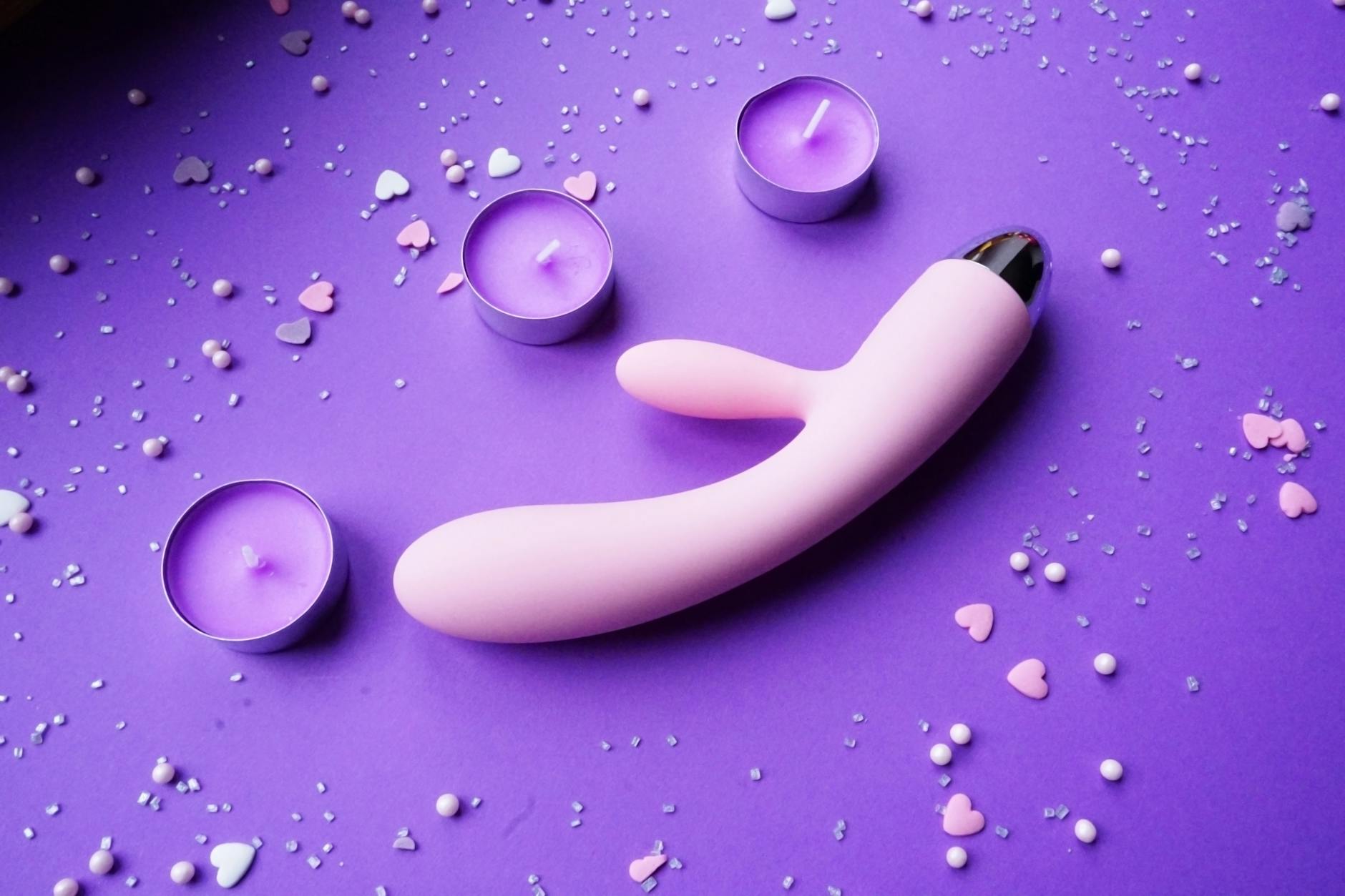
How to Use a Lemon Vibrator During Partnered Sex Without Awkwardness
Let's be real. The moment you introduce a toy into partnered sex, something shifts in the room. Sometimes it's hot. Sometimes it's weird. Sometimes your partner thinks you're saying they're not enough. None of that has to happen if you actually know what you're doing.
I've worked with dozens of couples navigating this exact transition, and the ones who nail it aren't the ones with the best toys or the fanciest techniques. They're the ones who got the conversation right beforehand and understood how to position a lemon clitoral vibrator so it actually enhances what's already happening, rather than interrupting it.
Why a lemon vibrator changes the game for couples
Unlike wand vibrators or traditional toys, a lemon clitoral vibrator uses suction and gentle pulsing. That means it doesn't require constant repositioning or take up a ton of physical space. Your partner can stay inside, engaged, connected, while you get direct clitoral stimulation. It's collaborative by design.
The physics matter here. A lemon vibrator stimulates the external clitoris without the intensity of friction-based toys. That means you're less likely to go numb mid-session, you can stay present longer, and the orgasm, when it comes, often builds naturally instead of crashing down like an emergency alert.
For your partner, the benefit is different but real. They get to see and feel you responding in real time. They can adjust their pace based on what's working. They're not watching you use a toy that makes you unavailable. They're watching you use a toy that makes you more responsive.
The conversation that needs to happen first
This is the part that determines whether the next part goes well.
Don't introduce the idea during sex. Don't spring it out as a surprise. Bring it up when you're both clothed, fed, not touching, and genuinely have time to talk. Here's a framework that works:
"I've been thinking about what would help me come more reliably during sex with you. I think a lemon clitoral vibrator might make a difference. I'm not saying anything's wrong with what we're doing. I'm saying I want to experiment with what makes my body respond better. Would you be interested in trying it together?"
Notice what that does. It frames the toy as a tool for your pleasure, not a replacement for your partner. It signals that this is about collaboration, not criticism. And it actually asks for their buy-in instead of assuming it.
Your partner might have questions. "Will I still feel you?" (Yes, mostly.) "Doesn't that mean we're not really connected?" (Actually, the opposite, because you'll be able to come, which means you'll be more present.) "How do I know what I'm supposed to do?" (We're getting to that.)
Answer them straight. Don't oversell the toy. Don't oversell the experience. Just be honest.
Positioning that actually works
The logistics matter more than the romance here.
If you're in a position where your partner is inside you, a lemon vibrator works best when you're not trying to also manage penetration sensations and clitoral stimulation at the same time. That's competing input, not complementary input.
The positions that work best:
You on top. You control depth and pace, so you can maintain the clitoral contact with the lemon vibrator while your partner is inside. You get stability, leverage, and total control over how much stimulation you're getting.
Spooning, your partner behind. The angle lets your partner reach around or to the side with the lemon vibrator. There's plenty of chest-to-back contact, which keeps the intimacy alive. It's slower, which means you can build sensation gradually.
You on your back, partner between your legs. Your partner can hold the lemon vibrator and control it themselves while managing their own movement. This requires more coordination and communication mid-session, but it's one of the most collaborative positions.
Positions that struggle: anything where you're both trying to maintain a specific angle while also introducing a toy. If you have to choose between the toy's angle and the penetration angle, you've already lost some of the benefit.
The first time (manage expectations)
Honestly, the first time usually isn't the one that's amazing.
You'll be self-conscious. Your partner might be unsure whether to keep moving or stay still while you use the toy. You might worry you're taking too long. There's a lot of cognitive load, and cognitive load is the enemy of arousal.
That's completely normal. Set a realistic goal for the first time: not "we'll both have the best orgasms of our lives," but "we'll try this and learn what we need to adjust." Take the pressure off performance.
Start with your partner not inside you. Get comfortable with the sensation of the lemon vibrator while they touch you, kiss you, and stay present. Once you know how your body responds to the toy alone, you can layer in penetration.
When you do introduce penetration, go slow. Let your partner enter gradually while you're using the toy. This gives your body time to integrate multiple sensations instead of being flooded. Your partner should stay relatively still at first, just maintaining presence, while you figure out how the two sensations work together.
Communication during sex (the real kind)
One of the biggest mistakes couples make is thinking that using a toy means less communication.
Actually, it means more, but different.
Instead of full sentences, you're giving feedback. "Faster." "Right there." "Stay still for a second." "A little softer." Your partner learns to read your breathing and your muscle tension, not just your words.
The lemon vibrator should enhance your ability to receive and respond, not replace it. If you're using the toy and you've gone completely silent and still, something's wrong. You should be more responsive, not less.
Your partner should know it's okay to ask questions mid-session. "Does that feel good?" "Should I speed up?" "Can you feel me?" These aren't mood-killers if you're already in an intimate space together. They're actually trust-building.
When to use it and when to skip it
A lemon clitoral vibrator isn't the move every single time you have partnered sex.
Sometimes you want quickies where the whole point is spontaneity and intensity. A toy interrupts that. Sometimes you both want to focus on connection without distractions. That's fine too.
The toy works best when you have enough time to set it up, when you both feel relaxed and curious, and when you're in a headspace where pleasure is the goal, not an afterthought.
If you're using it because you feel like you "should" be able to come during partnered penetration and the toy is just a workaround, that's a different conversation. You might be dealing with a mismatch in how your bodies work, which is worth addressing with a therapist, not a toy. The toy should enhance something that's already good, not fix something that's broken.
The vulnerability piece
Here's what nobody talks about: asking your partner to engage with your pleasure in a new way requires a specific kind of vulnerability.
You're saying "I need this to feel good." You're also saying "I trust you to help me get there." That's a lot. If your relationship is already shaky on vulnerability or if trust is an issue, introducing a toy might feel like adding a band-aid to a bigger wound.
But if your relationship is solid and you're both genuinely interested in each other's pleasure, a lemon vibrator can be a surprisingly intimate tool. Your partner gets to be part of your pleasure in a new way. You get to experience your own body more fully. That's connection.
Check in with each other after, not just about whether the sex was good, but about how you felt emotionally. Did you feel close? Did anything feel off? Would you do it again? Those conversations are where the real intimacy lives.
FAQ
Can my partner feel me internally if I'm using a lemon clitoral vibrator?
Yes, but not the same way they would during penetration alone. The external stimulation doesn't interfere with internal sensation, but your partner's experience shifts because your responses change. You'll likely be more vocal, more tense and released rhythmically, and overall more engaged. Many partners actually report that this is more pleasurable than penetration alone because they can feel your actual arousal building.
What if the toy doesn't fit into our positioning?
Then you try a different position or you use it at a different stage of sex. You don't have to integrate the toy into every moment of penetration. You could use it before your partner enters, or after, or during oral sex. Flexibility beats stubbornness every time.
How long can we actually use a lemon vibrator during partnered sex?
Depends on the battery and your sensitivity. Most sessions where a lemon clitoral vibrator is involved last 15-30 minutes of active use, though that's not continuous. You might use it for five minutes, take a break, switch positions, come back to it. There's a rhythm that usually develops naturally.
What if my partner is jealous of the toy or feels threatened?
That's feedback that something deeper needs to be addressed, probably in a conversation that doesn't happen during or right after sex. Jealousy about toys often masks other insecurities about desirability or performance. If your partner is struggling with that, reassure them specifically: "I want to experience more pleasure with you, and this helps me do that." But if reassurance doesn't help, couples therapy is a good move. A sex therapist or marriage counselor can help you both get on the same page about what partnership means.
Does using a lemon vibrator mean we're not compatible sexually?
Actually, the opposite. If you can talk about needing a toy, introduce it together, and work through the logistical and emotional stuff, you're demonstrating compatibility. Lots of couples never get that far because they're too embarrassed or too stuck in shame. The fact that you're even considering this means you're already ahead.
How often should we use a lemon vibrator during partnered sex?
As often as you both want to. There's no "healthy" frequency. Some couples use one every time. Some use it once a month. Some introduce it, it works for a season, then they move on to something else. The point is that it should feel collaborative and optional, never obligatory or like a backup plan.
The bigger picture
Using a lemon clitoral vibrator during partnered sex is really just a conversation about pleasure, presence, and vulnerability. The toy is the excuse; the actual work is learning to ask for what you need and trust that your partner wants to help you get there.
If you want to go deeper into how to build that kind of communication in your relationship, especially around pleasure and intimacy, our guide to introducing a lemon vibrator to your partner walks through some of the emotional groundwork. And if you're working with pelvic floor tension that's making penetration uncomfortable, this resource on lemon vibrators and vaginismus might help you figure out whether the toy itself is the missing piece or whether there's other work to do first.
The goal isn't perfect sex. The goal is partnership, honesty, and pleasure that feels mutual. A lemon vibrator can absolutely help you get there. So can patience, curiosity, and the willingness to try something new together.