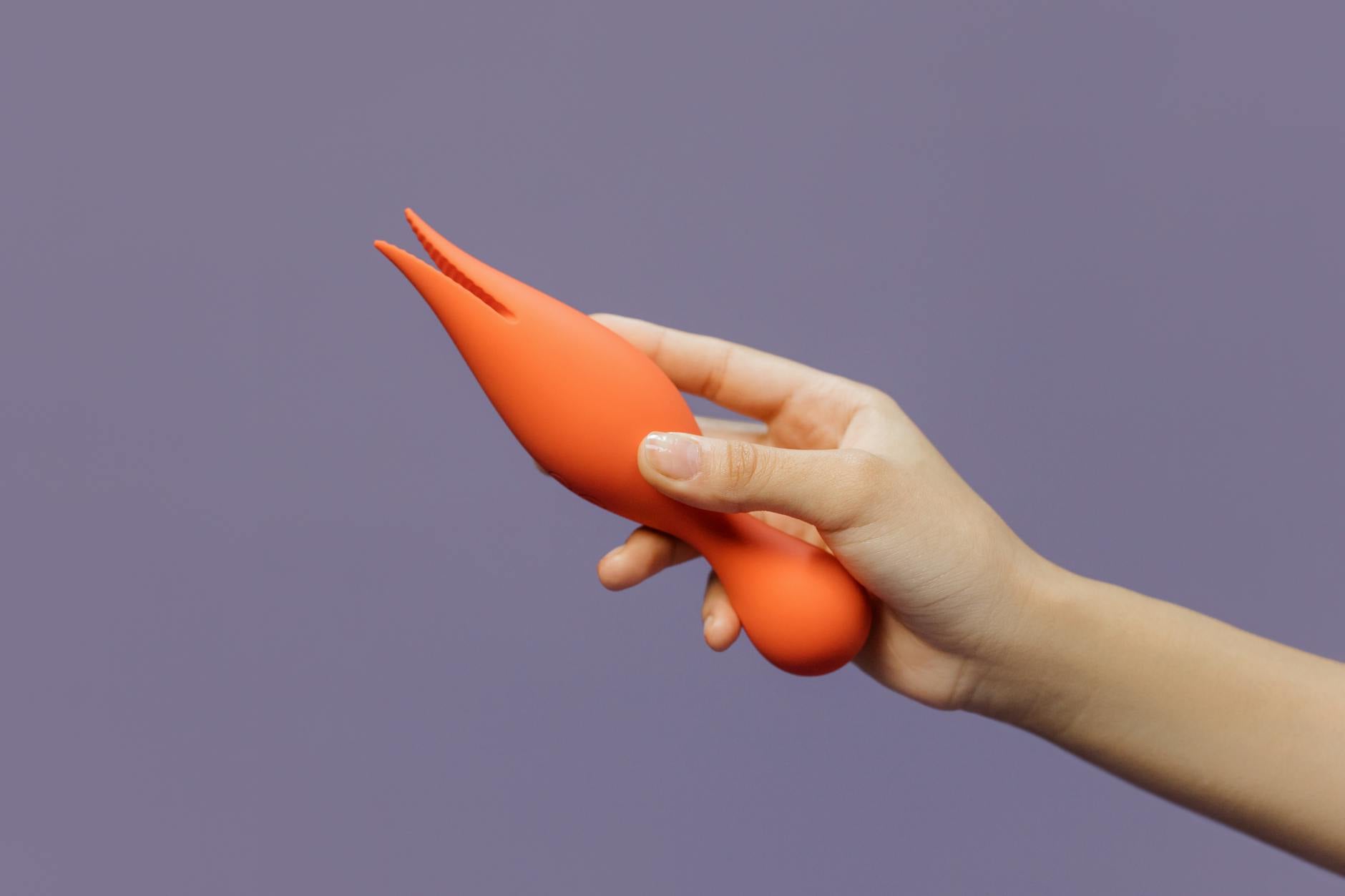
Let's talk about what hormones actually do to your clitoris
Your clitoral sensitivity shifts with hormones, and that's not a bug. It's just physiology. Estrogen, progesterone, and testosterone all influence how your nerve endings respond to touch, how quickly you become aroused, and what kind of stimulation feels best on any given day. Most people never get explicit instruction on this, which means they end up blaming themselves for changes that are completely normal.
Here's the thing: if you own a lemon vibrator or are thinking about getting one, understanding these shifts is your biggest advantage. The lemon clitoral vibrator's unique suction mechanism is wildly responsive to these changes, which means you can actually dial your experience up or down depending on where you are in your cycle or life stage. Once you know how, pleasure becomes predictable again.
How your clitoris changes through your cycle
If you menstruate, your clitoral sensitivity maps almost directly to your hormone levels. Right after your period ends, when estrogen starts climbing, your clitoris becomes more engorged and sensitive. Touch feels sharper, more direct. This is when many people describe needing less warm-up time and finding higher intensity on their lemon vibrator genuinely satisfying.
As you move toward ovulation, that sensitivity peaks around day 12 to 14. Your clitoris is maximally swollen, the tissue is richly bloodied, and honestly, this is often when orgasm feels easiest and most intense. If you're tracking when your lemon clitoral vibrator feels best, this window is usually the one.
Then progesterone rises after ovulation. This hormone does something different. It doesn't make you less sensitive exactly, but it changes the quality of sensation. Some people describe it as muffled or requiring more build-up. Others find their orgasms are quieter but deeper. The clitoral tissue is still responsive, but the nervous system's readout changes.
Right before your period, estrogen and progesterone both tank. This is when many people find their clitoris feels almost numb, or hypersensitive in an uncomfortable way. Your lemon vibrator at pattern 5 might have felt amazing three days ago and now feels aggressively intense. That's not weakness. That's hormones.
Birth control, hormonal IUDs, and what that means for sensation
If you take hormonal birth control, you're running on synthetic hormones at a steady state. This means your clitoral sensitivity is generally more stable. Some people love this because they always know what to expect from their lemon vibrator. Others miss the peaks and valleys, which used to feel like erotic variety.
Hormonal IUDs release progesterone into your system in low doses. Many people report slightly reduced sensitivity compared to non-hormonal methods, but it's subtle and individual. The biggest shift usually happens in the first three months as your body adjusts.
Non-hormonal IUDs don't change your hormone levels, so your cycle sensitivity still exists. The advantage here is that you get to experience and map those natural variations if you want to.
Recalibrating your lemon vibrator for each phase
This is where the lemon clitoral vibrator's design actually shines. Because suction works differently than friction, you have granular control over intensity that a traditional vibrator doesn't give you.
During your high-sensitivity phase (ovulation window): Start at pattern 1 or 2 and let yourself feel what that does. You might find that you only need one or two patterns the entire session. Many people find that slower suction, held steadily, produces the strongest orgasms during this window. There's no rush to climb the intensity ladder. Some of the best orgasms I see reported happen when someone stays at a lower pattern and lets the sensation build naturally over 10 to 15 minutes.
During your moderate-sensitivity phase (follicular, early luteal): This is your sweet spot for exploring patterns 3 through 5. Your clitoris is responsive but not oversensitized. This is the phase where many people try out new approaches with their lemon vibrator because the feedback is clear and honest. If you want to test whether you prefer steady suction or pulsing patterns, do it now.
During your low-sensitivity phase (late luteal, right before bleeding): Lean into longer warm-up time. Some people add external stimulation, like hand touch, before engaging their lemon vibrator. If you do use your lem vibrator, you might need patterns 4 or 5, but take your time getting there. There's often a sweet spot where intensity peaks and then any more feels uncomfortable. Finding that sweet spot usually means playing with the same pattern for a few minutes rather than climbing the ladder.
If this phase ever feels painful rather than just less responsive, that's worth investigating with a doctor. Pain is different from low sensation and deserves its own conversation.
What happens when hormones shift dramatically
Periods of major hormonal change, like the transition into perimenopause or the first months after stopping hormonal birth control, feel disorienting. Your clitoral sensitivity might feel completely unpredictable. One day your usual pattern feels perfect. The next day it feels wrong.
Here's what I recommend during these transitions: keep a simple note. Nothing elaborate. Just record the date, what pattern you used, what phase you were in, and how it felt. After three to four weeks of data, you'll see a pattern emerge. Usually, you'll notice that your sensitivity is following a new rhythm, even if that rhythm is different than before.
For people in perimenopause or menopause, clitoral sensitivity often drops overall, but the lemon suction mechanism tends to work better than friction-based toys through this phase. Why? Because suction doesn't require the same kind of engorged tissue response that a traditional vibrator does. You get stimulation without needing maximum blood flow.
The practical stuff: adjusting your routine
First, give yourself permission to change how you use your lemon vibrator based on where you are. There's no "right" way to use a lemon clitoral vibrator. There's only what works for your body today.
Second, understand that warm-up time is your friend. When sensitivity is lower, your clitoris needs more time to engorge and wake up. Spend 5 to 10 minutes with touch or with your lem vibrator on a lower pattern before you do anything else. Rushing straight to high intensity when your tissue isn't ready produces frustration, not pleasure.
Third, lubrication matters more during low-sensitivity phases. Water-based lube doesn't change how your lemon vibrator works, but it reduces friction and lets the suction engage your tissue more effectively. It's a small adjustment that often makes the difference between "this isn't working" and "okay, now we're getting somewhere."
Fourth, track what you learn. You don't need an app or a spreadsheet. Just a mental note of "oh, I always need pattern 2 right after my period" or "day 22 is usually when things feel numb." After a few cycles, you'll stop being surprised by your own body.
When sensitivity changes signal something else
There's a difference between normal hormonal fluctuation and a change that reflects something else going on. If your clitoral sensitivity has been stable for years and suddenly drops and doesn't recover over several cycles, talk to a doctor. This can sometimes signal thyroid issues, medication side effects, relationship stress, or other things worth investigating.
Likewise, if sensation has always been lower and you're wondering if a clitoral vibrator can help, the answer is usually yes, especially a lemon vibrator. Suction-based toys often work better for people with lower baseline sensitivity than traditional vibrators do. They engage your tissue differently. But getting checked out first to rule out anything medical is worth doing.
Real talk about pleasure through change
The biggest shift I see people make is accepting that their body's needs can change and that's fine. You're not broken. Your lemon vibrator didn't stop working. Your clitoris is just responding to what's happening in your hormone system. Once you understand that, you can actually work with your body instead of against it.
Your pleasure matters. It's worth understanding. And it's worth taking five minutes to notice what your body is telling you on any given day. That's not vanity. That's self-knowledge.
People also ask
Does hormonal birth control make clitoral stimulation feel different?
Yes, but not always negatively. Hormonal birth control stabilizes your hormone levels, which means your clitoral sensitivity usually stays more consistent throughout the month. Some people find this wonderful because their lemon vibrator response is predictable. Others miss the natural peaks and prefer non-hormonal options so they can experience the full range. Neither is better. It depends on what you prefer.
Can I use my lemon vibrator during my period?
Absolutely. Some people find that clitoral orgasms feel more intense during their period because increased blood flow makes tissue extra responsive. Others find that the cramping or heaviness makes them not want to. Both are normal. If you do use your lemon clitoral vibrator during your period, you might find that you need less stimulation than usual. Pay attention to what feels good, not to what you think you "should" be able to handle.
What should I do if my clitoral sensitivity feels completely unpredictable?
First, give it two to three full cycles to see if a pattern emerges. Hormones take time to settle into a rhythm. If it's still chaotic after that, keep a simple note of what's happening. Unpredictability often resolves once you have data in front of you. If it persists and nothing's changed in your life, a conversation with a doctor about thyroid function or other hormonal markers is worth having.
Why does my clitoris feel numb when I'm stressed?
Stress activates your sympathetic nervous system, which suppresses genital blood flow and sensation. Your clitoris can't engage fully if your nervous system is in fight-or-flight. This is temporary and usually resolves once you feel safe and calm. If chronic stress is tanking your sensation, addressing the stress becomes part of addressing pleasure. That might mean therapy, lifestyle changes, or relationship work.
Does sensitivity change permanently after menopause?
Yes, it typically does. Estrogen drops, tissue thins, and clitoral sensitivity generally lowers. But here's the good news: you can still have incredible orgasms. It often just requires a different approach than what worked before. Many people find that a lemon vibrator continues to work beautifully after menopause because suction-based stimulation doesn't require the same tissue response that friction does. Some even report that post-menopausal orgasms feel deeper and more satisfying than before.
Can I use my lemon vibrator right after starting new medication?
It depends on the medication. Some medications affect sensation, some affect arousal, and some do neither. If you've started something new and your lemon clitoral vibrator response has changed, it's worth mentioning to your prescriber. Sometimes they can adjust timing or suggest alternatives. They're doctors. They've heard this before.
What comes next
Your body is communicating with you constantly. Your clitoris is part of that conversation. The more you listen, the more predictable pleasure becomes. A lemon vibrator is just a tool, but it's a tool that lets you have a dialogue with your own sensation. That's worth paying attention to.
If you're still figuring out how your body responds to different stimulation, or if major hormonal changes have left you feeling disconnected from sensation, reach out. I work with people through exactly this kind of transition, and I'm always happy to talk through what's realistic for your body and life right now.