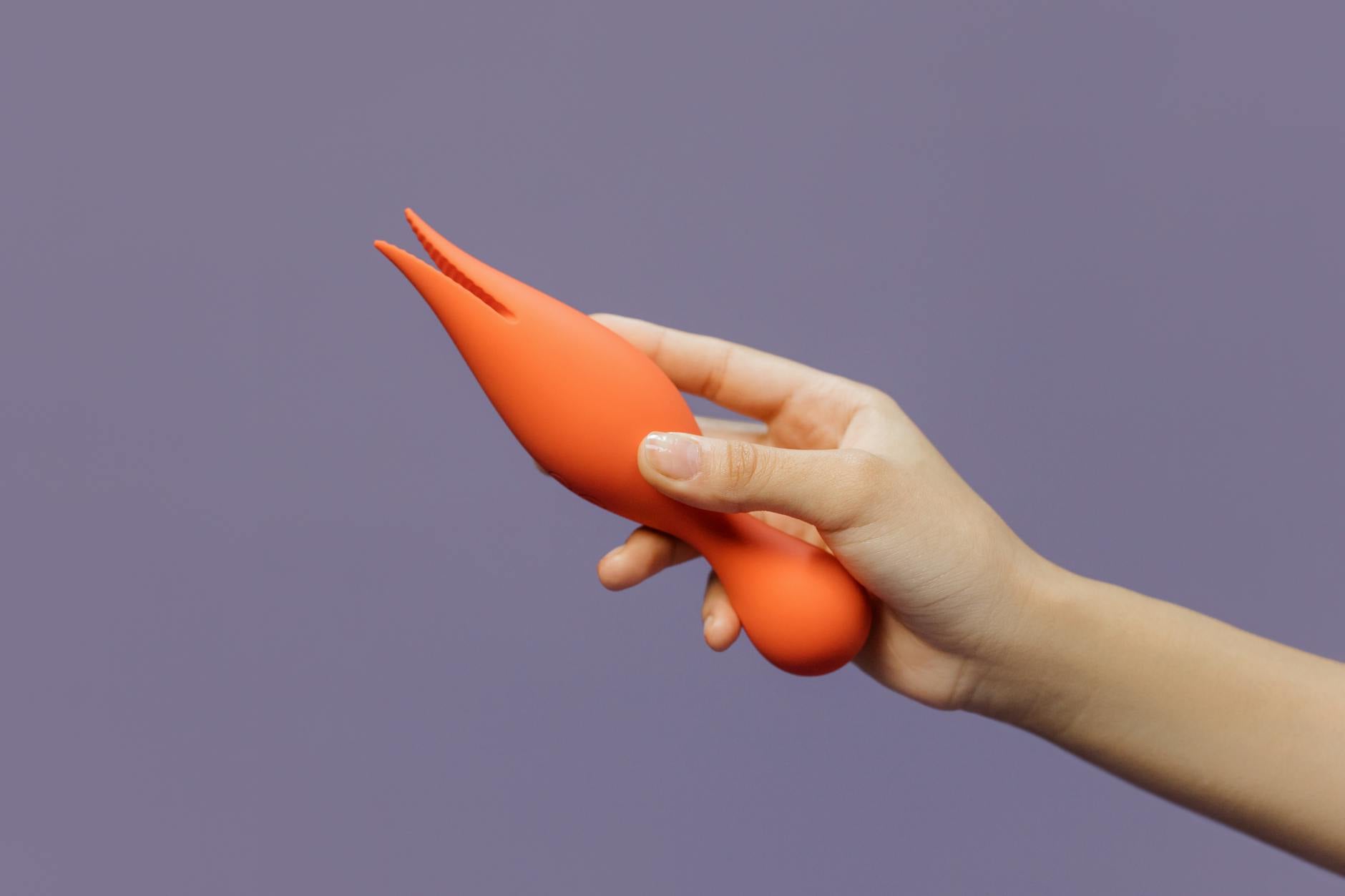
Why Lemon Vibrators Feel Different When On Hormonal Medications
If you've recently started hormonal birth control, switched medications, or begun hormone therapy, you might've noticed something shift with pleasure. Your favorite lemon vibrator that worked perfectly last month feels either too intense or barely there. Your body used to warm up in five minutes. Now it takes twenty. You might even wonder if something's wrong.
Nothing's wrong. Your brain and body are just operating under a different chemical blueprint.
Hormonal medications don't just prevent pregnancy or manage symptoms. They fundamentally rewire how blood flows to your genitals, how quickly your nervous system responds to touch, and how sensitive different tissue becomes. That's not a side effect you have to accept. It's a variable you can work with once you understand what's actually happening.
How hormonal medications change genital blood flow
Feel your heartbeat in your fingertips. That's blood flow. Sexual arousal is basically your body shunting extra blood to genital tissue to create swelling, sensitivity, and readiness. Hormonal medications alter how efficiently that happens.
Estrogen and progestin in birth control pills can reduce overall blood flow to the vulva and clitoris, especially during the placebo week. Some people experience this as numbness. Others report that arousal takes longer to build. Estrogen also thickens vaginal tissue slightly on some medications, which changes how you perceive direct vibration.
If you've started testosterone therapy or DHEA supplements, you might notice the opposite. Blood flow increases, sensation sharpens, and clitoral tissue becomes more engorged more quickly. A lemon vibrator that felt perfect before might suddenly feel too strong.
Spotting patch hormonal contraceptives like the ring or patch tend to produce more stable hormone levels than pills, so some users report fewer sensitivity swings. But the effect is still real. Your body is responding to chemistry, not imagination.
Why sensation timing shifts with medication changes
Let's talk about how fast your nervous system wakes up.
Arousal is a chain reaction in your brain and body. Stimulation triggers nerve endings. Nerves send signals to your brain. Your brain floods your system with dopamine and noradrenaline. Blood vessels relax. Blood pools. Tissue swells. You feel more sensation.
Hormonal medications can slow or speed this whole chain reaction. Some users report that when they start hormonal birth control, the ramp-up time lengthens. That five-minute path to arousal becomes ten or fifteen. With DHEA or testosterone, it might compress from fifteen minutes to five. Neither is better. They're just different thresholds.
This matters for lemon vibrators and suction toys specifically because these tools depend on building sensation incrementally. A lemon clitoral vibrator usually works best when there's already some baseline arousal and blood flow happening. If your medications slow your ramp-up, starting with the lemon vibrator at intensity level 3 might be frustrating. You might need gentler foreplay first, or a longer warm-up, before the vibrator's patterns feel rewarding.

Photo by FounderTips on Pexels
Clitoral nerve sensitivity under hormonal flux
Your clitoris isn't just a button. It's packed with thousands of nerve endings, organized in bundles. Hormones don't change how many nerve endings you have. They change how reactive those nerves are to stimulation.
Estrogen affects nerve density in the clitoral region and how responsive those nerves are to touch. When estrogen is lower, some people experience heightened sensitivity in their clitoris. Others experience the opposite. This varies wildly between people and even between cycles in the same person.
When you start a new hormonal medication, your estrogen level shifts to a new baseline. If you've moved from a low-dose pill to a higher-dose pill, or from pills to a hormonal IUD that releases smaller amounts of progestin directly into your system, your clitoral nerve sensitivity will adjust over roughly two to three weeks.
That adjustment period is why your go-to lemon vibrator might feel suddenly too intense or frustratingly muted. You're not broken. Your tissue is recalibrating.
The lubrication piece (it matters more than you think)
Wetter isn't always better, but dryness absolutely changes how vibration feels.
Estrogen supports your body's ability to self-lubricate. Some hormonal medications reduce that capacity, especially progesterone-dominant methods like the hormonal IUD or the implant. If you've switched to one of these, you might notice less natural lubrication. This doesn't mean your lemon vibrator won't work. It means the sensation profile changes.
Without enough lubrication, direct vibration can feel sharper or more jarring. Your clitoris might become irritated more easily. A lemon suction toy, which works by creating negative pressure rather than direct friction, often feels more comfortable in this scenario because it doesn't rely on glide.
But here's the other direction. If you've started hormonal medications that increase estrogen slightly, you might produce more lubrication than before. That extra slip changes the sensation of your favorite lemon vibrator. Some people report that their pleasure intensifies. Others say it feels less focused or pointed.
The fix is simple. Add water-based lubricant regardless. Even if your body is producing plenty, a slick layer smooths the sensation and reduces any irritation risk.
Pleasure timing within your cycle or dosing schedule
If you're on a birth control pill, your hormone levels drop during placebo weeks. That dip often triggers a window where clitoral sensitivity spikes, arousal builds faster, and orgasm feels easier. Many people report this as their "best" week for pleasure.
If you're on a method like the hormonal IUD, implant, or injection, your hormone levels stay relatively flat year-round. You lose those high-sensation windows but gain consistency. You might notice that a lemon vibrator feels the same every day, which some people prefer and others find less exciting.
Understanding your own medication's release pattern helps you plan. If you know your best-sensation week is coming, you can mentally prepare. You can also recognize when a day feels less responsive and adjust your approach rather than assuming something's wrong.
How to recalibrate your lemon vibrator practice
Three shifts that help when you're adjusting to new medications:
1. Extend foreplay. Give yourself double the warm-up time you used to need. If you spent five minutes on direct clitoral touch before, try ten. Your body needs longer for blood to accumulate and tissue to respond. A lemon vibrator works best after baseline arousal is already present.
2. Start lower. If you usually reach for intensity level 5 on your lemon clitoral vibrator, begin at level 2 or 3. Many people find that when hormonal medications first kick in, their previous intensity feels too strong. You can always increase. Recovering from overstimulation takes longer.
3. Add a second tool. If your lemon vibrator alone feels insufficient, layer it with something else. Use your fingers for general sensation first. Then add the vibrator. Or pair your vibrator with a lemon suction toy's gentler approach if the vibration suddenly feels sharp.
These aren't workarounds. They're adjustments to match your body's new operating system.
What actually changes and what doesn't
Here's what hormonal medications can affect:
- Arousal ramp-up time
- Baseline genital blood flow and engorgement
- Tissue thickness and texture
- Self-lubrication capacity
- Clitoral nerve reactivity
- Orgasm intensity and type
Here's what they don't:
- Your capacity for pleasure
- The neural pathways for arousal
- Your clitoral nerve ending count
- Your ability to orgasm
- Your desires or fantasies
Many people catastrophize this shift. "My medication ruined my sexuality." That's not what's happening. You're experiencing a recalibration, not a loss. How lemon vibrators feel different when clitoral nerves are overstimulated is a separate phenomenon, but both spring from the same root. Your body's sensitivity is a variable, not a failure.
Medication type matters (here's the breakdown)
Combined hormonal contraceptives (pills with estrogen and progestin, patches, rings) tend to reduce blood flow and extend arousal ramp-up time for most users. Adjusting sensation expectations takes two to three weeks.
Progestin-only methods (mini-pill, hormonal IUD, implant, injection) create more variable results. Some users report heightened sensitivity. Others report numbness. The effect stabilizes after three months.
Testosterone therapy or DHEA supplements typically increase blood flow, shorten arousal time, and heighten clitoral sensitivity within weeks. A lemon vibrator that was comfortable might suddenly feel intense.
Thyroid medications indirectly affect sexual response by influencing overall energy and blood flow. If pleasure shifted when you adjusted thyroid dose, that's real and worth mentioning to your doctor.
If your medication change caused a significant shift in pleasure and it's lasted longer than three months, check in with your prescriber. Sometimes a different formulation or dose works better for your body.
When to seek help vs. when to give it time
Two to three weeks is the baseline for your nervous system to adjust to hormonal shifts. Most people notice stabilization after a full cycle (or three months on methods without cycles).
If sensation hasn't returned to baseline after three months, bring it up with your doctor. Sometimes switching formulations helps. Sometimes adding a supplement like DHEA restores balance. Sometimes the solution is recognizing that this medication is right for you for other reasons, and learning to work with your new pleasure baseline is part of the deal.
If you're experiencing pain during or after using your lemon vibrator, or if arousal suddenly feels completely impossible, get checked sooner. That's not adjustment. That's a signal worth investigating.
FAQ: Hormonal Medications and Clitoral Pleasure
Does every hormonal medication affect pleasure?
No. About 30 to 40% of people notice a shift. Others feel no difference. Your baseline health, stress level, relationship status, and individual metabolism all play roles. Keep a simple log ("day 1 on new medication, arousal slower," etc.) to spot your personal pattern.
Can I use my lemon vibrator immediately after starting a new hormonal medication?
Yes, but expect adjustment. The sensation might feel muted, intense, or oddly timed compared to what you're used to. That's normal. Give yourself the three-week grace period before deciding the medication isn't working for you sexually.
Why does my clitoris feel numb on hormonal birth control?
Reduced blood flow to genital tissue is the most common culprit. Some people also experience nerve desensitization when estrogen drops. Adding lubrication, extending warm-up time, and using gentler initial stimulation (fingers before your lemon vibrator) helps signal to your nervous system that arousal is coming.
Is it okay to use my lemon clitoral vibrator less frequently while adjusting to new medications?
Absolutely. If pleasure feels frustrating during the adjustment period, step back for a week or two. Your body's still processing. Return to your lemon vibrator once things stabilize, not as a test of whether you're "fixed," but as a tool you know and trust.
Do hormonal medications permanently change how pleasure feels?
No. If you stop the medication, sensitivity typically returns to baseline within one to three menstrual cycles. But while you're on it, your body operates under those chemical conditions. Working with them, not against them, is the practical move.
Can I combine a lemon vibrator with other methods if medications make one tool less effective?
Completely. Layering tools, adding manual stimulation, using different intensities, and extending foreplay are all legitimate strategies. A lemon suction toy and a lemon vibrator create very different sensations. Using both gives you options as your body adjusts.
Your pleasure isn't broken when hormonal medications shift it. Your body is responding exactly as biology designed it to. The goal isn't to recreate what you felt before. It's to understand what you're working with now and find what works in this new configuration. That often takes intention, some experimentation, and patience. But it's completely doable.
If you're navigating medication shifts and pleasure feels confusing, reach out. We're here to talk through what you're experiencing and help you rebuild your relationship with sensation on your own terms.