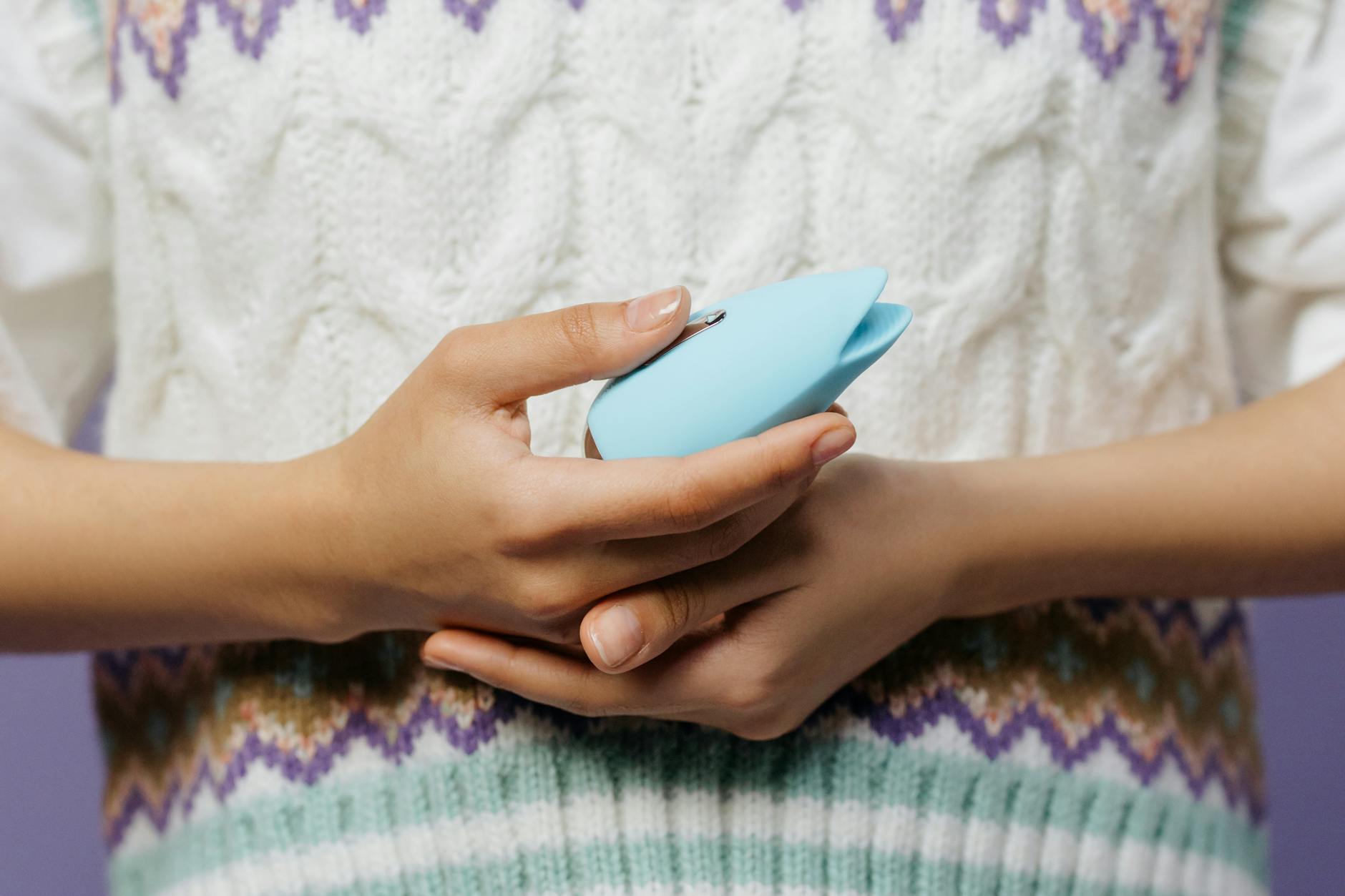
Let's start with the honest part
PCOS changes how your body responds to pleasure. It doesn't make pleasure impossible. But most conversations about PCOS focus on fertility, hair growth, and insulin resistance. Nobody talks about what it does to arousal, sensitivity, and the devices that actually work with your body instead of against it.
Here's what happens physiologically, and why lemon vibrators often become the tool that finally makes sense for people with PCOS.
How PCOS rewires your arousal system
Polycystic ovary syndrome means your ovaries produce higher than normal levels of androgens (male hormones). This includes testosterone, which is a major driver of desire in everyone, regardless of gender. Sounds like it should increase arousal, right? It's more complicated than that.
The problem isn't the testosterone itself. It's that PCOS creates unpredictable hormonal swings. Unlike a typical menstrual cycle with predictable estrogen and progesterone patterns, PCOS keeps hormones in constant flux. One week your testosterone is elevated; the next week it might drop. This means arousal doesn't follow a calendar.
Many people with PCOS report that their desire is inconsistent, sometimes intense and sometimes completely absent. Clitoral sensitivity can swing too. Some days the clitoris feels hypersensitive; other days it feels almost numb. This isn't psychological. It's hormonal.
Additionally, PCOS often comes with insulin resistance, which affects blood flow and nerve sensitivity throughout your body, including your genitals. Better circulation means better sensation. Inflammation, which is common with PCOS, can dull sensation in the opposite direction.
Why intensity alone doesn't work
Traditional vibrators marketed to people with PCOS often assume more power is the answer. A strong wand vibrator, high-frequency patterns, toys designed to "overcome" reduced sensitivity.
This approach fails because it ignores the inconsistency part. On days when your clitoris is hypersensitive, a powerful vibrator feels like too much. On days when sensitivity dips, you need something that can build gradually without overwhelming you when your body suddenly responds.
Lemon vibrators, including the Lem, are designed differently. They use air-pulse suction instead of pure vibration. That suction creates a broader stimulation pattern that doesn't rely on raw frequency or intensity alone. It's more like a gentle building pressure than a hammering sensation.
For people with PCOS, this matters because suction can feel just right whether your sensitivity is up or down. You're not chasing intensity. You're chasing responsiveness.
The pattern-switching advantage
One of the most underrated features of lemon clitoral vibrators is that they typically offer multiple intensity levels and, often, different stimulation patterns. This is crucial for PCOS bodies.
When your hormones are stable-ish and sensitivity is normal, you might use pattern 5. When your cycle hits the inflammatory phase and everything feels dulled, pattern 1 or 2 gives you something to build on without the frustration of "why doesn't this feel good today?"
People with PCOS also report that their arousal takes longer to build. Part of this is the insulin resistance piece (blood flow takes longer to shift). Part of it is the unpredictability. When you don't know if you'll respond at all, your nervous system stays in a subtle state of alert instead of relaxing into arousal.
The solution isn't a toy that forces intensity. It's a toy that gives you permission to take time. Lemon vibrators are patient. You can start at the lowest setting and genuinely feel the sensation building. You can spend 20 minutes on pattern 1 and never feel cheated or bored, because the sensation is there, it's just subtle.
This is the opposite of what happens with a powerful wand where if the low setting doesn't work, you're basically starting over with medium.
The sensitivity cycling piece
Another real issue for people with PCOS is that clitoral sensitivity doesn't just shift day to day. It can shift during a single session. You start with pattern 3, and 10 minutes in, the stimulation suddenly feels too intense. Or you start with pattern 2, and your body gradually opens up so that what felt subtle now feels adequate.
This is where the suction mechanism really shines. Because the stimulation isn't purely a vibration hitting your clitoris at a fixed rate, you have more control over how your body experiences it. You can adjust your position slightly, change the angle, or just stay still and let your nerve sensitivity catch up. The toy isn't fighting you. It's meeting you where you are.
Compare that to a vibrator that's delivering a fixed frequency at a fixed intensity. If it's not working, you have two options: go faster or go home. Neither addresses the real issue, which is that your nervous system is on its own timeline.
Arousal timing and PCOS
People with PCOS often say that arousal feels broken because it takes so long to build. Sometimes 30 minutes or more. Sometimes it doesn't build at all, and they can't figure out why.
Research on PCOS and sexual function is still sparse, but what we know suggests that the insulin resistance piece slows down the vascular response (the rush of blood that creates engorgement and sensitivity). The hormonal unpredictability means your body might be primed one day and resistant the next, even if nothing external changed.
Lemon clitoral vibrators help because they don't require you to reach a certain threshold to feel like you're "doing it right." You can use the toy for 5 minutes and feel the suction working. You can use it for 30 minutes and feel the slow build. Both are real, valid experiences. You're not waiting for arousal to flip a switch. You're meeting sensation where it is and letting it evolve.
This is particularly important if you're partnered. The pressure to "get aroused faster" to match a partner's timeline is real and toxic. A tool that doesn't require you to perform on a schedule is genuinely liberating.
The lubrication factor
Here's something that doesn't get discussed enough: PCOS doesn't typically cause vaginal dryness the way menopause does. But it can make lubrication inconsistent. One week you're fine; the next week things feel drier.
A suction-based toy like a lemon vibrator is more forgiving when lubrication is inconsistent because the suction itself creates a gentle seal that doesn't require as much slickness. A friction-based vibrator needs more glide. When you're already frustrated about hormones, the last thing you want is mechanical friction making things worse.
This is also why water-based lubricant becomes your friend if you're using any lemon clitoral vibrator with PCOS. It tops up what your body is doing naturally and gives you consistency.
Psychological permission and PCOS
A lot of what goes wrong with pleasure and PCOS is psychological. You've had three weeks of irregular cycles, spotting that showed up when it shouldn't, maybe facial hair or acne linked to the androgens. Your relationship with your body is complicated.
Then you try to have pleasure, and your body doesn't cooperate the way you expect. After a few rounds of that, a lot of people give up. Not because pleasure isn't possible, but because the unpredictability feels like another way your body is failing you.
A tool that works slowly, gently, and doesn't require you to "perform" (reach orgasm fast, respond on cue) can actually rebuild your sense of agency. You're not fighting your body. You're not waiting for it to cooperate on someone else's timeline. You're just exploring sensation at whatever pace your nervous system allows that day.
That psychological piece matters more than I think most sex toy guides acknowledge. The right tool isn't just about the mechanics. It's about permission.
When to check in with a doctor
If you have PCOS and sexual sensation or arousal has changed dramatically or painfully, mention it to your doctor. Sometimes what feels like "just my PCOS" is actually insulin management that could improve with medication adjustment. Sometimes it's depression or anxiety linked to the PCOS diagnosis itself, which is treatable.
Also, if you're considering hormonal treatments for PCOS (like birth control or spironolactone), ask your doctor specifically how that medication might affect arousal or sensation. Different treatments have different sexual side effects. The conversation is worth having before you start.
The PCOS pleasure toolkit
Lemon vibrators aren't a cure for PCOS. Nothing is, because PCOS isn't broken. It's different. But a clitoral vibrator designed around suction rather than vibration, paired with patience and permission, often becomes the tool that finally makes pleasure feel accessible again.
Pair that with lubricant, time, and a genuine willingness to explore sensation without a performance agenda, and you often find that pleasure is still available. It just works on PCOS time, not textbook time.
Your body isn't failing you. The toys and frameworks built for textbook bodies just weren't designed for yours.
Common questions about PCOS and pleasure
Does PCOS permanently change how orgasms feel?
Not permanently, but yes, temporarily. Hormonal shifts from PCOS can change orgasm intensity, duration, and even whether orgasm happens at all on any given day. This is genuinely frustrating, but it's not permanent in the sense that you'll never have good orgasms again. What often changes is consistency, not capacity. Many people find that <a href="/blog/why-lemon-vibrators-feel-different-in-your-30s-vs-your-40s">shifting to a device that works with your body's natural response patterns</a> rather than against them makes a huge difference. Lemon clitoral vibrators, for instance, let you build arousal gradually instead of requiring intensity from the start.
Can PCOS medication affect arousal or sensitivity with toys?
Absolutely. Different PCOS treatments have different sexual side effects. Birth control pills can increase or decrease desire depending on the formulation. Spironolactone (an anti-androgen) sometimes reduces sexual sensation because it lowers testosterone. Metformin (for insulin resistance) generally has fewer sexual side effects but improves bloodflow, which can help sensation. If you've been taking a PCOS medication and noticed changes in how you respond to pleasure, mention that to your doctor. Sometimes a different medication or adjustment is worth exploring.
Is it normal for arousal to feel totally absent some days with PCOS?
Yes, completely normal. PCOS means your hormones aren't following a predictable pattern. Some days testosterone is elevated and desire is there. Other days it's not. This isn't a sign that something is broken or that you're broken. It's just how PCOS works. The frustrating part is that you can't predict it or plan around it. Some people find that <a href="/blog/how-to-use-lemon-vibrator-when-anxiety-blocks-arousal">reframing pleasure as exploration rather than performance takes the pressure off</a> and makes it easier to access whatever is available on any given day.
Do clitoral vibrators feel different if I'm on PCOS medications?
Yes. Depending on the medication, you might notice that clitoral sensitivity is different than before you started treatment. Some medications increase sensitivity by improving bloodflow; others decrease it. If you've been using a powerful vibrator and just switched PCOS medication, you might suddenly find that it feels too intense. That's when a lemon vibrator with multiple intensity levels and pattern options becomes really valuable. You have flexibility to match whatever your body is doing that day.
Can PCOS affect lubrication and how toys feel?
Yes. PCOS doesn't typically cause the severe dryness that menopause does, but it can make lubrication inconsistent. One week you're fine; the next week things feel drier. This is partly hormonal and partly the inflammation that often comes with PCOS. Suction-based toys like lemon vibrators need less lubrication than friction-based toys because the mechanism is different. Adding a bit of water-based lubricant helps if inconsistency is an issue, but the tool itself is more forgiving than a traditional wand.
Is it common to have pain or discomfort with toys if you have PCOS?
If you're experiencing pain, that's worth checking with a doctor. PCOS itself doesn't usually cause pain during sexual activity, but inflammation from PCOS can sometimes make things more tender. Additionally, some PCOS medications or the condition itself can affect vaginal tissue thickness. Pain isn't normal and isn't something you should just live with. A good gynecologist can help figure out what's going on and whether you need to adjust medication, try a different toy, or address inflammation separately.
Final thought
PCOS is a lot. But your pleasure doesn't have to be collateral damage to the diagnosis. The right tool, paired with patience and genuine permission to explore on your own timeline, often makes a real difference. Lemon vibrators exist because some bodies need something gentler, more patient, and less performative than what's typically available. If that sounds like you, it might be worth exploring.